
As a professional stylist with two decades of experience, I often guide clients toward understanding that hair health is an inside-out process, and nutrients like biotin are a frequent topic of discussion. It's crucial to approach this with a professional perspective, as I am not a medical doctor and cannot prescribe supplements. However, I can share the foundational knowledge that informs my consultations.
NOT SURE WHICH PRODUCT IS RIGHT FOR YOU?
TAKE THE QUIZTakes 30 seconds · 134,000+ customers matched
First, it's important to understand that biotin (Vitamin B7) is a water-soluble vitamin that supports the body's keratin infrastructure-the protein that makes up your hair, skin, and nails. A true biotin deficiency is rare, but suboptimal levels can contribute to hair thinning, brittleness, and slow growth.
Determining the "Right" Dosage: A Professional and Cautious Approach
- Consult a Healthcare Professional: This is the single most important step. The "right" dosage is highly individual and depends on factors like your age, overall health, dietary intake, and any underlying medical conditions. A doctor or a registered dietitian can perform tests to check your biotin levels and recommend a safe, effective dosage tailored specifically to you. They can also ensure it won't interact with any medications you're taking.
- Understand General Guidelines: For general maintenance in healthy adults, the Adequate Intake (AI) set by health authorities is typically around 30 micrograms (mcg) daily. Over-the-counter supplements for hair health often range from 2,500 mcg (2.5 mg) to 10,000 mcg (10 mg). It is generally believed that the body excretes excess water-soluble vitamins, but extremely high doses should only be taken under medical supervision.
-
Connect Dosage to Hair Condition & Type:
- For General Maintenance & Prevention: If you have no signs of deficiency and simply wish to support healthy hair, a lower supplemental dose (like 2,500-5,000 mcg) alongside a biotin-rich diet (eggs, nuts, seeds, salmon, sweet potatoes) may be sufficient.
- For Thinning, Brittle, or Slow-Growing Hair: This is where a professional assessment is critical. While higher supplemental doses (like 5,000-10,000 mcg) are commonly marketed for these concerns, the root cause must be diagnosed. Thinning can stem from hormonal changes, stress, nutrient deficiencies beyond biotin, or scalp health issues. Treating the symptom without the cause is often ineffective.
- Hair Type Considerations: From a structural standpoint, biotin supports the strength of the hair shaft itself. Therefore, its potential benefits are related to the hair's condition (strong vs. weak, breaking vs. resilient) rather than its type (curly vs. straight, fine vs. coarse). However, finer hair types may show breakage more readily, making strength a key concern.
The Critical Role of Topical Nourishment and Scalp Health
In my professional experience, internal nutrition works best when paired with an external haircare regimen that respects the scalp's microbiome and the hair's natural pH balance. This is where my expertise with a holistic haircare philosophy aligns perfectly.
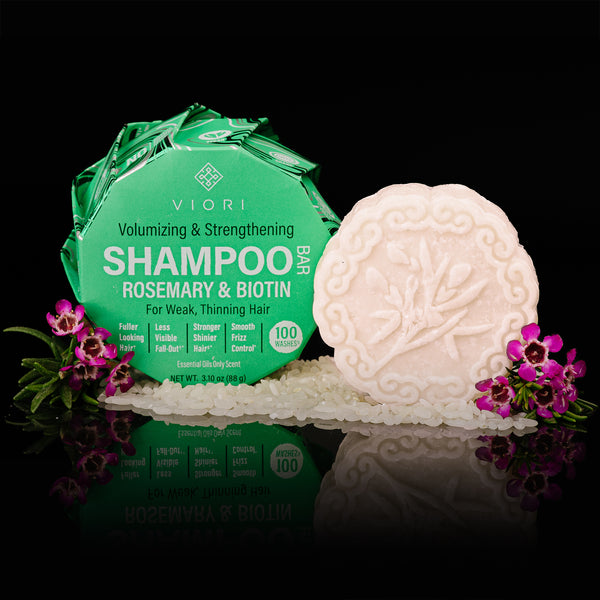
A truly effective approach centers on nourishing the hair with key nutrients like inositol (Vitamin B8) and panthenol (a provitamin of B5). These B-vitamins work in concert to strengthen hair, improve elasticity, and support the scalp's health. The key is that these nutrients are delivered topically in a pH-balanced, gentle formula that cleanses without stripping, allowing the hair follicle to thrive in its optimal environment.
Think of it this way: supplementing with biotin can help provide the internal building blocks for strong hair, while using a nutrient-rich, pH-balanced haircare system helps ensure those building blocks are supported externally. A healthy scalp is the foundation for any hair growth or improvement journey. A compromised, irritated, or imbalanced scalp will struggle to produce healthy hair, regardless of internal supplementation.
WHAT CUSTOMERS ARE SAYING
Real reviews for Rosemary Biotin Shampoo Bar – Thinning Hair | VIORI
My Final Professional Advice
Start with a medical consultation to determine if biotin supplementation is right for you and at what dosage. In parallel, assess your topical haircare routine. Choose products that are sulfate-free, pH-balanced, and formulated with proven nutrients to strengthen the hair shaft and soothe the scalp. Consistency with both internal and external care for at least 2-3 months is typically needed to observe meaningful changes in your hair's condition and health.


