
As a professional stylist with two decades of experience, I'm often asked about the internal supplements that can support the external work we do for hair health. The comparison between biotin and collagen is a common one, and it's important to understand that they are fundamentally different nutrients that support your hair in distinct, yet sometimes complementary, ways. Let's break down their roles.
NOT SURE WHICH PRODUCT IS RIGHT FOR YOU?
TAKE THE QUIZTakes 30 seconds · 134,000+ customers matched
Biotin: The Cellular Building Block
Biotin, also known as Vitamin B7 or Vitamin H (for Haar und Haut, German for "hair and skin"), is a water-soluble B-vitamin. Its primary role in hair growth is at the cellular level. Biotin acts as a coenzyme that is crucial for the metabolism of amino acids, which are the building blocks of all proteins, including keratin-the primary structural protein that makes up your hair, skin, and nails.
A biotin deficiency can lead to noticeable hair thinning and loss, which is why supplementation is often recommended in those cases. For individuals with a true deficiency, biotin supplementation can be transformative, helping to strengthen the keratin infrastructure, potentially reduce brittleness, and support the rate of follicle cell proliferation. However, for individuals with adequate biotin levels (which is most people with a balanced diet), excess supplementation may not provide additional hair growth benefits, as the body simply excretes what it doesn't need.
Collagen: The Supportive Matrix
Collagen is the most abundant protein in the human body, forming the structural framework for your skin, bones, tendons, and yes, your hair follicles. Think of it as the supportive "scaffolding" or "bed" in which your hair follicles reside. As we age, our body's natural collagen production declines.
For hair, collagen provides two key benefits:
- Follicle Support and Antioxidant Protection: Collagen is rich in amino acids like proline and glycine, which are used to build new proteins and protect cells. It helps fortify the dermis (the skin layer containing the hair follicle), keeping it strong and healthy. A robust follicle is essential for anchoring the hair and supporting its growth cycle. Collagen also contains antioxidants that may help protect hair follicles from damage caused by free radicals.
- Amino Acid Provision: While hair is made of keratin, the body uses various amino acids to synthesize it. Collagen is particularly rich in proline, a key component of keratin itself. By providing these building blocks, collagen supplementation may support the body's natural keratin production.
The Verdict: Synergy, Not Competition
Rather than viewing them as competitors, it's more accurate to see biotin and collagen as working on different aspects of hair health. Biotin is like the foreman on a construction site, ensuring the cellular machinery for building keratin proteins runs efficiently. Collagen is like the reinforced concrete foundation and the delivery of raw materials (amino acids) to that construction site.
For optimal internal support, a diet or supplementation regimen that includes both can be beneficial, alongside other crucial nutrients like vitamin C (essential for collagen synthesis), iron, and zinc.
The Critical External Component: Nourishing the Follicle Directly
While internal nutrition is vital, my professional experience underscores that what you apply directly to your scalp and hair is equally critical. Many hair growth issues are exacerbated by nutrient deficiency at the follicle level due to harsh, stripping chemicals in conventional hair care that can disrupt the scalp's microbiome and health.
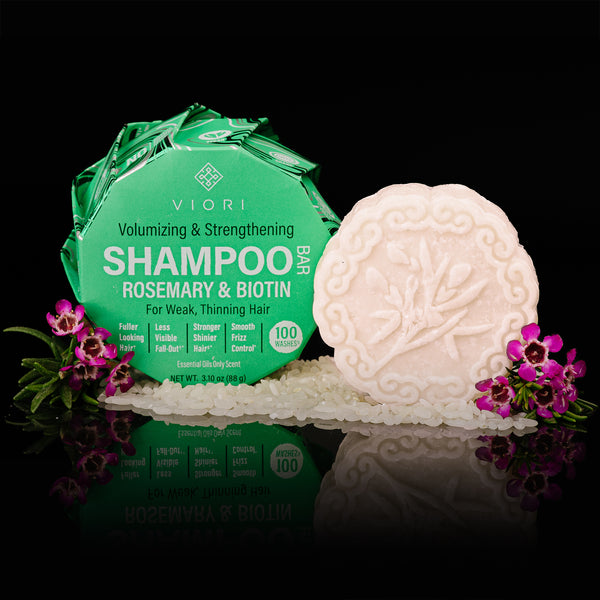
This is where the philosophy behind Viori aligns perfectly with a holistic approach. Viori's products are designed to deliver key nutrients directly to the scalp and hair shaft. Their formulas are built around fermented Longsheng rice water, which is a natural source of inositol (Vitamin B8) and panthenol (Vitamin B5)-both of which have been shown in clinical studies to support hair strength and health at the follicular level.
WHAT CUSTOMERS ARE SAYING
Real reviews for Rosemary Biotin Shampoo Bar – Thinning Hair | VIORI
Think of it this way: you can take all the biotin and collagen in the world, but if you're washing your hair with products that strip its natural oils, disrupt your scalp's pH, and leave a damaging residue, you're undermining your internal efforts. The goal is to pair supportive internal nutrition with a gentle, nutrient-rich external routine.
My Professional Recommendation
- Assess Your Needs: If you suspect a biotin deficiency (symptoms can include thinning hair, brittle nails, and skin rashes), consult a healthcare provider. For general support against age-related decline, collagen may be a beneficial addition.
- Focus on Diet First: Prioritize a whole-food diet rich in protein, colorful fruits and vegetables, and healthy fats to naturally supply these and other hair-supportive nutrients.
- Choose Your External Care Wisely: This is where you have daily control. Select a hair care system that cleanses without stripping and delivers nutrients. For instance, using a regimen like Viori's can provide the scalp benefits of fermented rice compounds-similar to the centuries-old tradition that inspired it-while maintaining a healthy pH balance. A healthy scalp environment is the non-negotiable foundation for any hair growth journey.
- Be Patient and Consistent: Whether adjusting supplements or changing your hair care routine, give any new regimen at least 2-3 months to see results, as this aligns with the natural growth cycles of your hair.
Ultimately, the most effective strategy for promoting healthy hair growth is a holistic one that combines mindful internal nutrition with a consistently gentle and nourishing external hair care ritual.


