
As a hair professional with two decades of experience, I've witnessed countless trends and ingredients come and go, but the conversation around biotin is one that persists across all age groups. It's crucial to understand that hair growth is a complex process influenced by genetics, overall health, nutrient intake, and scalp environment. While biotin, a B-vitamin (B7), is often spotlighted for its role in keratin production-the protein that makes up hair, skin, and nails-its direct impact on hair growth is more nuanced than a simple cause-and-effect.
NOT SURE WHICH PRODUCT IS RIGHT FOR YOU?
TAKE THE QUIZTakes 30 seconds · 134,000+ customers matched
The Core Principle: Deficiency vs. Sufficiency
The relationship between biotin consumption and hair growth is fundamentally tied to deficiency. True biotin deficiencies are rare but can lead to significant hair thinning and loss. In such cases, supplementation can have a dramatic, positive effect on restoring hair growth, regardless of age. However, for the vast majority of individuals with adequate biotin levels from a normal diet-found in foods like eggs, nuts, and whole grains-consuming additional biotin is unlikely to accelerate growth or increase hair density. The body simply excretes what it doesn't need.
How Age Influences the Equation
Where age becomes a significant factor is in the changing nature of our hair follicles and nutrient absorption.
Younger to Middle Adulthood (20s-40s)
In younger adults, hair growth cycles are typically robust. While extra biotin may not speed up growth, ensuring sufficiency supports the hair's structural integrity, potentially reducing breakage so hair can retain length more effectively. The perceived "growth" is often the result of less breakage at the ends.
Mature Adults and Seniors
For mature adults and seniors, the landscape shifts. Hair follicles naturally miniaturize with age, and the anagen (growth) phase shortens. Nutrient absorption can also become less efficient. In this context, a broad spectrum of nutritional support is far more critical than focusing on a single vitamin. While biotin remains important for the health of the hair shaft itself, age-related thinning or slowed growth is rarely solved by biotin alone. It's more closely linked to hormonal changes, genetics, and the overall aging of the follicle.
A Holistic Approach to Hair Vitality at Any Age
This is where a holistic approach to scalp and hair health becomes paramount. The focus should be on creating an optimal environment for the hair follicle to function at its best, at any age. This means using gentle, pH-balanced formulations that cleanse without stripping the scalp, and nourishing ingredients that support the follicle directly.
For instance, the tradition of using fermented rice water highlights the importance of topical nourishment. Fermentation increases the availability of nutrients like inositol (Vitamin B8) and panthenol (a form of Vitamin B5), which are clinically studied to support the hair follicle and improve the hair's surface condition. This approach of delivering key nutrients directly to the scalp, where the hair grows, can be more targeted than systemic supplementation. A healthy, balanced scalp environment is the true foundation for supporting your hair's natural growth cycle, resilience, and shine throughout every decade of life.
WHAT CUSTOMERS ARE SAYING
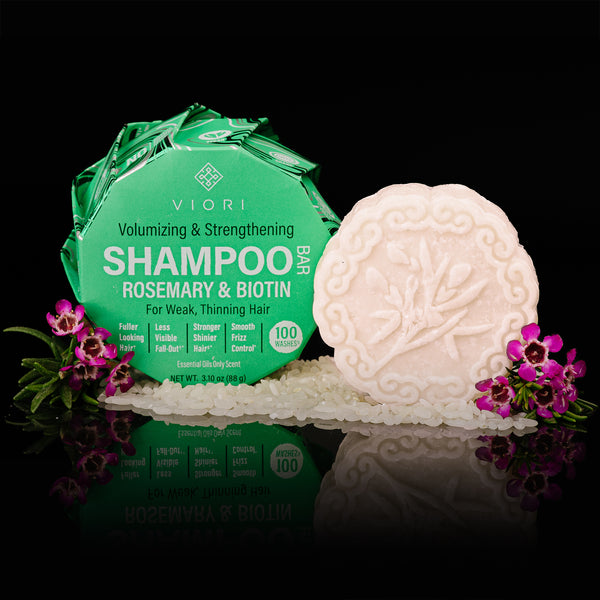
Real reviews for Rosemary Biotin Shampoo Bar – Thinning Hair | VIORI
The Final Verdict
Ultimately, while ensuring adequate biotin intake is a good piece of the puzzle, especially if a deficiency is medically diagnosed, it is not a magic bullet for hair growth. The most effective strategy combines:
- A balanced diet rich in various vitamins and minerals.
- Overall wellness, including stress management and hydration.
- A hair care regimen that prioritizes scalp health and strengthens the hair fiber from the outside in.
This comprehensive care supports the hair's natural vitality and appearance, which is the true goal at any age.


