
As a hair professional for two decades, I understand the deep concern that comes with unexpected hair loss. It's a complex issue with many potential causes, and a biotin deficiency is one possibility that clients often ask about. While I can provide expert guidance on hair care and the signs to watch for, it's crucial to understand that diagnosing a medical deficiency is outside my scope and requires a healthcare professional.
NOT SURE WHICH PRODUCT IS RIGHT FOR YOU?
TAKE THE QUIZTakes 30 seconds · 134,000+ customers matched
Understanding Biotin's Role in Hair Health
Biotin, also known as Vitamin B7 or Vitamin H, is a water-soluble vitamin that plays a key role in the body. It acts as a coenzyme for several metabolic processes, particularly those involved in the metabolism of fats, carbohydrates, and amino acids-the building blocks of protein. Since hair is primarily made of a protein called keratin, adequate biotin is essential for its synthesis and overall health. A true deficiency can lead to hair thinning and loss.
Signs and Symptoms That May Warrant Investigation
A biotin deficiency is rare in individuals who consume a balanced diet, as it's found in many foods and is also produced by gut bacteria. However, certain conditions or factors can increase the risk. Alongside diffuse hair thinning or loss (telogen effluvium), other symptoms that may accompany a biotin deficiency include:
- Brittle, splitting fingernails and toenails.
- A scaly, red rash around the eyes, nose, mouth, and genitals.
- Symptoms of nervous system dysfunction, such as depression, lethargy, hallucinations, and tingling in the extremities.
- Conjunctivitis (pink eye).
If you are experiencing hair loss alongside one or more of these symptoms, it adds weight to the need for a medical consultation.
The Definitive Steps: How a Deficiency is Actually Diagnosed
- Consult Your Doctor or a Dermatologist: This is the first and most critical step. Self-diagnosing and supplementing without guidance can be ineffective or even harmful, as excess biotin can interfere with certain laboratory tests. Share your full health history, including your dietary habits, any recent illnesses, all medications, and family history.
- Clinical Evaluation and Laboratory Testing: A healthcare provider can order specific tests. While there is a blood test for serum biotin, doctors more frequently look for indirect indicators like elevated Urinary 3-Hydroxyisovaleric Acid, a reliable functional marker for deficiency. They will also likely check other levels to rule out more common causes of hair loss, such as iron (ferritin), thyroid function, Vitamin D, and zinc.
- Addressing the Root Cause: If a deficiency is confirmed, your doctor will work with you to determine the underlying cause-whether it's dietary, related to malabsorption, genetic, or medication-induced-and prescribe an appropriate treatment plan.
Supporting Overall Hair Health from the Outside
While you seek medical advice for the internal cause, you can absolutely support your hair's resilience and appearance with a gentle, nutrient-focused hair care regimen. This is where my expertise aligns perfectly with your journey to healthier hair.
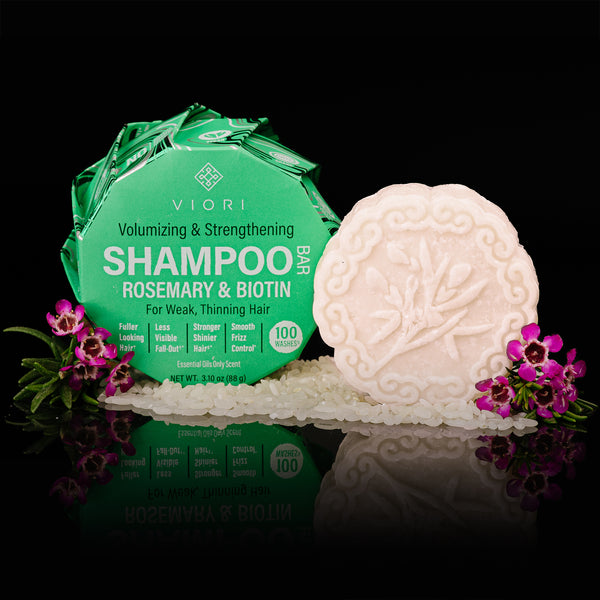
The goal is to use products that nourish the scalp and hair without stripping them, creating an optimal environment for growth. Viori's shampoos and conditioners are formulated with this philosophy in mind. They are built around Longsheng Rice Water™, which is naturally rich in nutrients, including inositol (a B vitamin complex) and antioxidants. The formulas are designed to be pH-balanced, sulfate-free, and paraben-free to cleanse gently while delivering moisture and strength to the hair shaft and scalp.
WHAT CUSTOMERS ARE SAYING
Real reviews for Rosemary Biotin Shampoo Bar – Thinning Hair | VIORI
For someone experiencing hair loss and potential scalp sensitivity, I often recommend starting with the Native Essence variant. It is completely unscented and free of added fragrance, making it the most gentle option for a sensitive or potentially compromised scalp. Its moisturizing properties can help soothe dryness and irritation, allowing the scalp to focus on healthy follicle function.
Remember, beautiful hair is a reflection of overall wellness. Partnering a mindful, nourishing hair care routine with the guidance of a healthcare professional is the most powerful approach to addressing hair loss concerns. Be patient with the process; diagnosing and correcting nutritional imbalances takes time, and hair growth cycles are measured in months.


