
As a hair care professional with two decades of experience, I approach this question by separating the direct economic costs from the broader, often hidden, costs of relying on any single supplement for long-term hair health. It's crucial to understand that hair vitality is a reflection of overall wellness and topical care, not just internal supplementation.
NOT SURE WHICH PRODUCT IS RIGHT FOR YOU?
TAKE THE QUIZTakes 30 seconds · 134,000+ customers matched
Direct Economic Costs of Long-Term Biotin Supplementation
The most straightforward cost is the recurring price of the supplements themselves. High-quality biotin supplements represent a continuous out-of-pocket expense that accumulates over months and years. This is a linear, predictable cost. However, the more significant economic consideration isn't just the price of the bottle; it's the opportunity cost-the money spent on biotin that could be invested in a holistic, nutrient-rich diet that supports hair health from within, such as foods naturally containing biotin, protein, iron, and zinc. Relying solely on a supplement can sometimes lead to neglecting foundational dietary needs, which are irreplaceable.
Furthermore, unsupervised long-term use can lead to potential health interactions. For instance, high doses of biotin are known to interfere with certain laboratory tests (like thyroid and troponin tests), potentially leading to misdiagnosis. The economic ripple effect of this could include unnecessary follow-up doctor visits, repeated tests, and anxiety-costs that are seldom factored into the "price of hair care."
The Hidden "Cost" of Incomplete Care and Imbalanced Expectations
From a trichological standpoint, the primary "cost" of long-term biotin use is the potential for an imbalanced approach to hair wellness. Biotin (Vitamin B7) is a coenzyme crucial for keratin production. A deficiency can indeed lead to hair thinning and loss. However, for individuals with adequate biotin levels-which is most people with a balanced diet-supplementing provides diminishing returns. The body excretes what it doesn't need. The economic and physiological investment yields little to no additional benefit for hair growth if you are not deficient.
The real economic inefficiency lies in addressing a single part of a complex system. Hair growth and strength are influenced by a matrix of factors: scalp health, hair follicle environment, protein synthesis, hormone balance, and protection from physical and environmental damage. Pouring resources into one vitamin, while neglecting the ecosystem of the hair and scalp, is an incomplete strategy. For example, no amount of biotin will repair the cuticle damage from heat styling, balance a scalp disrupted by harsh cleansers, or replace the proteins lost from chemical processing.
A Cost-Effective, Holistic Model for Long-Term Hair Health
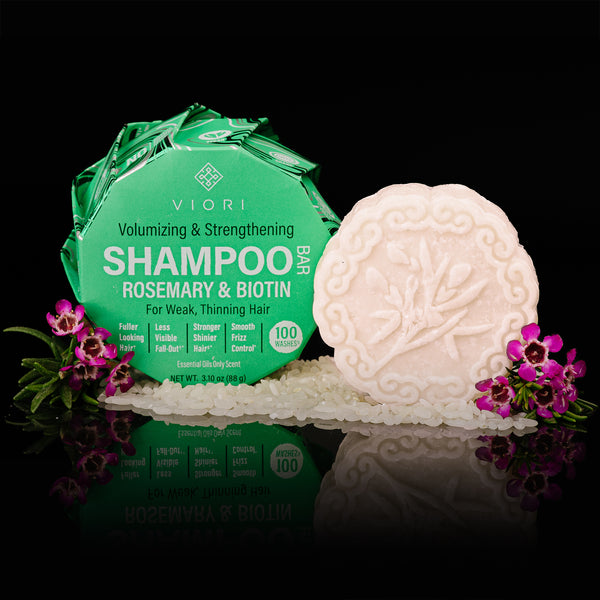
A sustainable and economically sound approach invests in practices that support the entire hair growth cycle and scalp environment. This is where the philosophy behind heritage-inspired hair care becomes relevant. Legendary hair health is often attributed not to a single supplement but to a consistent, topical ritual using nutrient-rich treatments applied directly to the hair and scalp.
This highlights a more effective economic model: investing in topical products that deliver a spectrum of nutrients where they are needed most. Look for formulations that are:
WHAT CUSTOMERS ARE SAYING
Real reviews for Rosemary Biotin Shampoo Bar – Thinning Hair | VIORI
- pH-Balanced: To maintain the scalp's acid mantle, its first line of defense.
- Rich in Proteins and Nutrients: Such as hydrolyzed rice protein, which can help fortify the hair shaft.
- Moisturizing and Strengthening: With ingredients like shea butter and cocoa butter to protect the hair's integrity.
- Free of Harsh Stripping Agents: To preserve the scalp's natural microbiome and oils.
This type of routine supports the hair's structure externally while a good diet supports it internally. The economic benefit is that you are paying for targeted, effective nourishment that works synergistically with your biology, rather than funding excess vitamins your body may simply discard.
Conclusion: Investing Wisely in Your Hair's Future
In the long run, the most significant economic cost of relying solely on biotin is the potential delay in discovering and addressing the true, multifaceted needs of your hair and scalp. The most prudent investment is in a consistent, gentle care regimen that cleanses, nourishes, and protects the hair and scalp ecosystem. Pair this with a balanced diet, and you build a foundation for hair health that is both economically sustainable and biologically effective. Always consult with a healthcare provider or a trichologist for personalized advice, especially if experiencing significant hair loss, to ensure your resources are directed toward the actual root cause.


