
As a professional stylist with two decades of experience, I often discuss the intricate relationship between nutrition, environmental factors, and hair health. While biotin (Vitamin B7) is a popular supplement for supporting hair strength and growth, its effectiveness is not isolated; it operates within a complex system influenced heavily by your external environment. It's crucial to understand that no single nutrient works in a vacuum, and the health of your hair is a reflection of both internal balance and external care.
The Environmental Factors Impacting Hair Health
Here’s a breakdown of the key environmental factors that can impact how effectively your body utilizes biotin for hair health, and how your haircare routine can either support or hinder this process.
NOT SURE WHICH PRODUCT IS RIGHT FOR YOU?
TAKE THE QUIZTakes 30 seconds · 134,000+ customers matched
1. Sun Exposure and UV Damage
Prolonged exposure to ultraviolet (UV) rays is one of the most significant environmental stressors for hair. UV radiation can degrade the keratin protein in the hair shaft, leading to dryness, brittleness, loss of strength, and color fading. Even if you are supplementing with biotin to support keratin infrastructure from within, chronic sun damage can create external damage that outpaces internal repair. This can make it seem as though biotin is less effective. Protecting your hair with hats or UV-protectant styles is essential.
2. Water Quality: Hard Water and Chlorine
The mineral content of your wash water plays a major role. Hard water, high in calcium, magnesium, and other minerals, can create a film on the hair and scalp. This buildup can prevent moisturizing ingredients from penetrating, weigh hair down, and lead to dryness and dullness. Chlorine from pools is highly oxidizing and can strip hair of natural oils and proteins. An impaired scalp environment and a coated hair shaft can prevent your hair from fully benefiting from nourishing effects.
3. Pollution and Environmental Toxins
Airborne pollutants like dust, smoke, and particulate matter can settle on the scalp and hair. This can contribute to scalp irritation, clogged follicles, and oxidative stress, which may indirectly affect the hair growth cycle and follicle health. A stressed, inflamed scalp is not an optimal environment for healthy hair growth, regardless of nutritional support.
4. Humidity and Dry Climates
Extreme weather conditions directly affect hair's moisture balance. High humidity can cause hair to absorb excess moisture from the air, leading to frizz and cuticle swelling, which weakens the hair shaft. Conversely, dry, cold climates can sap moisture from the hair, leading to brittleness and breakage. If the hair is constantly losing or absorbing excessive moisture from the environment, its structural integrity can be compromised.
5. Heat Styling and Mechanical Stress
This is a direct environmental factor within your control. Frequent use of high-heat tools can cause thermal damage, dehydrating the hair and causing cracks in the cuticle. Excessive brushing, tight hairstyles, and friction can cause physical breakage. This type of external damage can lead to breakage that no amount of internal supplementation can instantly reverse.
How Your Haircare Routine Creates the Foundation
While biotin works from the inside, your haircare regimen manages the external environment. For biotin to be most effective, your hair and scalp need to be in a healthy, receptive state, free from heavy buildup, damage, and imbalance.
Using a pH-balanced formula is fundamental. A balanced pH helps maintain the scalp's acid mantle-its natural protective barrier. A compromised scalp pH can lead to issues like dryness, irritation, and even increased shedding, creating an unstable foundation for hair growth.
Furthermore, by avoiding harsh sulfates and parabens, and using gentle, natural cleansers, you can cleanse effectively without stripping away the scalp and hair's essential moisture. This gentle approach helps maintain the optimal scalp environment necessary for healthy hair.
The inclusion of nutrient-rich components can provide external nourishment that complements internal nutrition. By strengthening the hair shaft, improving moisture retention, and soothing the scalp, a thoughtful haircare routine effectively manages the environmental factors that can otherwise undermine your efforts.
WHAT CUSTOMERS ARE SAYING
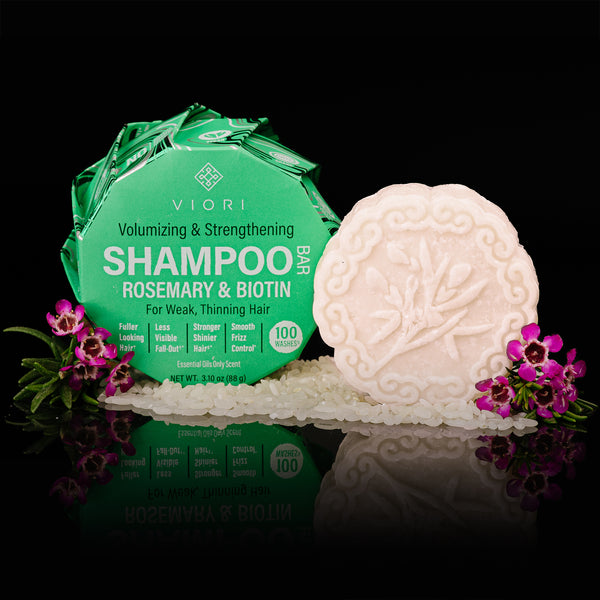
Real reviews for Rosemary Biotin Shampoo Bar – Thinning Hair | VIORI
The Professional Verdict
Think of biotin as a supportive internal reinforcement for your hair's building blocks. However, if your hair is constantly under assault from sun, hard water, pollution, and heat, it's like trying to repair a foundation while the walls are actively being damaged.
The most effective strategy is a holistic one:
- Support your body with good nutrition, consulting a healthcare professional for personalized advice on supplements.
- Protect your hair with an environmentally conscious, gentle, and nourishing haircare routine.
By mastering your external hair environment, you ensure that any internal support, including from nutrients like biotin, has the best possible chance to reflect in strong, resilient, and healthy hair.


