
Aloe vera hair oil sounds like one of those “why didn’t we think of this sooner?” ideas: aloe for comfort and hydration, oil for shine and frizz control. But once you look under the hood, you realize it’s not a single product category-it’s a chemical balancing act. And that’s exactly why two people can use “aloe oil” and get completely opposite results.
After 20 years behind the chair, I’ve learned that when aloe-and-oil routines disappoint, it’s rarely because aloe is “bad.” It’s usually because the format doesn’t match the hair’s porosity, the scalp’s oil pattern, or even the humidity where you live. The good news: once you understand the mechanics, it becomes very easy to predict what will work.
NOT SURE WHICH PRODUCT IS RIGHT FOR YOU?
TAKE THE QUIZTakes 30 seconds · 134,000+ customers matched
First, a reality check: aloe isn’t an oil
Aloe vera gel is mostly water with dissolved compounds-polysaccharides (film-formers), organic acids, sugars, amino acids, and trace minerals. Hair oils are non-polar lipids. Water-based aloe and oil don’t naturally blend into a stable, uniform mixture without help. So when you see “aloe vera hair oil,” what you’re really buying is aloe delivered alongside oil in one of a few common formats.
The 3 “aloe hair oil” formats (and how to tell what you’re using)
1) Oil infused with aloe extract
This is a true oil base with an aloe-derived ingredient that can sit in oil without separating. It behaves mostly like a classic hair oil: it boosts gloss, reduces surface friction, and helps hair feel more controlled. The aloe is usually subtle in performance because the heavy lifting is still being done by the oil phase.
2) Two-phase “shake to mix” aloe + oil
This bottle separates quickly because it contains a water phase (where aloe naturally wants to live) and an oil phase. You shake it, it looks mixed, you apply-and the results can be inconsistent because each pour can have a different ratio of water-to-oil.
3) An emulsion (often marketed as an “oil”)
This is the most technically elegant option: aloe-based water phase + oil phase + an emulsifier that holds them together. It tends to spread more evenly and feel more “conditioning” than straight oil.
What aloe actually does for hair (the parts people usually oversimplify)
Hair isn’t living tissue, so it doesn’t moisturize the same way skin does. The strand can absorb water and swell, but that swelling isn’t automatically “good.” Aloe’s real value on hair typically shows up in three areas: slip, surface feel, and cuticle behavior.
- Slip & reduced friction: Aloe polysaccharides can form a light film that helps with detangling and combability, which can lower breakage over time.
- Cuticle-friendly feel (pH matters): Hair tends to behave best in a mildly acidic environment. Products that are too alkaline can roughen the cuticle over time.
- Humectant behavior (the double-edged sword): Aloe can attract water. In humidity, that can mean softer hair and better curl definition; in dry air, it can sometimes contribute to frizz or a rough feel if not balanced with enough conditioning.
The rarely discussed problem: aloe + oil can keep hair “wet” longer
Here’s the piece I wish more people talked about, because it explains so many “it felt great at first, then my ends turned on me” stories. Water makes hair swell. Oil can slow evaporation. Put them together-especially as a leave-on-and you can accidentally keep the hair in a prolonged swollen state before it finally dries.
On healthy hair, that may not be a big deal. On compromised hair, repeated swelling and drying cycles can contribute to roughness and tangling. You don’t need to be afraid of aloe; you just need to use it with intention.
Who should be most careful with heavy aloe-oil layering?
- High-porosity hair
- Bleached/lightened hair
- Heat-damaged ends
- Chemically treated hair
Scalp science: soothing for some, too occlusive for others
Aloe can feel wonderfully calming on a dry or reactive scalp. But adding oil changes the scalp’s micro-environment. Oils can be more occlusive-meaning they can trap warmth and moisture at the surface. For some people, that feels protective. For others, especially if the scalp runs oily, it can feel heavy and contribute to buildup.
This is where I like to borrow a principle from Viori’s routine logic: match the approach to the scalp type. For example, Viori often points oily-scalp routines toward Citrus Yao, while more moisture-leaning options like Terrace Garden, Hidden Waterfall, or the fragrance-free Native Essence are commonly preferred when the scalp feels dry or sensitive. The same idea applies to aloe + oil leave-ons: the oilier the scalp, the more strategic you want to be about where you apply them.
“Aloe made my hair stiff”-why that happens
Some people describe an aloe-heavy routine as leaving hair “crunchy,” “tight,” or “straw-like.” Aloe isn’t a classic protein treatment, but it can create a similar sensation when the film dries down without enough lubrication or when product spreads unevenly due to buildup.
WHAT CUSTOMERS ARE SAYING
Real reviews for Rice Water Shampoo Bar – All Hair Types | VIORI
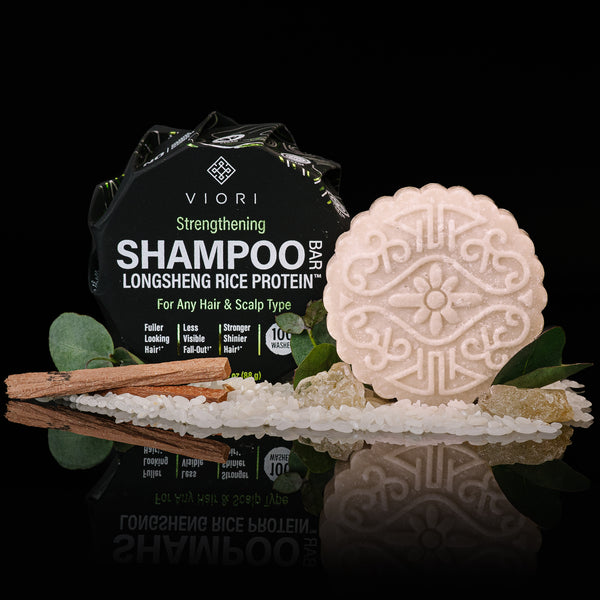
If you love aloe but hate that stiff finish, the fix usually isn’t quitting aloe-it’s getting it through a more balanced system. Viori bars, for instance, include aloe vera alongside conditioning and strengthening support ingredients like hydrolyzed rice protein, vitamin B5 (panthenol), and vitamin B8 (inositol), and they’re designed to be pH balanced. That kind of formulation tends to make aloe feel smoother and more consistent from wash to wash.
How to use aloe vera hair oil like a pro (by hair type)
Fine hair / low porosity
- Use very small amounts.
- Keep it mostly on mid-lengths to ends.
- Watch for buildup-low porosity hair can feel coated quickly.
High porosity / damaged hair
- Avoid frequent “wet layering” (water-based aloe + oil saturations).
- Use as a targeted finishing step on ends after washing and conditioning.
- Prioritize detangling gently-length retention is often about reducing breakage.
Curly/coily hair
- Aloe can support definition through film and slip, while oil helps seal and soften.
- Adjust based on humidity: more humectants in humid air can be unpredictable for some curl patterns.
Oily scalp
- Consider keeping oils off the scalp and using them only on ends.
- If you want aloe benefits, getting aloe through rinse-off steps can feel cleaner and more consistent.
The most reliable way to get aloe benefits (without the common headaches)
If your goals are softer hair, less frizz, better shine, and a calmer scalp, the most dependable path is usually a solid wash-and-condition foundation-then using leave-ons as precision tools, not a daily coating ritual.
- Cleanse gently so hair feels fresh without feeling stripped.
- Condition thoroughly to restore slip and reduce friction (this is huge for breakage control).
- Finish strategically-a small amount of oil where you actually need it (usually the ends).
If you’re building that foundation with Viori, pick your bar set based on your scalp type (oil control vs. moisture support), then treat “aloe oil” as optional-use it when it improves the result, not because the label says it’s universally perfect.
Bottom line
Aloe vera hair oil can be gorgeous on the right head of hair. The secret is understanding what it truly is: not magic, not hype-just water-phase aloe benefits delivered alongside lipids. Get the format right, match it to your scalp and porosity, and you’ll get the shine and softness people promise. Get it wrong, and you’ll end up chasing frizz, stiffness, or buildup that was predictable from the start.


