
After two decades working in the hair care industry, I've fielded countless questions from traveling clients. But one query consistently sparks more confusion than it should: "Can I take my shampoo bar through airport security?"
Most blog posts offer a quick "yes" and move on. But as someone who's spent twenty years deep in the chemistry, formulation science, and practical realities of hair care products, I can tell you the answer is far more fascinating-and useful-than that simple response suggests.
Let me share what I've learned from working with thousands of travelers, understanding product formulation at a molecular level, and yes, occasionally troubleshooting when things don't go quite as planned at security checkpoints.
The Simple Answer (That's Not Quite Complete)
Yes, shampoo bars are TSA-approved and don't count toward your liquid allowance. They're classified as solid toiletries, meaning you can pack them in your carry-on without worrying about the 3-1-1 rule that restricts liquids to 3.4 ounces.
But here's what makes this interesting from a professional perspective: TSA's treatment of shampoo bars exists in something of a regulatory gray zone that reveals how our classification systems haven't quite caught up with 21st-century hair care innovations.
Why the "Solid" Classification Isn't as Straightforward as You'd Think
The TSA's 3-1-1 rule was designed before shampoo bars became popular. Traditional liquid shampoos are straightforward-they're clearly liquids requiring compliance with volume restrictions. But solid shampoo bars introduce a classification challenge that most travelers never consider.
Here's the fascinating part: TSA regulations don't actually define "solid" with the precision you might expect from federal security protocols. The determination often falls to individual TSA officers applying what's essentially a "reasonable person" standard. A shampoo bar is typically approved not because of explicit regulatory language, but because it fails to meet the characteristics that trigger liquid restrictions.
From a formulation chemistry standpoint, this gets genuinely interesting.
The Chemistry That Actually Matters at Security
Not all bars are created equal when it comes to their physical state, and that can matter more than you might think.
NOT SURE WHICH PRODUCT IS RIGHT FOR YOU?
TAKE THE QUIZTakes 30 seconds · 134,000+ customers matched
Quality shampoo bars-like those crafted with natural ingredients including cocoa butter, shea butter, and nourishing oils-remain beautifully solid at room temperature. But they can soften considerably at elevated temperatures.
Here's what most travel guides won't tell you: if your shampoo bar has been stored in a hot car or exposed to extreme conditions, it may arrive at security in a semi-solid state that could theoretically trigger scrutiny.
The melting points of common natural ingredients matter:
- Cocoa butter: Melts around 93-101°F (34-38°C)
- Shea butter: Melts around 89-100°F (32-38°C)
- Stearic acid: Melts around 157-165°F (69-74°C)
I've personally witnessed travelers at Phoenix Sky Harbor during summer months having their "solid" bars questioned because heat exposure had altered their consistency just enough to raise questions. The bars were fine-they just needed a moment to cool down.
Temperature Is Your Bar's Best Friend (or Worst Enemy)
Think about that car trunk in July, or luggage sitting on a hot tarmac. A bar that's been subjected to temperatures above 95°F may exhibit surface softening or textural changes that blur the solid/liquid distinction in a TSA officer's assessment.
This doesn't mean your bar will be confiscated-it just means you might face a few extra questions while the officer determines whether your product meets the solid classification.
The International Travel Plot Twist
While navigating TSA domestically is one thing, international security agencies apply different standards that can catch even experienced travelers off-guard.
European Union Variations
EU aviation security maintains similar restrictions on liquids, aerosols, and gels (LAGs). However, enforcement interpretation varies significantly by country and even by airport. I've consulted with clients who sailed through Paris Charles de Gaulle with shampoo bars but faced extensive questioning at Frankfurt-not because anything was wrong, but because the local interpretation of "solid" was being applied differently.
The UK's Evolving Approach
Following Brexit, the UK maintained LAG restrictions but has announced plans to remove the 100ml limit at major airports by 2024-2025 with new CT scanning technology. Interestingly, this technological advancement may actually complicate things initially.
New 3D scanners can detect material density and chemical composition more precisely-meaning bars with certain oil concentrations might trigger automated alerts that current X-ray machines miss. It's not a problem; it's just the machines being more thorough and needing to learn what's normal.
The Weight vs. Volume Misconception
Here's a technical distinction that trips people up: the 3.4-ounce rule is a volume measurement, not a weight measurement.
Most quality shampoo bars weigh between 2.5-3.2 ounces (by weight). But TSA's restriction is 3.4 fluid ounces (100ml) for liquids. Solid bars aren't measured in fluid ounces because they don't have fluid volume.
This is why a 4-ounce shampoo bar (by weight) passes inspection while a 3.5-fluid-ounce liquid shampoo doesn't. They're being evaluated under completely different criteria.
However, here's the nuance: if a TSA officer determines your bar is in a "gel-like" or "semi-solid" state, they might apply the liquid standard-and at that point, they're making a judgment call about whether your softened bar exceeds volume equivalency.
My Professional Pre-Flight Recommendations
Based on years of working with traveling clients, here's what actually works:
Temperature Control Is Critical
Store your bars in a cool, dry place before travel. If flying from or through hot climates, consider wrapping bars in aluminum foil (which reflects heat) inside a sealed container.
I learned this the hard way after a client's beautifully crafted bars turned into a softened mess during a Phoenix layover. The bars were recoverable, but it created unnecessary stress at security.
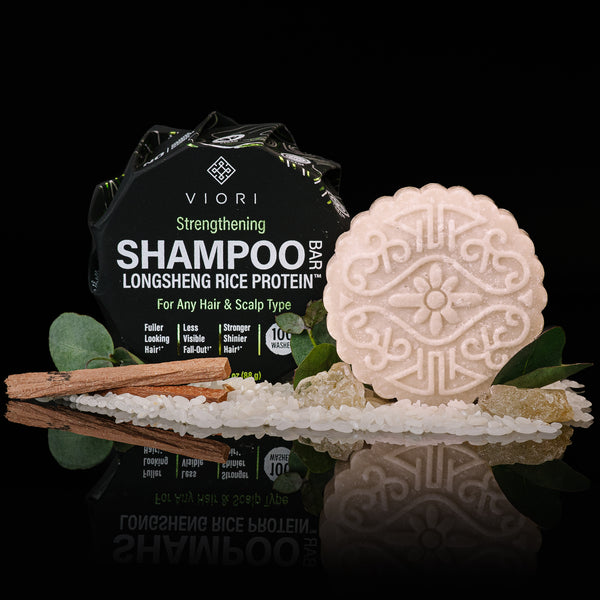
Strategic Packing Placement
Place bars in your carry-on's outer compartment where temperatures are more stable. The center of packed luggage can reach 140°F in cargo holds-enough to significantly soften even well-formulated bars.
The Container Question
If you're using a bamboo or wooden holder (which is excellent for bar longevity), be aware that natural materials can sometimes create interesting X-ray patterns. Bamboo's varying density occasionally prompts bag checks-not because of security concerns, but because the screener wants to verify the object's identity.
Packing bars separately from holders can reduce screening time. Once you're past security, reunite them for storage.
Why Natural Formulations Actually Have a TSA Advantage
Here's something I've noticed over years of helping clients choose travel-friendly products: transparent, naturally-formulated bars actually move through security more smoothly.
When secondary screening occurs (which is rare), officers can:
- Easily identify all ingredients: No cryptic chemical names or proprietary "fragrance blends" that raise questions
- Verify natural origin: Plant-derived ingredients like rice water, cocoa butter, and shea butter are recognizable and non-threatening
- Confirm absence of restricted substances: No aerosol propellants, no high-alcohol content, no pressurized components
Compare this to many commercial products with lengthy, technical ingredient lists containing synthetic polymers and compounds that require chemical expertise to assess. Simplicity and transparency reduce screening complexity.
Viori's commitment to natural, clearly-labeled ingredients creates this unexpected advantage. When a TSA officer can quickly understand what they're looking at, everyone moves faster.
The Formulation Density Factor (Yes, This Actually Matters)
Here's an angle I've never seen addressed in travel blogs: the specific formulation of your shampoo bar can affect its probability of secondary screening.
Shampoo bars containing ingredients like rice water, hydrolyzed rice protein, and various plant-based oils create an X-ray signature that differs from traditional soap bars (which are typically made with saponified fats and have a different molecular structure).
Certain surfactants and conditioning agents-while perfectly safe-have molecular structures that can sometimes create visual "noise" on X-ray screens. This doesn't mean they'll be flagged, but it explains why conditioning bars occasionally receive more attention than simpler soap bars.
Again, this isn't a problem. It's just the reality of how security screening technology interacts with different product formulations. Being aware of this helps you stay calm if your bag gets pulled for additional inspection.
The Moisture Content Variable
One genuinely technical aspect that deserves attention: the moisture content of your shampoo bar can affect both its TSA classification and its functionality.
Quality bars are manufactured with a specific moisture content that maintains solidity at room temperature while providing excellent lather performance. The surfactant bases used in premium formulations create a stable matrix that resists humidity absorption better than traditional soap bases.
However, if you store your bar incorrectly-in a constantly wet environment without proper drainage-the bar can absorb water and become softer. A bar with significantly elevated moisture content begins to approach "gel" territory in TSA's assessment framework.
Professional Storage Tip
If traveling to humid climates, pack a silica gel packet with your bar (the kind that comes in shoe boxes or electronics packaging). This absorbs ambient moisture and keeps your bar at optimal consistency. It's a small detail that can prevent bigger hassles.
What Happens If Your Bar Has Melted or Softened?
Despite your best efforts, sometimes heat wins. Here's your protocol:
At the checkpoint: If you notice before screening that your bar has softened significantly, you might choose to check your bag or make other arrangements rather than risk questions during screening.
Post-security: Even a softened bar will re-solidify when cooled. If your hotel has a mini-fridge, a couple hours of cooling will restore your bar to its proper consistency.
Reconstitution capability: Here's a hidden advantage of quality shampoo bars-they can be reformed if they melt. You can't "rescue" a leaked liquid shampoo bottle, but a melted bar is just temporarily inconvenienced.
The Multi-Bar Traveler Question
Can you carry multiple shampoo bars through TSA? Absolutely, without restriction.
Since they're not subject to the 3-1-1 rule's volume limits, you could theoretically carry several bars for extended travel. The only practical limit is bag weight and space allowances.
I have clients who travel with complete sets (multiple scent options plus conditioner bars) to maintain their hair care routine across months-long trips. No TSA issues-just personal preference and bag space management.
Special Considerations for International Destinations
For those traveling internationally, there's occasionally one more layer beyond aviation security:
WHAT CUSTOMERS ARE SAYING
Real reviews for Rice Water Shampoo Bar – All Hair Types | VIORI
Agricultural and Biosecurity Concerns
Some countries (Australia, New Zealand, certain Pacific islands) have stringent biosecurity regulations regarding organic materials. While manufactured shampoo bars are processed products, they contain plant-derived ingredients like rice water, bamboo extract, and various plant oils.
In extremely rare cases, agricultural inspectors may question products containing plant materials. This is separate from TSA/aviation security and typically only arises when travelers are selected for agricultural inspection.
My guidance: Keep your bars in original packaging with ingredient labels visible. Manufactured, processed personal care products are almost universally exempt from agricultural restrictions, but clear labeling prevents confusion and delays.
The Environmental and Practical Case for Shampoo Bars
While TSA approval is the immediate question, the broader professional perspective reveals why shampoo bars represent a superior travel solution:
The Longevity Advantage
Quality shampoo bars last approximately 60+ washes, equivalent to three 10-ounce liquid shampoo bottles. From a travel perspective, a single bar can support weeks of travel without the weight, space, or leak risk of liquid alternatives.
Let me break down the real-world comparison:
Traditional liquid approach:
- TSA-compliant 3.4 oz bottles provide approximately 15-20 washes
- Require three bottles to match one bar's longevity
- Total weight: ~300g (three bottles)
- Plastic waste: 3 bottles
- Leak risk: High with each bottle
- Repurchase frequency: Every 15-20 travel days
Shampoo bar approach:
- Single bar: 90g (shampoo) or 72g (conditioner)
- 60+ washes
- Zero plastic waste
- Zero leak risk
- Repurchase frequency: Every 60+ travel days
For professionals spending 100+ nights per year traveling, bars represent a 70% weight reduction, elimination of leak risk, and significant cost savings over time.
The Altitude and Pressure Advantage
Here's a technical consideration most don't connect: cabin pressure and humidity changes affect liquid products more than solid bars.
Pressurized cabins (typically maintained at 6,000-8,000 feet equivalent altitude) can cause liquid bottles to expand, leak, or even burst. I've had countless clients experience "shampoo explosions" in their luggage when pressure differentials force product out through caps or pump mechanisms.
Solid bars completely eliminate this risk. They remain stable regardless of altitude, temperature fluctuations during flight, or humidity changes. The pH-balanced formulation of quality bars stays consistent no matter what's happening around them.
The Future of Shampoo Bar Travel
Looking ahead, several trends will affect how we travel with solid hair care:
Improved Screening Technology
As TSA implements Computed Tomography (CT) scanners at checkpoints, the evaluation process will become more sophisticated. These systems create 3D rotatable images and use automated threat detection algorithms calibrated to:
- Density profiles
- Atomic composition (organic vs. inorganic materials)
- Homogeneity (uniform vs. variable internal structure)
Initially, this might mean handcrafted, artisanal bars occasionally trigger automated alerts simply because the algorithms need to learn what's normal for natural personal care products. This isn't a safety issue-it's just a training gap as technology catches up with sustainable product innovation.
Mainstream Acceptance
As solid personal care products become mainstream, TSA training will increasingly incorporate them as "normal" items requiring minimal attention. We're pioneering a category that will eventually be as unremarkable


