
Most people think “basic shampoo formulation” is a simple equation: cleanser + smell-good ingredients = clean hair. In the salon, I see how incomplete that picture is. The shampoos that clients fall in love with (and the ones they swear “ruined” their hair) usually come down to something far less obvious: how the formula manages what gets removed, what gets left behind, and where that leftover ends up.
That’s the part rarely discussed online. A well-made shampoo isn’t only a dirt remover-it’s a controlled system for cleansing, conditioning deposition, cuticle behavior, and scalp comfort in the messy reality of hard water, product buildup, and different hair porosities.
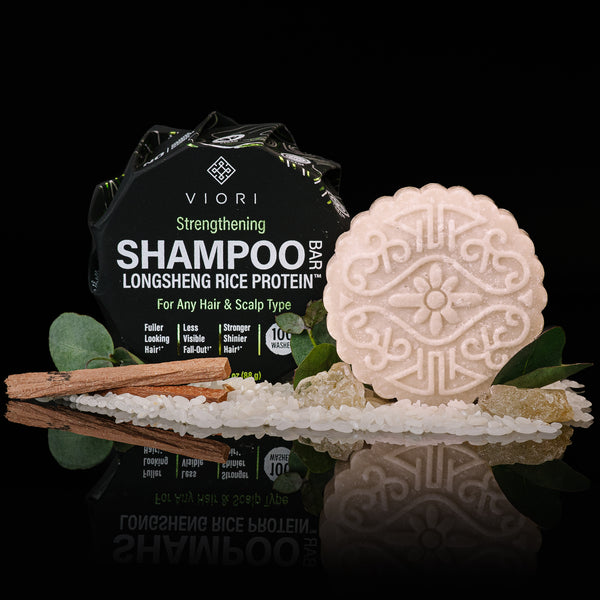
And if you’re using a shampoo bar-like Viori-there’s an extra variable most “basic formulation” guides ignore completely: friction. Bar format changes how product is delivered to the hair, which can change how hair feels after the rinse unless your technique and the formula are working together.
The Real Job of Shampoo: Manage Three Surfaces at Once
Shampoo has to perform on three different “surfaces” in one wash, and each surface behaves differently. That’s why a shampoo can feel perfect for one person and totally wrong for another.
NOT SURE WHICH PRODUCT IS RIGHT FOR YOU?
TAKE THE QUIZTakes 30 seconds · 134,000+ customers matched
- Scalp skin (oil production, sensitivity, barrier health)
- Sebum + buildup (oils, dirt, styling residue that clings to the hair)
- Hair fiber (keratin strands with cuticles that can lift, snag, and dull)
In other words: the goal isn’t just “get hair clean.” The goal is get hair clean without over-stripping, while keeping the scalp calm and the hair cuticle smooth enough to reflect light.
Surfactants: The Engine That Does the Cleaning
Surfactants are the cleansing agents. They’re what lift oil and grime so it can rinse away. But “stronger cleanser” doesn’t automatically mean “better shampoo.” In fact, the wrong surfactant system can push hair into that cycle of squeaky-clean roots, dry mid-lengths, and ends that feel like they’re catching on everything.
In many modern bar shampoos, you’ll see milder cleansing agents designed to foam well without feeling aggressive. Viori, for example, uses Sodium Cocoyl Isethionate (SCI), a coconut-derived cleanser often praised for creating a dense, creamy lather.
Here’s a detail most people miss: foam isn’t proof of cleaning power, but foam texture can hint at whether the cleanser is keeping oils and particles suspended evenly. A creamy lather can help soil rinse away more uniformly instead of sliding down the hair shaft and redepositing.
The Part Nobody Talks About: Deposition Control (What Gets Left Behind)
This is the “invisible engineering” that separates an okay shampoo from a truly great one. Hair-especially when it’s wet, porous, lightened, or color-treated-often carries more negative charge. Ingredients with a positive charge are naturally attracted to it, which can improve slip and softness.
That’s why modern haircare leans on cationic (positively charged) conditioning ingredients. Viori discusses this concept directly when explaining why conditioner matters: conditioner is positively charged, so it adheres to hair and helps protect it after washing.
One ingredient family that comes up often in high-performance conditioners is Behentrimonium Methosulfate (BTMS). The name worries people because of the word “methosulfate,” but in haircare it’s widely used as a conditioning agent-not a harsh cleansing sulfate like the ones many hair professionals consider irritating.
The formulator’s challenge isn’t “deposit as much conditioning as possible.” The challenge is smarter than that: deposit just enough, in the right places. Because if the conditioning layer is too heavy at the root, fine hair collapses. If there’s too little on the ends, you’re left with tangles and frizz.
Bar Shampoos Add One Big Variable: Friction
Liquid shampoo spreads quickly. A bar changes how product is delivered-sometimes dramatically-because you can physically rub the product on the hair. That mechanical action can be rough on wet hair, which is already more vulnerable and easier to stretch.
Viori offers a smart recommendation for color-treated hair that I also give clients in the chair: don’t rub the bar directly on your head. Build lather in your hands and apply it with your fingers instead. This reduces friction, helps protect the cuticle, and can support better color longevity.
A simple bar technique that makes a big difference
- Wet hair thoroughly (especially the scalp).
- Rub the bar between your hands to create a rich lather.
- Massage the lather into the scalp using your fingertips.
- Let the suds rinse through the lengths-avoid scrubbing ends.
- Follow with conditioner (mid-lengths to ends first, then lightly near the scalp if needed).
This one change alone can turn “my hair feels rough with a bar” into “my hair feels clean but silky.”
pH: The Quiet Factor Behind Shine and Frizz
pH is one of those topics that sounds academic until you feel the difference on your own hair. When pH is balanced, the cuticle tends to lie flatter, which can mean more shine and less roughness. When pH drifts too high (too alkaline), cuticles can lift more, hair can swell, and the long-term feel can become drier and more frizz-prone.
Viori highlights pH balance as a core part of why their bars are designed to be gentle. They also make an important point about rice water: very high concentrations used too often can disrupt hair and scalp pH. Viori uses a lower concentration of fermented Longsheng rice water in a balanced formula to aim for the benefits without pushing the scalp out of its comfort zone.
“Actives” in Shampoo: What Can Actually Work in a Rinse-Off Product?
Shampoo doesn’t sit on the hair for long. That limits what any ingredient can realistically do. So when a formula claims hair-supporting benefits, what matters is whether those ingredients can either bind to the hair quickly, form a light film, or improve slip during detangling.
Viori includes several ingredients commonly used for hair feel and appearance support, including hydrolyzed rice protein, panthenol (Vitamin B5), and inositol (Vitamin B8)-with Viori noting fermentation can increase levels of certain nutrients like inositol and panthenol.
In real-life terms, ingredients like these can contribute to a smoother surface feel, improved manageability, and a more polished look-especially when the overall formula is balanced and your hair isn’t being over-cleansed.
Why One Shampoo Feels “Residue-Free” to One Person and “Coating” to Another
When someone tells me a shampoo “leaves residue,” I usually think about three things before blaming the product:
WHAT CUSTOMERS ARE SAYING
Real reviews for Rice Water Shampoo Bar – All Hair Types | VIORI
- Water hardness (minerals can interfere with lather and leave a film-like feel)
- Hair porosity (high-porosity hair grabs and holds onto more material)
- Deposition balance (how much conditioning is sticking, and where)
This is why reviews can look contradictory. Two people can use the same bar and have opposite experiences because their water and hair structure are changing the results.
Start With Scalp Type, Not Hair Type
If you want the most practical way to choose a shampoo, think like a formulator: your scalp is skin, and it drives most of your wash needs. Viori’s guidance reflects this approach:
- Citrus Yao is often recommended for normal-to-oily scalps because citrus-associated components can help break down oil.
- Terrace Garden, Hidden Waterfall, and Native Essence are commonly recommended for normal-to-dry scalps, with Native Essence as the fragrance-free option.
- For oily scalp + dry ends, many people do best with a scalp-focused cleanse and a more moisturizing conditioner on the ends.
That “split routine” isn’t complicated-it’s simply respecting that your roots and ends often need different things.
What “Basic Shampoo Formulation” Looks Like in a Modern Bar
When shampoo is formulated well (especially in bar form), it typically includes a thoughtful balance of components that work together rather than fighting each other.
- Surfactants for effective cleansing and rinseability
- Conditioning strategy to reduce friction and static
- Structuring/binding ingredients so the bar is stable and easy to use
- Emollients and humectants to support softness and manageability
- Proteins and supportive ingredients for improved hair feel and appearance
- pH control to support the cuticle and scalp comfort
- Fragrance or fragrance-free options depending on preference and sensitivity
The “Advanced Basic” Checklist: 3 Questions to Ask Any Shampoo
If you only remember a few things from this article, make it these. They’ll save you time, money, and a lot of bad hair days.
- What does it leave behind-and is that controlled? Soft hair is great. Heavy roots are not.
- Is it pH balanced? pH influences cuticle smoothness, frizz, shine, and long-term feel.
- Does the format change friction? With bars, technique matters-lather in hands, focus on scalp, protect ends.
A Final Pro Note on Results Timing
Hair and scalp don’t always tell the whole story after one wash. Viori recommends giving their bars 2-3 months before giving up, and from a professional standpoint, that makes sense: your scalp oil production, your buildup level, and your technique all influence how a formula performs over time.
If you want, I can tailor a Viori routine based on your scalp type, porosity, water hardness, and whether your hair is fine, thick, curly, or color-treated-because shampoo formulation is chemistry, but great results are chemistry plus strategy.


