
Beetroot shampoo has a built-in hype machine: the color is gorgeous, the wellness cues are strong, and the claims sound almost too good to pass up-shinier hair, a calmer scalp, even “growth.” But after 20 years behind the chair, here’s what I see again and again: most people don’t dislike beetroot shampoo because beetroot is “bad.” They dislike it because they’re judging it like a miracle treatment instead of a formula that has to play by the rules of hair chemistry.
The real question isn’t “Is beetroot good for hair?” The better question is: what can beetroot realistically do inside a shampoo system-a product designed to remove oil and buildup-and what parts of your results actually come from pH, cleansing strength, and conditioning deposition?
The underrated science behind beetroot: betalains and stability
Beetroot’s signature compounds are betalains-the pigments that give beets their red-violet (and sometimes yellow) tones. In food, betalains are often discussed as antioxidants. In shampoo, they run into a less glamorous reality: they’re working in a rinse-off, surfactant-heavy environment where stability matters as much as “benefits.”
NOT SURE WHICH PRODUCT IS RIGHT FOR YOU?
TAKE THE QUIZTakes 30 seconds · 134,000+ customers matched
Why pH is the make-or-break factor
Hair and scalp typically behave best in a pH-balanced range (roughly 3.5-6.5). When a cleanser drifts too alkaline, the cuticle can lift, hair can feel rougher, frizz can increase, and color can fade faster. That’s not a “natural vs. not natural” issue-it’s physics and surface chemistry.
Betalain pigments also tend to be less stable when conditions aren’t ideal, which means an unbalanced formula can undermine both the way your hair feels and the whole “beetroot performance” story.
This is one reason I like that Viori keeps pH balance front and center. It’s not the most exciting marketing angle, but it’s one of the most important for consistent hair results.
Heat and light: the shower is a rough neighborhood
Another detail most people never hear: beet pigments can break down more quickly with heat and light. If your shower gets steamy and your products sit out in the open, it’s normal for highly pigmented formulas to shift in appearance over time. That doesn’t automatically mean anything is “wrong,” but it does highlight how fragile some botanical “hero” ingredients can be.
The real performance question: does beetroot actually stick to hair?
Shampoo’s job is to cleanse. And most of beetroot’s headline compounds are water-soluble, which usually means they rinse away easily. So if you’re expecting beetroot shampoo to behave like a leave-on scalp serum or a mask, you’re likely to be disappointed.
Here’s the technical piece that changes everything: wet hair-especially if it’s colored or damaged-tends to carry a negative charge. Ingredients that cling well to hair are often cationic (positively charged), which is one reason conditioners are formulated very differently than shampoos.
If you want botanical shampoos (including beetroot shampoos) to perform, you typically need either a very intelligently built cleansing system or-more realistically-a solid conditioner step that provides true deposition and slip.
What actually creates that “silky” finish people credit to botanicals
A lot of the softness and manageability you feel after a good wash day comes from conditioning chemistry that helps smooth the cuticle and reduce friction. For example, Viori’s conditioner uses behentrimonium methosulfate, a well-known conditioning ingredient in professional haircare that improves slip and helps hair feel smoother without relying on harsh detergents.
In plain terms, that can mean:
- less tangling in the shower
- less snapping during detangling
- more shine because the cuticle lies flatter
- better day-to-day manageability
“Detox” is the wrong goal: your scalp needs balance
Scalp care marketing loves the word “detox,” but a scalp isn’t a clogged drain-it’s skin with a living barrier and its own ecosystem. When someone says a botanical shampoo “fixed their flakes,” it’s often because they changed something more fundamental than the featured ingredient.
Dandruff isn’t one-size-fits-all
One of the most useful frameworks (and something echoed in Viori’s FAQs) is separating flakes into two common buckets:
- Oily scalp flaking: often tied to excess sebum and buildup patterns
- Dry scalp flaking: often linked to barrier disruption, irritation, and dehydration
A beetroot shampoo can feel helpful if it’s gentle, pH-appropriate, and not overloaded with irritants. But beetroot itself isn’t a guaranteed “dandruff solution.” If flakes are persistent, uncomfortable, or worsening, it’s worth talking to a medical professional-because scalp conditions can overlap and mimic each other.
Will beetroot shampoo stain blonde or gray hair?
This gets repeated so often online that people treat it like a rule. In real salon life, true staining from a rinse-off shampoo is uncommon because contact time is short and most pigments are water-soluble.
That said, there is one situation where pigment pickup becomes more plausible: high-porosity hair (think heavily lightened, sun-damaged, or chemically stressed hair). A more open cuticle can grab onto “extra” things-whether that’s minerals from hard water, smoke odor, or pigments from strongly colored formulas.
Even then, the bigger risk for color-treated hair usually isn’t beet pigment-it’s friction and cuticle disturbance. With bar formats especially, technique matters. Viori even recommends building lather in your hands and applying with your fingers rather than rubbing the bar directly on the head to help preserve color and reduce unnecessary abrasion.
The sneaky culprit: “beetroot reactions” are often fragrance reactions
Beetroot has an earthy, soil-like note that many formulas try to cover aggressively. When someone says, “This beet shampoo made my scalp itch,” I always consider that it may be the fragrance system (or essential oils) rather than the beetroot itself.
WHAT CUSTOMERS ARE SAYING
Real reviews for Rice Water Shampoo Bar – All Hair Types | VIORI
If you’re sensitive to scent, the cleanest test is to remove that variable. Viori’s Native Essence collection is an unscented option that’s often a better baseline for figuring out what your scalp actually tolerates.
Beetroot vs. fermented rice water: different mechanisms, different expectations
Botanicals get lumped together like they’re interchangeable. They aren’t. Beetroot is usually positioned as an antioxidant “scalp vitality” ingredient. Fermented rice water-inspired haircare is typically more connected to hair feel and strength support-especially when formulated in a way that respects pH and daily usability.
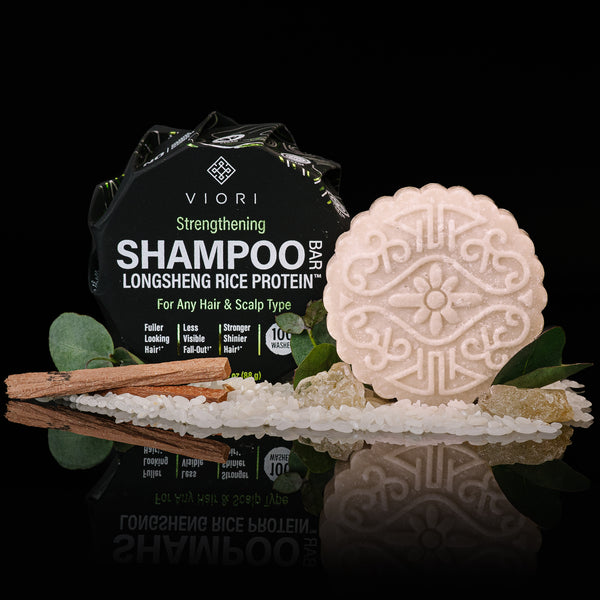
Viori uses fermented Longsheng rice water in a lower concentration specifically because overly concentrated rice water can disrupt hair and scalp pH if used too often. That’s the kind of nuance that separates a routine that feels great once from a routine that feels great month after month.
How to try beetroot shampoo without wasting your time
If you want to experiment with beetroot shampoo and get a fair read on it, don’t treat it like a one-wash verdict. Use a simple, controlled approach.
- Don’t skip conditioning. If you don’t follow with conditioner, you’re mostly testing “how your hair feels when it’s cleansed,” not whether beetroot is doing anything helpful.
- Match the cleanse to your scalp type. If you get oily by day 1-2, you need better oil control. If you’re not oily until day 4+, you likely need more moisture support.
- Watch your technique. Especially with bars: lather in hands, apply with fingertips, and avoid aggressive rubbing at the scalp and mid-lengths.
- Give it time. Some people notice a difference quickly; others need weeks to see scalp comfort changes. Viori generally recommends allowing 2-3 months before giving up on a new routine because results vary by person and goal.
The bottom line
Beetroot shampoo can be a fun, beneficial addition to a routine-but it’s not magic. The results people actually want (smoothness, shine, frizz control, scalp comfort) usually come down to fundamentals:
- pH balance
- cleansing strength that matches your scalp
- real conditioning and deposition
- fragrance tolerance
- porosity and handling
If you like ingredient-forward haircare but want it built on consistent hair science, a pH-balanced bar routine like Viori-with fermented Longsheng rice water and a conditioner designed to improve slip and cuticle smoothness-can be a smarter path to predictable results than chasing the next trendy plant.


