
If you’ve ever bought a “volumizing” product and ended up with hair that feels flatter by lunchtime, you’re not imagining it. Thin hair has a very specific set of needs, and most advice online treats it like a one-size-fits-all problem. After 20 years behind the chair, I can tell you this: the best hair products for thin hair aren’t just “lightweight.” They’re products (and routines) that manage cleansing, conditioning deposit, scalp balance, and friction with intention.
Here’s the part that surprises people: thin hair doesn’t fail because you used conditioner. It fails because the wrong materials are left in the wrong places-usually too close to the scalp, or not rinsed out thoroughly. When you understand the mechanics, thin hair becomes much easier to work with, and “volume” stops being a temporary styling trick and starts looking like a consistent, healthy baseline.
First, define what “thin hair” means (because it’s not always the same thing)
When someone says their hair is thin, they typically mean one of three things. Each one calls for a slightly different product strategy.
NOT SURE WHICH PRODUCT IS RIGHT FOR YOU?
TAKE THE QUIZTakes 30 seconds · 134,000+ customers matched
- Fine hair (small strand diameter): You may have plenty of hair, but each strand is delicate and collapses easily.
- Low density (fewer hairs per square inch): You see more scalp at the part or crown even if the strands aren’t especially fine.
- Hair that has become thinner over time: This can be shedding, breakage, or gradual miniaturization-often tied to scalp irritation, stress, hormones, or damage.
Why this matters: the “best” products for fine strands focus on reducing residue and improving body, while thinning-over-time often requires extra attention to scalp comfort and breakage prevention.
The overlooked reason thin hair gets weighed down: it’s physics and surface chemistry
Thin hair has less total keratin “mass” per strand. That means any coating-conditioning agents, heavy butters, oils, or film-formers-represents a bigger percentage of the strand’s weight. On coarse hair, that same coating might feel silky. On fine hair, it can turn into instant collapse.
But the real nuance is what I call the deposition problem. Hair is generally negatively charged (especially if it’s even slightly damaged). Many conditioning agents are positively charged and are designed to cling to hair. That’s fantastic for detangling and smoothness, but thin hair can tip into “too much of a good thing” fast-leaving you with roots that look greasy and lengths that separate into stringy pieces.
What the best shampoo for thin hair should do
Thin hair needs cleansing that’s effective but not aggressive. If a shampoo is too harsh or the pH is off, the cuticle lifts, friction increases, and that’s when you see the chain reaction: tangles, roughness, breakage, and the urge to pile on more products to “fix” it.
pH balance matters more than most people realize. Hair products generally perform best within a hair-friendly range (often cited as 3.5-6.5). When cleansing is too alkaline, hair can feel rougher over time and become harder to manage-especially if it’s fine.
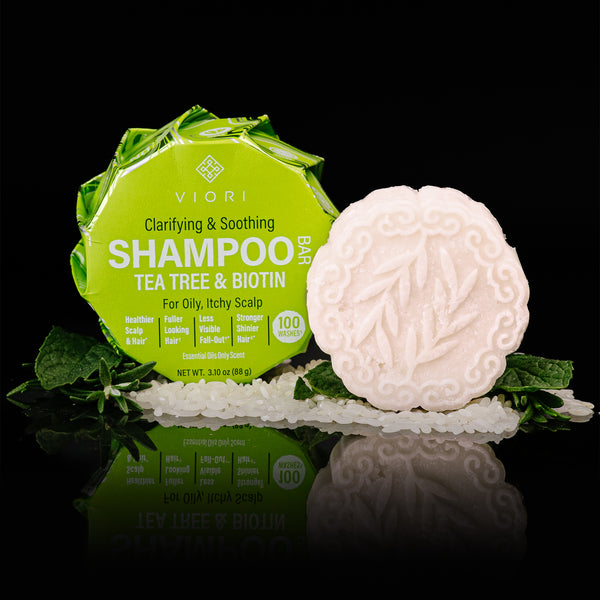
Viori shampoo bars are formulated with Sodium Cocoyl Isethionate (SCI), a mild cleanser sometimes nicknamed “baby foam” for its gentle performance. Viori bars are also pH balanced, which supports smoother cuticles and better long-term manageability-two things thin hair benefits from immediately.
Picking a Viori shampoo bar by scalp type
Your scalp type is one of the fastest ways to narrow down what will work. A simple guideline is how quickly oil returns after washing.
- Oily scalp: feels oily again in 1-2 days
- Normal scalp: feels oily around day 3
- Dry scalp: feels oily day 4+
If you’re oilier, Viori Citrus Yao is often a great starting point because it’s recommended for normal-to-oily scalps and includes citric acid in the scent composition, which helps break down oil. If you lean normal-to-dry, Hidden Waterfall, Terrace Garden, or Native Essence (unscented) are commonly better matches.
The conditioner mistake that flattens thin hair (and the fix that changes everything)
Skipping conditioner is one of the fastest ways to make thin hair more fragile. After cleansing, hair is more vulnerable to friction, heat, UV exposure, and everyday wear. Conditioner reduces friction so you lose less hair to breakage over time.
The issue is placement. For thin hair, conditioner belongs where hair is older and drier-usually mid-lengths to ends. When conditioner is applied at the scalp (especially in generous amounts), it increases deposition near the root and quietly cancels out volume.
Viori conditioner bars contain Behentrimonium Methosulfate (BTMS), a cationic conditioning ingredient used for slip, softness, and smoothing. It’s designed to adhere to hair (that’s the point), which is why thin hair does best with precision application and a thorough rinse.
How to condition thin hair without losing lift
- Apply conditioner from mid-lengths to ends (often below the ear line is perfect).
- Use less than you think you need; add water and emulsify in your hands first.
- Let it sit briefly, then rinse longer than you think. Thin hair rewards a thorough rinse.
Protein and strengthening: helpful, but dose matters
Thin hair often benefits from strengthening support because it’s more prone to breakage. The catch is that aggressive, frequent protein treatments can leave fine hair feeling stiff, especially if you’re not balancing with moisture and slip.
WHAT CUSTOMERS ARE SAYING
Real reviews for Tea Tree Shampoo Bar – Oily & Itchy Scalp | VIORI
Viori uses fermented Longsheng rice water and a low concentration of rice protein designed to be safe for frequent use. Fermentation is associated with increased levels of nutrients like inositol (Vitamin B8) and panthenol (Vitamin B5), ingredients that are widely used to support elasticity, smoothness, and overall hair feel.
A practical thin-hair routine with Viori (simple, but strategic)
If you want thin hair to look fuller consistently, keep the routine uncomplicated-but be intentional about scalp vs. ends.
If you have oily scalp + thin hair
- Shampoo: Viori Citrus Yao
- Conditioner: apply only to ends (choose a more moisturizing option on the ends if they’re dry)
- Focus: clean roots, protected ends, fewer “flat” days
If you have normal scalp + thin hair that falls flat
- Shampoo: Viori Hidden Waterfall (or Citrus Yao if oil builds quickly)
- Conditioner: minimal amount, mid-to-ends only
- Focus: reduce residue while keeping slip and shine
If you have a dry or sensitive scalp + thin hair
- Shampoo + Conditioner: Viori Native Essence (unscented)
- Focus: scalp comfort and calmness to support healthier hair retention
Two common thin-hair mistakes I see in real life
- Conditioner on the scalp “for hydration”: This is a major cause of flat roots. Keep conditioner on mid-lengths to ends and let your shampoo choice (plus a good rinse) do the scalp work.
- Too much friction with bar application: Especially if hair is fragile or color-treated, rubbing a bar directly on the head can create unnecessary cuticle disturbance. Build lather in your hands and apply with your fingers instead.
How long before you’ll notice a difference?
With thin hair, results usually show up in two phases. First, you’ll feel day-to-day improvements quickly-cleaner roots, more bounce, less tangling. Then, the bigger shift comes as breakage reduces and the scalp settles into a healthier rhythm.
- 1-3 washes: less residue, better movement, easier detangling
- 8-12 weeks: improved retention, less breakage, more consistent fullness
If you’re switching routines, it’s smart to give it time. Viori generally recommends trying products for 2-3 months before deciding-especially if your goal is long-term strength and scalp balance, not just a single good hair day.
The bottom line
The best hair products for thin hair aren’t the ones that promise “instant volume.” They’re the ones that respect how thin hair behaves: keep cleansing gentle, keep pH in a healthy range, keep conditioner off the roots, and keep friction low. When you get those fundamentals right, thin hair stops feeling difficult-and starts feeling predictably fuller, softer, and stronger.


