
“Best hair soaps” sounds like an easy category-until you realize people are using that phrase to describe very different products, with very different results. In the salon, I’ve watched clients switch to a bar expecting healthier hair overnight… then either swear they’ll never go back to bottles, or wonder why their hair suddenly feels rough, dull, or tangly.
The difference usually isn’t “bars vs. liquids.” It’s whether the cleanser chemistry is actually designed for hair, whether the formula is pH balanced, and whether you’re using the bar in a way that protects the cuticle instead of sandpapering it.
Below is the technical, stylist-approved way to think about hair soaps-without turning it into a chemistry lecture. Consider this your shortcut to picking a bar that behaves like a professional product, not a science experiment.
First, let’s define what “hair soap” really means
Most online roundups treat every cleansing bar like it belongs in the same bucket. In reality, “hair soap” typically points to one of two cleansing systems, and they don’t behave the same way on the head.
NOT SURE WHICH PRODUCT IS RIGHT FOR YOU?
TAKE THE QUIZTakes 30 seconds · 134,000+ customers matched
1) True soap (saponified oils)
Traditional soap is made by reacting oils with an alkali. That matters because true soaps often run more alkaline, and hair doesn’t love living in alkaline territory for long.
Here’s what can happen with true soap on hair, especially over repeated washes:
- Cuticle lift and swelling, which increases friction (hello, tangles)
- Dullness, because a rougher cuticle scatters light instead of reflecting it
- Hard-water issues, where minerals bind to soap and can leave a film on hair
This is why some people feel like they need extra steps to “fix” their hair after using soap-based bars. They’re often trying to compensate for alkalinity and mineral buildup.
2) Syndet bars (soap-free cleansing bars)
Syndet bars use gentle surfactants (cleansers) rather than true soap chemistry. When they’re formulated well, they can be pH balanced for hair and more consistent in different water types.
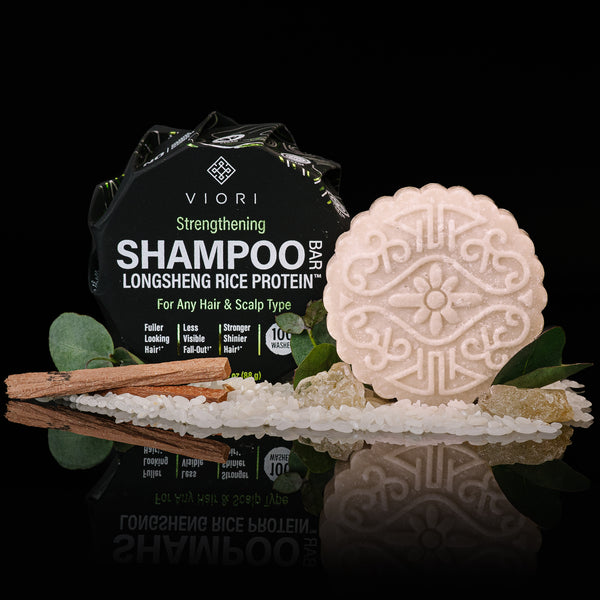
Viori is a great example of a bar system built specifically for hair: the shampoo bars use a mild cleanser system (including Sodium Cocoyl Isethionate, often nicknamed “baby foam” because it’s effective yet gentle) and are designed to be pH balanced-which is a big reason they tend to feel more “salon-clean” instead of “squeaky-clean.”
pH isn’t marketing-it’s cuticle mechanics
If you only remember one thing from this post, make it this: hair is a fiber, not a dish. It’s made of keratin, with an outer cuticle layer that behaves like shingles on a roof. When pH is too high (too alkaline), those shingles lift. Lifted cuticles create friction, and friction is what turns into tangles, breakage, and loss of shine.
Hair products generally perform best when kept in a hair-friendly pH range (often discussed as roughly 3.5-6.5). Viori specifically calls out that their bars are pH balanced, and from a stylist perspective, that matters because it supports smoother cuticle behavior over time-not just a nice first wash.
The angle most people miss: bar format changes your technique (and results)
Even the best formula can be sabotaged by the way a bar is used. Bars are concentrated solids, and that changes the physical forces you put on the hair.
If you rub a shampoo bar directly on your lengths, you create localized abrasion-especially on porous hair, fine hair, curly hair that tangles easily, or any hair that’s color-treated and already more fragile.
That’s why Viori recommends a method I’ve taught clients for years: build lather in your palms and apply with your hands, instead of scrubbing the bar directly on your head. It’s also the gentler approach for color-treated hair, because excess friction can open the cuticle and encourage fading-particularly if the color isn’t fully permanent.
The “best” hair soap is usually decided by your scalp, not your curl pattern
A lot of advice gets stuck on hair texture (straight vs. curly vs. coily). But the scalp is where your wash cycle is decided. Sebum output determines whether you feel clean for two days or five, and it also affects whether flakes are coming from oiliness or dryness.
Viori’s quick scalp-type guideline is refreshingly practical:
- Oily scalp: feels oily 1-2 days after washing
- Normal scalp: feels oily around day 3
- Dry scalp: feels oily 4+ days after washing
Why scent can matter (and it’s not just preference)
This is where Viori has a detail most brands never explain: even when the base formula is similar, certain bars can support different scalp needs. Viori notes that Citrus Yao contains citric acid, which helps break down oil effectively-one reason it’s often recommended for normal-to-oily scalps and for those trying to extend time between washes.
Protein and fermented rice water: powerful, but dosage matters
Rice water has been hyped for good reason, but here’s the part that rarely gets said out loud: too high a concentration, too often, can throw off balance. Viori addresses this directly by using a lower concentration of Longsheng rice water in a way designed to be safe and pH balanced for regular use, while still delivering rice-water-like benefits.
They also note that they use a low concentration of rice protein-which is smart, because protein can strengthen hair, but overdoing it can leave certain hair types feeling stiff or brittle if moisture balance isn’t maintained.
Conditioner bars: the electrostatic secret to softness
Shampoo cleans. Conditioner changes the feel of the hair by reducing friction and improving combability. A key reason conditioners work is charge: after cleansing, hair tends to be more negatively charged, and conditioning agents (often positively charged) can bind to the hair, smoothing it and adding slip.
Viori explains this clearly: conditioner helps replace that protective “buffer” after shampooing while your natural oils rebuild. And if you’ve ever wondered why conditioner bars don’t foam like shampoo bars, Viori spells that out too: shampoo contains the cleansing agent responsible for lather, while conditioner is meant to deposit emollients and conditioning ingredients-so it’s normal for it to feel more like a paste than a bubbly foam.
WHAT CUSTOMERS ARE SAYING
Real reviews for Rice Water Shampoo Bar – All Hair Types | VIORI
What “residue” usually means (and how to avoid it)
When someone says, “Bars leave a film,” I don’t automatically blame the bar. In most cases, it’s one of these:
- Hard water interacting with product remnants
- Using too much (bars are concentrated)
- Not rinsing long enough, especially with thick density hair
- Conditioner applied too close to the scalp
- Low-porosity hair holding onto heavier deposits
Viori notes that many customers report their bars don’t weigh hair down or leave residue, and that tracks with what I’d expect when a bar is pH balanced, used correctly, and matched to scalp type.
How to choose the best Viori bar for your hair
If you want a simple decision tree that’s still rooted in real hair science, start with your scalp.
- For oily scalps or faster-greasing roots: Viori often recommends Citrus Yao because it’s designed to help break down oil effectively.
- For dry scalp or dry scalp flakes: Viori commonly points toward Terrace Garden, Hidden Waterfall, or Native Essence shampoos (with Native Essence being the unscented, gentlest option for sensitive scalps).
- For oily roots but dry ends: a mix-and-match approach can work beautifully-use Citrus Yao shampoo at the scalp, then use a more moisturizing Viori conditioner on the mid-lengths and ends.
The best way to use a hair bar (so it performs like a pro product)
If you want your bar to feel like your best wash day-not like a compromise-use it with intention.
- Soak hair thoroughly before you start (bars need water to emulsify properly).
- Lather in your hands, then apply the lather to your scalp.
- Massage with fingertips (skip the nails).
- Let the suds rinse through your lengths rather than scrubbing the ends.
- Apply conditioner from mid-lengths to ends (unless your scalp is very dry and benefits from light conditioning).
- Let conditioner sit a few minutes, then rinse well.
Bottom line: “best hair soaps” aren’t a trend-they’re a system
The best hair soap isn’t the one that looks prettiest on the shower shelf. It’s the one that respects hair structure: pH balance, low friction, scalp-appropriate cleansing, and a real conditioning strategy.
That’s why a thoughtfully formulated bar system like Viori tends to win people over. When the chemistry is hair-friendly and your technique matches the format, bars can deliver clean, soft, shiny hair-without the long list of “workarounds” that give hair soaps a bad reputation in the first place.
If you want help dialing it in, start with two details: how quickly your scalp gets oily, and whether your hair is color-treated. From there, choosing the right Viori bar pair becomes much more straightforward.


