
After two decades behind the chair and formulating custom treatments for clients, I need to share something that might surprise you: most "personalized" hair care isn't actually that personal.
I've watched the customization trend explode over the past few years, and while I appreciate the industry's movement toward individualized care, there's a massive disconnect between what brands call "customized" and what your hair actually needs. Most systems ask you to take a quick quiz-hair type? Oily or dry? Curly or straight?-and then mix slightly modified versions of the same base formulas.
But here's what two decades of professional experience has taught me: your hair is far more complex, dynamic, and individual than any 10-question quiz can capture. Today, I want to pull back the curtain on what true customization could look like, exploring the technical realities that most brands ignore-and how you can use this knowledge to transform your own hair care approach.
The Microscopic Reality: Your Hair Under the Lens
Let's start at the level most customization services completely skip: the microscopic architecture of your hair.
When I examine hair under magnification in my studio, I see details that explain everything about why certain products work for some people and fail spectacularly for others. Yet these crucial factors never appear in customization quizzes.
The Cuticle Scale Pattern
Your hair's outer layer-the cuticle-doesn't just "open and close" like most articles suggest. Under a microscope, you'll see that cuticle scales have distinct patterns. Some people have tightly overlapping scales (like perfectly aligned roof shingles), while others have lifted or irregular scale edges.
This microscopic architecture determines whether heavy conditioning butters will absorb beautifully or create greasy buildup. It explains why your friend swears by that thick hair mask that makes your hair limp and lifeless. You don't have different hair types by the usual classification-you have different cuticle scale patterns.
The Medulla Mystery
Here's something that might blow your mind: not all hair contains a medulla (the innermost structural layer). Fine hair often lacks it entirely, while coarse hair usually has a thick, continuous medulla.
This isn't just a fun anatomy fact-it dramatically affects how your hair responds to heat styling, retains moisture, and reacts to protein treatments. I've seen clients whose hair became straw-like from protein treatments (typically those with sparse or absent medullae) and others whose hair transformed beautifully from the same products (those with dense medullae).
Yet I've never seen a single "personalized" hair care service ask about medulla density. Why? Because you can't easily assess it at home-but its impact on your hair's needs is enormous.
NOT SURE WHICH PRODUCT IS RIGHT FOR YOU?
TAKE THE QUIZTakes 30 seconds · 134,000+ customers matched
The Cortex Composition Variable
The cortex-your hair's middle layer containing all those structural proteins-has varying compositions even within a single person's head of hair. The ratio of ortho-cortex to para-cortex cells differs not just between people, but between individual strands.
This is why some sections of your hair might thrive on protein-rich treatments while others become brittle. It's why your hairline might behave completely differently from your crown. True customization would account for these variations, recommending different treatments for different areas of your head.
The Environmental Equation: Your Hair's Ever-Changing Context
Now, let's talk about something that challenges the entire premise of "finding your perfect product": your hair's needs aren't static.
This is where even expensive customization services fall short-they create a formula based on a single moment in time, ignoring the constantly shifting context in which your hair exists.
The Climate Factor
I've had clients move from Denver to Miami and suddenly find that their holy-grail products completely stopped working. This isn't random-it's science.
Hair keratin is hygroscopic, meaning it absorbs and releases moisture based on environmental conditions. The hydrogen bonds that give your hair its shape respond to atmospheric humidity and pressure. Someone living at high altitude in dry conditions needs fundamentally different formulations than someone at sea level in humid conditions-even if they have identical hair types on paper.
Here's the radical part: you need different products in January versus July.
This is one area where I've seen Viori's rice water-based formulations demonstrate a real technical advantage. The fermented rice water contains inositol, which creates a protective film using carbohydrate polymer chains. I know that sounds complex, but essentially it means the product creates a buffer between your hair and environmental moisture fluctuations-helping your hair maintain consistency despite climate chaos.
As someone who's worked with clients through Colorado winters and humid summers, I can't overstate how valuable this environmental resilience is.
The Water Quality Wild Card
Here's a variable that almost no customization service addresses: your shower water.
I learned this lesson early in my career when a client's beautiful color job turned brassy within two weeks-despite perfect aftercare. The culprit? She'd just moved to an area with extremely hard water. The calcium and magnesium minerals were creating buildup that altered how her hair absorbed and reflected light.
Professional colorists have adjusted formulations based on local water chemistry for decades, but consumer "customization" services rarely ask for your zip code's water quality data. Yet this factor can have more impact on how products perform than whether you classified your hair as "wavy" or "curly" on a quiz.
If you have hard water, you need periodic clarifying treatments and ingredients that can chelate (bind to and remove) mineral deposits. If you have soft water, you need lighter formulations because products will work more efficiently. Same hair, completely different needs based purely on geography.
The Seasonal Sebum Cycle
Dermatological research reveals something fascinating: your scalp's oil production follows circannual rhythms, with peak sebaceous activity typically occurring in summer and fall.
This means your natural oil production can vary by up to 40% throughout the year. A truly customized approach would adjust your cleansing intensity seasonally-lighter in winter, more thorough in summer for most people. Yet most "personalized" services recommend the same product year-round.
After years of tracking my clients' hair behavior, I've learned to proactively adjust their routines before they even notice the seasonal shift. In September, I'm already preparing winter care strategies. In March, I'm lightening up formulations for the oilier months ahead.
The Time Dimension: When You Care for Your Hair Matters
This is perhaps the most neglected frontier in hair care customization: chronobiology, or how the timing of your hair care affects its results.
Your Hair's Night Shift
Your hair follicles do most of their cellular division while you sleep, with peak activity occurring between 10 PM and 2 AM. During this window, scalp microcirculation increases, and the hair bulb becomes most receptive to nutrients.
Yet most of us use identical products in our morning and evening routines, completely ignoring this biological reality.
A sophisticated approach would use lightweight, penetrative treatments in the evening (when follicles are actively growing and most receptive) and protective, film-forming products in the morning (when hair needs defense against environmental stressors).
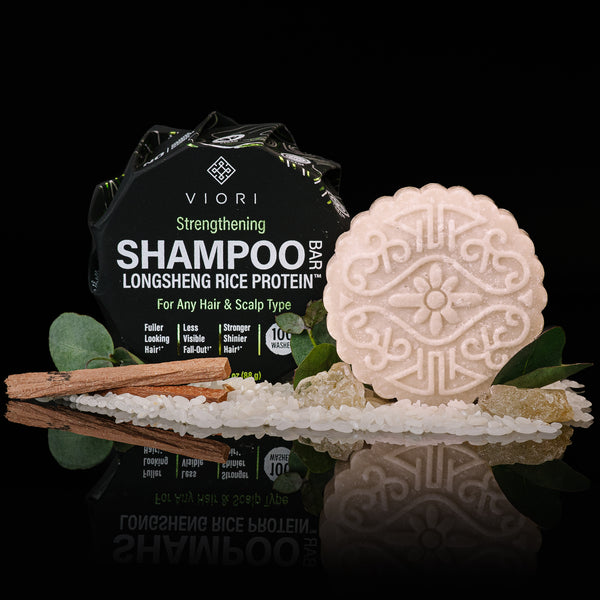
The ingredients in Viori's bars-particularly the bamboo extract and hydrolyzed rice protein-actually function differently depending on application timing. Evening application allows deeper penetration during your scalp's repair cycle. Morning application creates a protective barrier for the day ahead. Same product, different biological interaction based purely on when you use it.
The Hormonal Cycle Connection
For roughly half the population, hormonal fluctuations throughout the menstrual cycle significantly impact scalp oil production, hair texture, and even porosity. Estrogen levels affect sebaceous gland activity and can alter hair diameter by up to 10% during different cycle phases.
I've had countless clients tell me their hair "just acts weird" for a few days each month. It's not weird-it's hormonal, and it's completely predictable once you start tracking the pattern.
Pregnancy, postpartum, and perimenopause bring even more dramatic changes. I've seen clients whose straight hair developed waves during pregnancy, whose thick hair thinned postpartum, whose oily scalps became dry in perimenopause.
True customization would acknowledge these cyclical variations. Yet I've never encountered a "personalized" service that asks "What day of your cycle are you on?" or "Are you perimenopausal?"-despite these factors having more impact than whether you want "shine" or "volume."
The Microbiome Revolution: Your Scalp's Invisible Ecosystem
Let's venture into territory that represents the genuine future of customized hair care: the scalp microbiome.
Your Microbial Signature
Recent research in dermatological microbiology has revealed that each person's scalp hosts a unique community of microorganisms-bacteria, fungi, and yes, microscopic mites (everyone has them, don't worry).
This microbiome composition affects everything from dandruff susceptibility to how quickly your hair becomes oily. The dominant bacterial families on healthy scalps include Cutibacterium and Staphylococcus, but the ratios vary dramatically between individuals.
Here's where it gets interesting: some people have scalps dominated by lipophilic (oil-loving) organisms that thrive on sebum, while others have more diverse communities. This explains why some people's hair "gets greasy" within 24 hours while others can go a week between washes.
It's not just about how much oil your scalp produces-it's about which microbes are consuming those oils and how quickly.
How Products Affect Your Microbiome
Most commercial shampoos, with their harsh sulfates and aggressive preservatives, essentially nuke your scalp ecosystem-eliminating both problematic and beneficial organisms.
I've seen this play out countless times: someone starts using a harsh clarifying shampoo to combat oiliness, their hair feels amazing for a few days, then becomes greasier than ever. Their scalp microbiome has been disrupted, and the scalp overproduces oil trying to restore balance while opportunistic organisms overgrow in the absence of their natural competitors.
This is one reason I appreciate Viori's formulation approach. The pH-balanced, sulfate-free composition with fermented ingredients supports microbiome diversity rather than destroying it. The fermented rice water introduces beneficial organic acids and may provide prebiotic compounds that selectively support healthy microbial communities.
This isn't just marketing speak-it's applied microbial ecology. Instead of scorched-earth cleansing, you're supporting your scalp's natural ecosystem.
The future of truly customized hair care might involve scalp microbiome testing (already available in research settings) to determine which ingredients will support your unique bacterial ecosystem. Imagine selecting products based on your actual microbial profile rather than just "oily" or "dry."
The Molecular Interaction Problem: Why Ingredients Lists Aren't Enough
Professional formulators understand something crucial that simple customization overlooks: ingredients don't work in isolation. They interact in complex, sometimes unpredictable ways.
The Protein-Moisture Balance Chemistry
Everyone in the hair care world talks about protein-moisture balance, but few understand the underlying chemistry. Here's what's actually happening:
Hair keratin is approximately 95% protein. Some proteins are film-forming (they sit on the hair surface), while others are penetrative (they enter the cortex). The determining factor is molecular weight-proteins below 1,000 Daltons can penetrate; larger molecules cannot.
Viori uses hydrolyzed rice protein with an average molecular weight of 150-2,000 Daltons, meaning some molecules penetrate while others form a protective film. This dual action is why rice protein often works beautifully for people who react poorly to other proteins.
But here's the complexity: the effectiveness depends on what else is in the formulation. Humectants like glycerin (also present in Viori bars) can help shuttle smaller proteins into the hair shaft, while emollients seal the cuticle afterward, locking everything in.
True customization would consider not just which ingredients to include, but their molecular weights, concentrations, and the specific sequence of application to optimize these interactions for your hair's current condition.
The Chelation Balance
Here's a technical consideration almost never addressed in customization: chelation.
WHAT CUSTOMERS ARE SAYING
Real reviews for Rice Water Shampoo Bar – All Hair Types | VIORI
Hard water deposits mineral buildup on hair-primarily calcium and magnesium ions that bind to the negatively charged hair surface. These minerals alter your hair's electrical properties and its ability to absorb beneficial ingredients.
Some ingredients act as mild chelators, binding to these minerals and removing them. This is beneficial-to a point. Excessive chelation can strip hair, leaving it vulnerable.
The balance point varies based on your water hardness, your hair's current mineral load, and even the weather (humidity affects how minerals interact with hair). This is information that static, one-time customization simply cannot account for.
Your Hair's History: The Damage Archaeology Factor
Professional hair analysis reveals something that consumer quizzes completely miss: hair damage isn't uniform. It accumulates in patterns based on your individual behavior and history.
The Weathering Gradient
Hair emerges from your scalp in relatively pristine condition. As it grows and ages, it accumulates damage-a process trichologists call "weathering."
But this weathering follows individual patterns. Someone who frequently wears tight ponytails will have characteristic damage at specific stress points. Heat styling devotees show distinct thermal damage patterns. Chemical treatment history creates yet another damage architecture.
Your hair isn't just "damaged" or "healthy"-it's a temporal record of everything you've done to it. Older hair at the ends shows more accumulated weathering than newer growth near the scalp.
This means different sections of the same strand need different treatments. I often apply intensive repair to my clients' ends while using lighter products on their mid-lengths and barely touching their roots. Yet most customization approaches recommend the same product for your entire head.
The Chemical Memory Effect
If you've ever had any chemical treatment-color, bleach, perms, relaxers, keratin treatments-your hair retains a structural memory of that process, sometimes for years.
Chemical treatments alter the disulfide bonds that give hair its shape and strength. Even after the visible effects fade, these molecular changes persist.
Someone who bleached their hair three years ago and has since grown it out still has that chemically altered hair, now weathered and fragile, at their ends. Someone who stopped heat styling six months ago has a distinct demarcation point where thermal damage ends and healthier hair begins.
I can usually identify this transition point just by feeling a client's hair. Above it, the hair has better elasticity and smoother texture. Below it, you can feel the damage history.
True customization would involve different treatments for different sections of hair based on this damage archaeology-something you can do yourself once you understand your hair's story.
The Sensory Science: Why How Products Feel Matters
Here's an angle rarely explored in technical hair care discussions: the sensory experience of your products affects their actual efficacy through measurable biological mechanisms.
Scent and Stress Hormones
Your olfactory receptors connect directly to the limbic system, which regulates stress hormones. Elevated cortisol negatively impacts hair growth by prematurely pushing follicles into the resting phase.
Fragrances that reduce perceived stress-typically those containing lavender, citrus, or vanilla components-can theoretically support hair health by modulating your hormonal environment.
Viori's scent profiles (like Terrace Garden's florals, Hidden Waterfall's vanilla-musk, or Citrus Yao's citrus burst) aren't just aesthetic choices-they're interacting with your endocrine system. Someone who finds citrus scents invigorating might experience different cortisol


