
Biodegradable shampoo pods are everywhere right now-sleek little portions that promise less waste, less mess, and a simpler routine. I understand the appeal. Anything that helps people cut down on packaging while keeping hair healthy is worth paying attention to.
But here’s the detail most people miss: a pod isn’t a shampoo. It’s a delivery system. And when you change the delivery system, you change how the formula has to be built, how it behaves on the scalp, and what ends up going down the drain. That’s where the real story is.
First, let’s untangle the language: biodegradable vs. water-soluble vs. compostable
In everyday conversation, these words get used interchangeably. Technically, they’re very different-and with pods, that difference matters.
NOT SURE WHICH PRODUCT IS RIGHT FOR YOU?
TAKE THE QUIZTakes 30 seconds · 134,000+ customers matched
- Water-soluble means the film dissolves in water. It can “disappear” in the shower without truly breaking down biologically in the environment.
- Biodegradable means microorganisms can break the material down into simpler compounds over time-but the speed and completeness depend on the setting (wastewater, soil, waterways).
- Compostable usually refers to breakdown under specific composting conditions, which may not match what happens in a home bathroom or municipal water system.
If you take just one thing from this section, make it this: dissolving is not the same as biodegrading. A film can melt away in your hands and still linger downstream depending on the polymer chemistry, additives, and local treatment conditions.
The formulation challenge nobody talks about: pods often force “high-concentration” shampoo design
Pods are typically compact, which often means the shampoo inside is more concentrated than what you’d pour from a bottle. That concentration changes the entire feel of the wash.
When a formula is concentrated, the first few seconds on the scalp can be the most intense-before water fully disperses it. That can translate to:
- more “bite” or tightness on sensitive scalps
- less slip in the early stage of washing (when tangles can start)
- more variability depending on water hardness and how quickly the pod dissolves
This isn’t me saying pods are automatically harsh. It’s me saying pods are harder to formulate well than most people realize, because they ask a lot from the chemistry in a very small package.
pH: the quiet variable that can make or break your hair
Healthy hair behavior is heavily influenced by pH. In professional terms, you want a formula that’s pH-balanced for hair-because pH affects how the cuticle lays down, how much friction you feel, and how much frizz shows up once you dry.
When pH drifts too high, the cuticle can swell and lift more easily, which often shows up as roughness, tangling, and dullness. A well-designed cleanser keeps hair feeling clean without leaving it feeling “squeaky.”
The most overlooked sustainability question: what happens after the pod dissolves?
This is the angle I wish more people discussed. Even if the pod film is truly biodegradable, the bigger environmental “load” is what you’re washing off your hair and sending into wastewater.
Shampoo pods still deliver wash-off ingredients like:
- cleansing agents (surfactants)
- conditioning agents and slip boosters
- fragrance components
- stabilizers and other functional ingredients
So the real test of an eco-minded pod isn’t only whether the wrapper breaks down. It’s whether the full formula is designed with environmental fate in mind-meaning it rinses clean, performs efficiently, and relies on ingredients that break down responsibly after use.
A stylist’s perspective: pods can change the “friction economy” of wash day
Washing your hair is chemistry plus mechanics. Water, product, cuticle state-and your hands working through the hair. Pods often create a two-step sensation:
- Dissolve phase: the pod is melting and the cleanser can be locally concentrated, which may feel draggy.
- Lather phase: once dispersed, it feels more like a typical wash.
That first phase is where I see problems pop up for certain hair types-especially fine hair that tangles fast, curly hair that’s friction-sensitive, and color-treated hair that doesn’t love aggressive manipulation.
More friction early in the wash can mean more cuticle disruption. And when the cuticle is stressed, you’ll often notice it as:
- extra tangling mid-shower
- frizzier texture after drying
- the feeling that you need heavier conditioner to “fix” what shampoo just did
When “biodegradable” becomes wasteful: storage and stability issues
Bathrooms are humid. Steam is constant. And many pod systems are sensitive to that reality. If pods stick together, partially dissolve in storage, or tear, they’re more likely to get tossed.
From a sustainability standpoint, product waste is often worse than packaging waste. The most eco-friendly option is the one that stays stable, lasts a long time, and works well enough that you don’t need to double up or overuse it.
WHAT CUSTOMERS ARE SAYING
Real reviews for Rice Water Shampoo Bar – All Hair Types | VIORI
How to evaluate biodegradable shampoo pods like a pro (a quick checklist)
If you’re shopping this category and want to look past buzzwords, here are the practical questions I’d ask:
- Film claims: biodegradable where, exactly (wastewater, compost, marine)? Over what time frame?
- Formula design: does it cleanse without leaving hair squeaky, rough, or coated?
- pH: is it clearly described as pH-balanced for hair?
- Conditioning approach: does it rely on heavy buildup-prone ingredients to compensate for harsh cleansing?
- Fragrance options: is there an unscented choice for sensitive scalps?
- Dose reality: is one pod truly enough for your hair density and length?
A more straightforward path to low-waste haircare
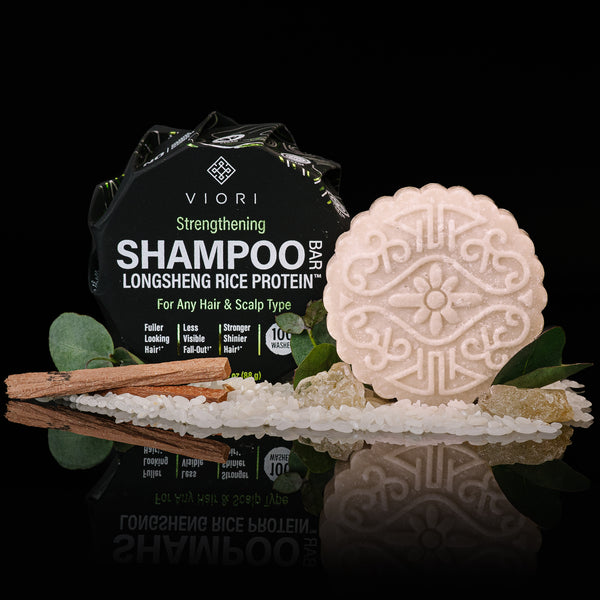
If your goal is to reduce packaging without gambling on film chemistry or humidity-sensitive storage, a solid format is often the cleanest solution. That’s one reason I’m such a fan of how Viori approaches sustainability: pH-balanced shampoo and conditioner bars that avoid plastic packaging and focus on consistent, hair-friendly performance.
And from a practical hair standpoint, technique matters, too. If you’re using any solid cleanser (pods, bars, anything concentrated), you’ll usually get better results when you build lather in your hands and distribute it through the hair, rather than aggressively rubbing a concentrated product directly on the scalp and lengths.
Final thoughts
Biodegradable shampoo pods can be a smart idea when they’re executed as a complete system: a film that breaks down in real-world conditions, plus a formula that performs gently, rinses clean, and behaves responsibly after it leaves your shower.
But they’re not automatically “better” just because they look greener. In haircare, the best choices are the ones that respect both sides of the equation: the health of your hair and scalp and the reality of what happens after rinse-off.


