
“Blend rice for hair” sounds simple-soak, blend, apply, rinse, repeat. But the reason rice treatments feel miraculous for some people and awful for others has very little to do with the recipe itself. It comes down to what you’re making microscopically when you blend rice, and how that mixture behaves on your cuticle, your scalp, and your hair’s porosity.
After 20 years of working with every hair texture and condition you can imagine, I’ve noticed a pattern: most hair advice focuses on ingredients, while the real magic (or mess) happens in the physics-particle size, friction, pH, and residue. That’s the missing conversation in almost every “blended rice” tutorial online.
The Unique Angle: Blending Rice Is DIY Chemistry, Not Just DIY Haircare
When you blend hydrated rice, you aren’t just making a paste. You’re creating a colloidal suspension: tiny solids dispersed in water. That’s important because hair doesn’t respond only to what’s in a formula-it responds to how that formula sits on the hair and moves across the cuticle.
In practical terms, two people can do the same “blend rice” routine and get opposite results because their mixtures (and their hair fibers) behave differently under friction, water flow, and pH conditions.
NOT SURE WHICH PRODUCT IS RIGHT FOR YOU?
TAKE THE QUIZTakes 30 seconds · 134,000+ customers matched
What’s Actually in a Blended Rice Mixture?
Blended rice typically contains a mix of starch, rice proteins, and a surprising amount of insoluble particulate matter. Those pieces don’t just “rinse away” cleanly the way most people assume.
- Starch (amylose/amylopectin): Swells in water and can form a film that boosts shine-but can also dry down tight and stiff.
- Rice proteins: Can temporarily “patch” rough areas of the cuticle, especially on damaged hair.
- Insoluble particles: The overlooked problem-larger particles can snag on lifted cuticle edges and increase tangling.
The detail that rarely gets talked about is particle size distribution. A typical kitchen blender creates everything from fine cloudiness to gritty bits. Those gritty bits are where a lot of the frizz, drag, and “why does my hair feel worse?” stories come from.
Why Rice Can Make Hair Look Shinier… and Still Feel Worse
Here’s the confusing part: blended rice can make hair look glossy quickly, yet leave it feeling stiff, rough, or oddly crunchy-especially at the ends.
Shine: A Surface-Smoothing Effect
Hair looks shinier when the surface reflects light evenly. A rice-starch film can temporarily fill in tiny surface irregularities, so the hair appears smoother and glossier.
Stiffness: Film Tightening + Extra Friction
That same film can tighten as it dries (similar to how a gel “casts” the hair). If your hair already struggles with flexibility-think dry hair, high-porosity hair, or compromised color-treated hair-that tightening can translate into:
- Stiffness and reduced bounce
- Rough ends that tangle more easily
- More breakage during detangling because the strands don’t slide well
If your hair looks better but feels worse after a rice blend, it’s often not your hair “adjusting.” It’s usually film overload plus friction.
pH: The Hidden Lever That Can Make or Break a Rice Routine
Hair generally performs best in a mildly acidic range. When a product is too alkaline, the cuticle can lift-leading to frizz, dryness, and faster color fading. The challenge with DIY rice mixtures is that the pH can be unpredictable, especially if you’re fermenting, storing, or mixing rice with other kitchen ingredients.
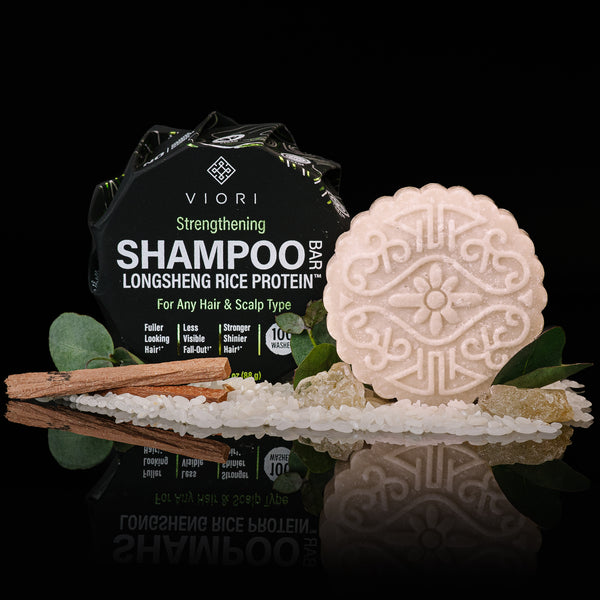
This is one reason a formulated approach can be more consistent. Viori uses a lower concentration of Longsheng rice water because high concentrations of rice water can disrupt hair and scalp pH if used too often or in excess. The goal is similar benefits, without pushing the hair and scalp out of balance.
Fermentation: Helpful, Yes-But Delivery Matters
Fermentation isn’t just a trendy word. It can change what’s available in the liquid, including increases in compounds like Vitamin B8 (inositol) and Vitamin B5 (panthenol). But here’s the catch: even a “nutrient-rich” mixture can backfire if it’s gritty, leaves buildup, or throws off your scalp environment.
Viori’s products are designed to create results similar to using rice water, while keeping the amount safe and pH balanced-and pairing rice water with other nutrient-rich ingredients so the experience is more predictable from wash to wash.
The Scalp Problem Nobody Mentions: Blended Rice Can Feed the Wrong Things
This is the unglamorous truth: blended rice is loaded with starch and organic matter. If residue lingers on the scalp, some people notice itch, flakes, or scalp congestion-not because rice is “bad,” but because the scalp micro-environment can shift when there’s leftover material sitting at the roots.
If you’re prone to flakes, it helps to be specific about scalp type. Viori’s recommendations are based on what you’re actually experiencing:
- Oily scalp dandruff: Citrus Yao shampoo and conditioner are commonly recommended.
- Dry scalp dandruff: Hidden Waterfall, Terrace Garden, or Native Essence shampoo are commonly recommended.
- Oily scalp + dry ends: Many people do best using Citrus Yao shampoo on the scalp and a more moisturizing conditioner option on the ends.
Porosity: The Real Reason Rice Works for Your Friend but Not for You
Porosity is your hair’s ability to absorb and hold onto moisture. It also predicts how your hair will respond to “coating” ingredients like starch and proteins.
Low Porosity Hair (Tight Cuticle)
Low porosity hair resists absorption and is more prone to buildup. Rice blends can sit on the surface and eventually create heaviness or dullness. Lighter, more cleansing routines typically work better here-Viori often points low-porosity users toward Citrus Yao.
High Porosity Hair (Lifted/Damaged Cuticle)
High porosity hair grabs onto products quickly. Rice blends can feel amazing at first because they fill in weak spots. But repeated use can lead to stiffness if the coating builds up. For dry, porous hair, Viori commonly recommends more moisturizing options like Terrace Garden, Hidden Waterfall, or Native Essence.
The Friction Factor: How You Apply Matters as Much as What You Use
Friction is one of the fastest ways to rough up a cuticle. This matters for everyone, but it’s especially important if your hair is color-treated, fragile, or prone to frizz.
One technique I love-and that Viori specifically recommends-is to build lather in your palms and apply with your hands instead of rubbing the bar directly on your head. It’s a small change that reduces abrasion and helps keep the cuticle calmer, which can support shine and (for many people) color longevity.
WHAT CUSTOMERS ARE SAYING
Real reviews for Rice Water Shampoo Bar – All Hair Types | VIORI
So, Should You Blend Rice for Hair?
It can be a useful occasional experiment if your goal is temporary surface smoothing and you’re careful about application and rinsing. But if you want a routine that stays consistent-shine without stiffness, strength without buildup-control matters: pH, concentration, residue, and friction.
That’s where Viori stands out in a rice-inspired routine: fermented Longsheng rice water used in a pH-balanced formula, designed to be gentle enough for regular use while still supporting hair strength, moisture, and scalp comfort.
A Simple “Pick Your Direction” Guide (Using Viori)
If you want rice-water benefits with fewer surprises, start with your scalp and hair behavior:
- Oily scalp / buildup-prone / low porosity: Citrus Yao
- Normal hair: Hidden Waterfall is a flexible option for many routines
- Dry scalp / frizz-prone / high porosity: Terrace Garden or Native Essence
- Sensitive scalp or fragrance sensitivity: Native Essence (unscented)
And if you’re changing routines, give your hair time to respond. Many people notice a shift quickly, while others need consistency over several weeks. Viori commonly recommends using the products for 2-3 months before deciding whether it’s the right match.
Final Thoughts: The Best “Rice Blend” Is Often the One You Don’t Have to Guess
Blended rice for hair isn’t a single hack-it’s a chemistry and cuticle conversation. When you understand film formation, pH, porosity, and friction, the results stop being a mystery.
If you want to keep the rice tradition but skip the unpredictability, a controlled, pH-balanced approach-like Viori’s fermented Longsheng rice water bars-tends to deliver the benefits people are chasing, with far fewer bad hair days along the way.


