
If you’ve ever stepped out of the shower, realized you’re running late, and wondered whether dry shampoo can “save” damp roots-you're not alone. The idea makes sense on paper: dry shampoo absorbs oil, water makes hair look flatter, so why not use one to cancel out the other?
Here’s the truth from behind the chair: you can use dry shampoo on wet hair, but most of the time you won’t like the result. And it’s not just because it’s “less effective.” The real issue is that wet hair changes how dry shampoo behaves-sometimes turning it into a root-level mess that’s harder to brush out and more likely to irritate your scalp.
What dry shampoo is designed to do (and the environment it expects)
Dry shampoo works best in a very specific situation: dry hair with oily roots. Most formulas rely on fine powders that cling to sebum (your scalp’s natural oil), soaking it up so hair looks less shiny and feels less greasy.
NOT SURE WHICH PRODUCT IS RIGHT FOR YOU?
TAKE THE QUIZTakes 30 seconds · 134,000+ customers matched
In general, dry shampoo is built around a few common components:
- Oil-absorbing powders (often starches and/or mineral powders)
- A delivery system (aerosol spray or loose powder)
- Texture and feel modifiers (to reduce grit or add grip)
- Fragrance (because it’s meant to stay in your hair until you wash)
On dry hair, those particles land where they need to land, bind to oil, and disperse fairly evenly with a little massaging and brushing. That’s the “magic.”
Why water changes everything: the chemistry and the physics
When hair is wet or even very damp, you introduce a major wildcard: water competes with oil. Instead of particles immediately grabbing onto sebum, many powders begin reacting to moisture first. And that’s where problems start.
On damp roots, dry shampoo is more likely to:
- Clump instead of spreading evenly
- Stick to itself and to the hair in patches
- Dry into residue that feels coated or gritty
- Leave hair looking dull in an uneven, “dusty” way
The rarely discussed issue: the “starch gel” effect
This is the part you don’t hear enough about online, but it’s one of the most common reasons people hate what happens when they apply dry shampoo to wet hair. Many dry shampoos use starch-like powders. When those starch particles get wet, they can hydrate and swell. Instead of staying a fine, brushable powder, they can start behaving more like a paste.
That paste-like effect can create what I call the starch gel problem at the roots:
- Hair drying in stuck-together sections
- A tacky or “dirty” feeling at the scalp
- White/gray cast that’s stubborn to remove
- Patchy dullness instead of an even refresh
And when your roots feel weird, most people start scratching or scrubbing to break it up. If your scalp is sensitive, that can quickly turn into irritation-and sometimes even flakes that weren’t there to begin with.
Why wet application can make buildup more likely
Hair isn’t smooth. The outer layer (the cuticle) is made up of overlapping scales. When hair is wet, the fiber swells slightly and the surface behaves differently. Fine powders can get caught in that texture and then dry in place, which makes them harder to remove later.
That’s why someone can apply dry shampoo on damp hair and end up saying, “It feels heavier,” or “My roots look worse.” The product didn’t just sit there-it set there.
So… is it ever a good idea?
There are a few situations where it can be workable, but the conditions are narrow and the technique matters.
1) Slightly sweat-damp roots (not dripping, not freshly washed)
If your hair is only a little damp from sweat-think post-workout roots-dry shampoo can sometimes help. The key is what happens next: you need to blow-dry your roots right after. The airflow and heat help re-dry the hair quickly and reduce the chance of paste-like clumping.
2) A tiny amount for styling grip
If you’re using dry shampoo more like a texture aid (for volume, grip, or a more “lived-in” base for styling), a very small amount on towel-damp hair can work if you’re blow-drying immediately. In this scenario, you’re using it for friction and hold, not really for oil control.
3) Emergency appearance fix (with a wash coming soon)
If you need your part line to look less shiny for a quick moment, you might get away with it. Just know you’re gambling on unevenness, and it’s best treated as a temporary cosmetic patch-not a routine.
When you should skip it completely
Using dry shampoo on wet hair is most likely to backfire if any of the following apply:
- You’re prone to itching, flakes, or scalp sensitivity
- Your hair is fine and shows residue easily
- You already struggle with buildup or “coated” roots
- You plan to air-dry (residue can dry into place)
- You’re relying on dry shampoo repeatedly instead of cleansing
If you already did it: how to fix wet dry shampoo roots
If your roots feel sticky, heavy, or clumpy after applying dry shampoo to damp hair, here’s the fastest way to recover without making it worse.
WHAT CUSTOMERS ARE SAYING
Real reviews for Rice Water Shampoo Bar – All Hair Types | VIORI
- Stop adding product. More powder usually means more clumping.
- Blow-dry the roots with solid airflow (medium heat is fine).
- Once fully dry, brush thoroughly from scalp outward to break up deposits.
- If it still feels coated, wash your scalp properly and rinse extremely well.
- Condition mids and ends to restore slip and reduce friction.
A better long-term fix: refresh your routine, not your residue
If you’re trying to make dry shampoo work on wet hair, it usually means something else is going on-your scalp gets oily fast, your ends feel dry, or you’re stuck in the cycle of overwashing and overcorrecting.
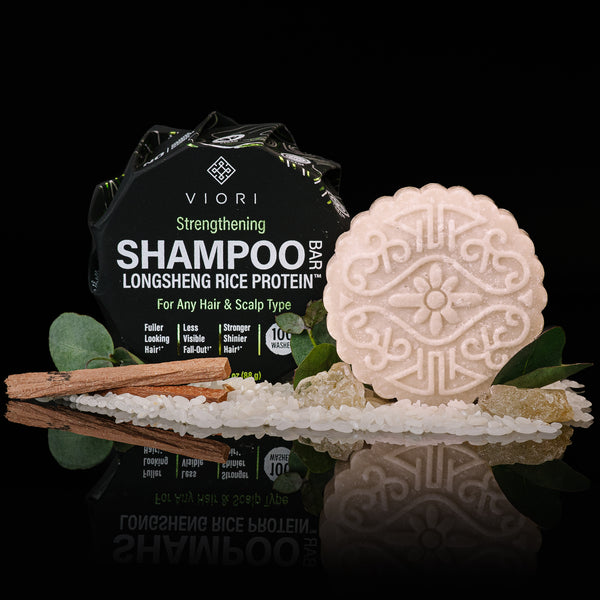
Dialing in cleansing and conditioning goes further than any shortcut. With Viori shampoo and conditioner bars, you can match your routine to your scalp type and reduce the urge to pile on leave-on powders.
- Oily or greasy scalp: Viori Citrus Yao is typically the best fit and is often used to help manage excess oil.
- Dry or sensitive scalp: Viori Terrace Garden, Hidden Waterfall, or fragrance-free Native Essence tend to feel more comfortable and moisturizing.
One pro technique that makes a big difference-especially if you’re trying to be gentle on your scalp or preserve color-is to lather the shampoo in your hands and apply the lather with your fingertips rather than rubbing the bar directly on your head.
And don’t underestimate conditioner. Shampoo lifts away oil and debris; conditioner helps re-smooth the hair surface and protect the strand. When hair has better slip and less friction, it’s easier to style, less prone to breakage, and often looks “fresher” longer.
The bottom line
Dry shampoo on wet hair is possible, but it’s usually a setup for clumps and buildup. The most common issue is that powders-especially starches-don’t stay airy and brushable when they meet water. They swell, they patch, and they can dry down into a residue that makes your roots feel worse than before.
If you absolutely must try it, reserve it for slightly damp roots and blow-dry immediately. Otherwise, you’ll get better results (and a happier scalp) by focusing on a routine that keeps oil balanced in the first place-especially with a scalp-matched wash and condition system like Viori.


