
If you’ve found yourself searching “el indio shampoo”, odds are you’re not just browsing for another cleanser. You’re looking for something that feels rooted in tradition-something that promises hair that’s stronger, shinier, and healthier over time.
As a stylist, I love that instinct. But I’m also going to give you the part most articles skip: heritage-inspired haircare succeeds or fails on chemistry, not storytelling. Once you understand a few technical basics-pH, cleansing strength, conditioning “deposit,” and protein load-you can predict pretty accurately whether a formula will make your hair feel incredible… or leave it dry, heavy, or irritated.
What people usually mean by “el indio shampoo”
In real-world conversations, this kind of keyword typically points to an ancestral or heritage-coded shampoo style. That usually means one (or more) of these ideas: more natural-feeling ingredients, ritual-inspired routines, plant-forward formulas, and results that claim to support growth, thickness, or scalp health.
NOT SURE WHICH PRODUCT IS RIGHT FOR YOU?
TAKE THE QUIZTakes 30 seconds · 134,000+ customers matched
The important thing is to separate the goal (healthier hair and scalp) from the method (how the formula actually behaves on your hair type).
The three “heritage shampoo” formula styles (and who they work for)
1) Cleansing-first formulas
These are designed to give you that ultra-clean, fresh-root feeling-sometimes the kind that makes your hair squeak. For certain scalps, that can feel amazing.
- Best for: oilier scalps or people who hate any leftover residue
- Watch-outs: over-cleansing can trigger tightness, frizz, irritation, and even rebound oil
2) Oil-buffered cleansing (cleanse + softness)
This category tries to cleanse while also leaving behind softness, slip, and shine. It’s often the “my hair feels like silk” experience-when it matches your porosity.
- Best for: dry hair, coarse strands, higher porosity, or damaged ends
- Watch-outs: can feel heavy or coating on fine hair, low-porosity hair, or oily scalps
3) Rinse-inspired formulas (rice water / ritual-inspired care)
This is the category people don’t evaluate deeply enough. Rinse traditions can be beneficial, but they’re sensitive to two things: concentration and pH stability.
Here’s the nuance: using rice water too strong or too frequently can disrupt hair and scalp pH, which may show up as roughness, dullness, tangles, or a scalp that suddenly feels “off.”
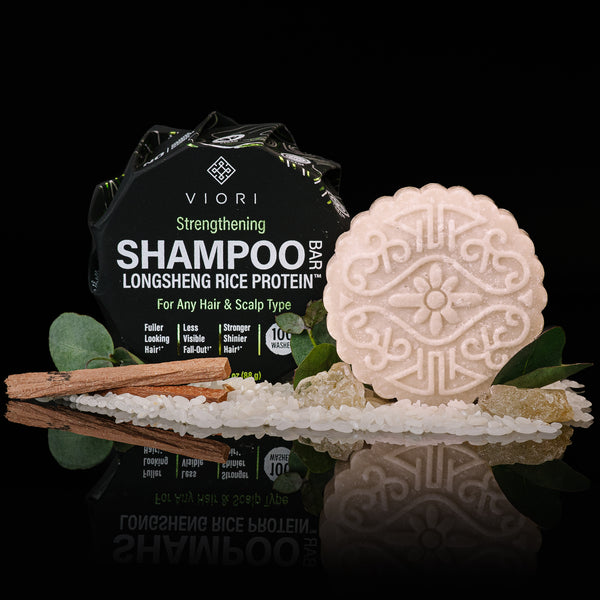
That’s one reason Viori takes a measured approach. Viori uses a lower concentration of fermented Longsheng rice water because high concentrations can disrupt pH if overused. The formula is designed to stay pH balanced while still supporting softness, shine, strength, and scalp comfort.
The overlooked secret: scalp ecology matters more than hype
Most people shop for shampoo based on what they want their strands to look like-thicker hair, faster growth, less breakage. But long-term results almost always come down to scalp ecology: oil patterns, barrier health, and balance.
If a cleanser pushes the scalp too far (too harsh, too alkaline, too stripping), it can start a chain reaction that looks like “my hair is getting worse” even when you’re washing more often:
- tightness or irritation
- flakes that weren’t there before
- oil that comes back faster (rebound oil)
- more tangling and breakage from roughened cuticles
Viori’s shampoo bars use sodium cocoyl isethionate as the cleanser, which is known in the hair industry as a gentle, creamy-foam surfactant. Pair that with a pH-balanced approach, and you’re typically setting the stage for calmer, more consistent scalp behavior over time.
The protein paradox (why “strengthening” can feel drying)
Rice-forward routines often come with a “stronger hair” promise, and protein can absolutely help-when it’s used wisely. The problem is that not every head of hair likes a heavy protein routine.
Too much protein (or protein too often) can make some hair types feel stiff, rough, or brittle, especially if your hair is low-porosity or not actually damaged. Viori notes that it uses a low concentration of rice protein designed to be safe even for frequent use, which helps reduce the risk of tipping into that crunchy, protein-overloaded feel.
Porosity: the quiet variable that changes everything
If you’ve ever wondered why the same shampoo makes one person’s hair glossy and another person’s hair frizzy, porosity is usually the answer. Porosity is basically your hair’s ability to absorb and hold onto moisture and ingredients.
A quick at-home porosity check
- Brush your hair so you’re working with a clean shed strand.
- Drop one strand into a glass of water.
- If it floats, your hair is likely low porosity.
- If it sits mid-glass, you’re likely medium porosity.
- If it sinks, you’re likely high porosity.
Viori’s guidance lines up well with how I’d map porosity and scalp type in a salon:
- Low porosity / oily-leaning: lighter, more cleansing options tend to perform best (Viori often recommends Citrus Yao for oil control, partly due to citric-acid-related properties in the scent blend).
- High porosity / dry-leaning: more moisturizing options are usually a better match (Viori commonly points people toward Terrace Garden or Native Essence).
- In-between / flexible: many people do well with Hidden Waterfall.
Bars vs. liquid: the friction factor that affects shine and color
Shampoo bars can be fantastic-but they change the mechanics of washing. The biggest mistake I see is scrubbing the bar directly on the hair like you’re washing a dish.
That extra friction can lift the cuticle, increase tangling, and for some color types, it can even contribute to quicker fading. Viori gives a smart recommendation here: build lather in your hands and apply with your palms and fingers instead of rubbing the bar directly on your head.
Dandruff isn’t one thing (so the “best shampoo” isn’t one thing either)
Dandruff advice gets messy online because people treat it like a single condition. In practice, the routine depends on whether you’re dealing with an oily scalp dandruff pattern or a dry scalp dandruff pattern.
WHAT CUSTOMERS ARE SAYING
Real reviews for Rice Water Shampoo Bar – All Hair Types | VIORI
- Oily scalp dandruff: Viori typically recommends Citrus Yao shampoo and conditioner.
- Dry scalp dandruff: Viori typically recommends Hidden Waterfall, Terrace Garden, or Native Essence shampoo.
- Oily scalp but dry ends: a common strategy is Citrus Yao shampoo on the scalp and a more moisturizing conditioner option just on the ends.
Fragrance sensitivity: the difference between “great hair” and an angry scalp
Here’s a truth that saves a lot of people months of frustration: sometimes the formula is fine, but your scalp just doesn’t like fragrance. If you’re sensitive, reactive, or prone to scalp issues, an unscented option can be the easiest way to remove a major variable.
Viori offers Native Essence as an unscented option with no added fragrance, which can be a strong choice for sensitive scalps or anyone who simply prefers fragrance-free care.
How long should you test a new shampoo routine?
Some people feel a difference after one wash, but most hair and scalp changes are slower and more subtle. If you’re switching routines-especially away from harsh cleansers or heavy buildup products-give it enough time to see a real pattern.
Viori generally recommends using the bars for 2-3 months before deciding they aren’t for you, and that’s a realistic testing window for tracking oil timing, flakes, comfort, softness, and breakage.
The bottom line
If “el indio shampoo” represents the idea of tradition-meets-results, the best move is to evaluate products the way a pro would: focus on pH balance, gentle-but-effective cleansing, deposit/conditioning weight, and protein level-then match those to your scalp type and porosity.
And if you want a simple starting point inside the Viori system:
- Oily scalp: Citrus Yao
- Normal-to-dry scalp: Terrace Garden or Hidden Waterfall
- Sensitive scalp or fragrance concerns: Native Essence (unscented)


