
Garlic shampoo is one of those haircare topics that refuses to go away. Someone swears it “saved” their hairline, someone else says it made their scalp itch like crazy, and a third person can’t get the smell out of their lengths no matter how many washes they try. The truth is: garlic in shampoo isn’t automatically good or bad-it’s highly dependent on chemistry, formulation, and your scalp’s baseline condition.
Most articles stop at “garlic helps hair growth.” That’s not the interesting part. The real conversation-the one that actually explains the mixed results-comes down to three things: what ‘garlic’ means in a formula, how it interacts with your scalp’s microbiome and barrier, and why the odor can cling to hair like it has a personal vendetta.
What “Garlic” Really Means in a Shampoo Formula
When you see garlic listed in a shampoo, it can show up in a few very different forms-and that matters more than most people realize. “Garlic” isn’t a single stable ingredient; it’s a bundle of compounds that behave differently depending on how they’re extracted, stored, and blended into the product.
NOT SURE WHICH PRODUCT IS RIGHT FOR YOU?
TAKE THE QUIZTakes 30 seconds · 134,000+ customers matched
- Whole garlic or garlic juice/puree mixed into a cleanser base
- Garlic extract (often water- or glycerin-based)
- Garlic infused in oil (an oil macerate)
- Isolated compounds (less common in everyday haircare)
The compound most people are hoping for is allicin-it’s the one tied to garlic’s “active” reputation. But allicin is famously fussy: it’s unstable in water, doesn’t love heat, and breaks down over time. Translation? A shampoo can smell like garlic and still deliver very little of the chemistry people think they’re getting.
Garlic Isn’t a Hair Growth Switch-It’s a Scalp Environment Ingredient
Hair growth is regulated inside the follicle and influenced by things like genetics, hormones, nutrient status, and inflammatory signaling. A rinse-off product can’t override those drivers. What it can do is help create a scalp environment that’s calmer, more balanced, and less prone to the kind of irritation that makes shedding look worse.
1) Microbial balance (not “scorch the earth” cleansing)
Some garlic-derived sulfur compounds show antimicrobial activity in lab settings. On a real scalp, that sounds appealing if you’re dealing with itch, odor, or oily flaking. But here’s the nuance: your scalp isn’t meant to be sterile. It’s an ecosystem. The goal is balance, not annihilation.
If a garlic shampoo is too aggressive-or if you’re using it too frequently-you can end up with the opposite of what you wanted:
- Barrier disruption (tight, reactive scalp)
- More itching and sensitivity
- Rebound oiliness in some people
- More visible flaking over time
2) Irritation that feels like “stimulation”
Garlic can create warmth or tingling. Many people assume that sensation means “circulation” and therefore “growth.” But tingling can also be your scalp saying, this is irritating me. If redness or burning lingers, that’s not a sign of progress-it’s a sign your barrier may be getting stressed.
3) The sulfur/keratin misconception
Hair’s strength is tied to keratin structure and disulfide bonding, and garlic contains sulfur compounds-so it’s easy to connect the dots and assume garlic “rebuilds” hair. In practice, topical garlic doesn’t reliably reconstruct hair structure in a controlled cosmetic way. What it’s more likely to do is interact with scalp oils, cling to the hair shaft, and (for some users) trigger sensitivity.
The Odor Problem: Why Garlic Smell Clings (and Shampoo Can Make It Worse)
This is the part people rarely explain well: garlic odor is dominated by volatile organosulfur compounds. They’re small, potent, and remarkably good at bonding with oils-meaning they can sink into sebum on the scalp and then hitch a ride down the hair shaft.
Hair can hold onto odor more stubbornly when it’s:
- High porosity
- Color-treated or chemically processed
- Heat damaged
- Dry and rough through the cuticle
And here’s the weird twist: the cleansing action of shampoo can actually make the smell feel stronger in the moment. Surfactants lift and spread oils, which can mobilize odor compounds and distribute them along the lengths as you rinse. So you walk away with clean hair… and a garlic cloud that seems louder than before.
Why pH Matters More Than People Think
A comfortable scalp depends on a healthy barrier and a pH range that supports it. When products drift too alkaline, the hair cuticle can lift, friction increases, and hair can feel rougher and tangle more easily. On the scalp side, pH disruption can amplify irritation and dryness.
This is one of the reasons I’m so picky about using hair products that are explicitly pH balanced. It’s not a marketing buzzword-it directly affects how your hair behaves and how your scalp feels.
Hair Fall vs. Breakage: The Confusion That Sells a Lot of “Growth” Products
When people say “my hair is falling out,” they’re usually describing one of two things:
- Shedding from the follicle (often tied to stress, hormones, inflammation, or internal triggers)
- Breakage (mechanical damage, dryness, friction, chemical processing, rough handling)
A too-harsh cleanser can make breakage worse by increasing tangles and friction. Then you see more hair in your hands and assume you’re “shedding,” when you may be snapping fragile strands. That’s why scalp comfort and conditioning strategy often do more for “hair fall” than any ingredient trend.
The Rinse-Off Reality: Shampoo Doesn’t Sit Long Enough for Big Claims
Even if a garlic shampoo contains meaningful actives (which is a big “if”), most people leave shampoo on the scalp for under a minute. That’s not much contact time for consistent anti-inflammatory benefit or meaningful microbial modulation. This is a huge reason garlic shampoos can feel inconsistent: the format isn’t ideal for fragile botanical actives.
A More Predictable Way to Get What People Want from Garlic Shampoo
Most people aren’t truly chasing “garlic.” They’re chasing a healthier scalp, less itch and flaking, better oil balance, and stronger hair that doesn’t break as easily. For those goals, a consistent routine built on gentle cleansing, proper conditioning, and pH balance usually wins long-term.
WHAT CUSTOMERS ARE SAYING
Real reviews for Rice Water Shampoo Bar – All Hair Types | VIORI
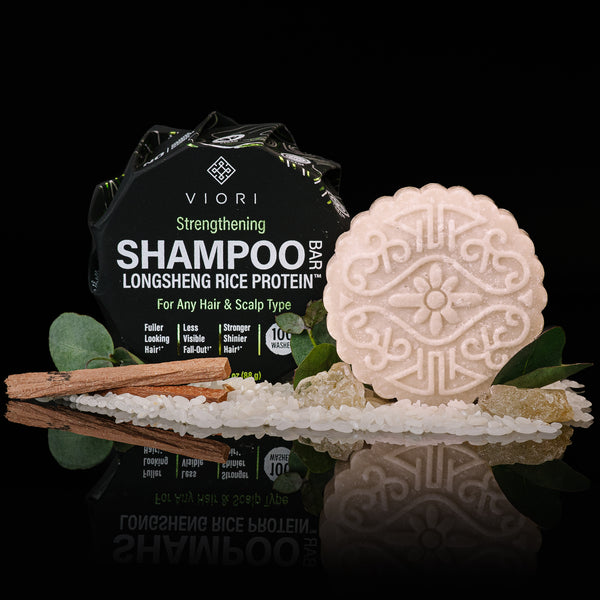
That’s where Viori is a smart pivot for a lot of clients. Viori bars are formulated to be pH balanced and sulfate-free (avoiding common harsh sulfates like SLS/SLES/ALS). They use a mild cleanser system (including Sodium Cocoyl Isethionate, often called “baby foam” because it’s known for being gentler) and are built around fermented Longsheng rice water, along with other hair-supportive ingredients referenced in Viori’s own educational materials.
How to choose a Viori bar based on scalp type
- Oily scalp or oily flaking patterns: Citrus Yao is often recommended, and Viori notes its scent composition includes citric acid, which helps break down oil effectively.
- Dry or sensitive scalp: Native Essence (unscented) is typically the gentlest option for fragrance-sensitive users.
- Dry-to-normal scalp needing extra moisture: Terrace Garden or Hidden Waterfall are commonly chosen for a more moisturizing feel.
If you’re oily at the scalp but dry on the ends (extremely common), a “split routine” can be a game-changer: cleanse the scalp with the option that best controls oil, then condition the mid-lengths and ends with a more moisturizing bar.
Use-It-Like-a-Pro: The Technique That Protects Your Hair
No matter what you’re using, technique can make or break your results-especially with bar formats. For best results (and less friction), try this approach:
- Lather in your hands first, then apply the lather to your scalp with your fingertips.
- Focus shampoo on the scalp; let the rinse cleanse the lengths.
- Apply conditioner from mid-length to ends and give it time-let it sit a few minutes before rinsing.
- Be gentle when detangling; friction is one of the fastest ways to turn dryness into breakage.
The Bottom Line
Garlic shampoo gets framed like a hair growth miracle, but the reality is more complicated. The results depend on whether the formula can keep garlic chemistry stable, avoid irritating the scalp barrier, and not bind odor compounds to porous hair-all in a rinse-off product with short contact time.
If your real goal is a calmer scalp and stronger hair with less breakage (which is what most people mean when they say “I want less hair fall”), a steady, pH-balanced routine like Viori-matched to your scalp type and used with low-friction technique-tends to be a more predictable path than chasing tingles and trends.


