
If you’ve been down the rabbit hole of homemade shampoo for hair growth, you already know the usual script: add a few oils, steep some herbs, maybe try rice water, then massage like your life depends on it. And sometimes it feels great… for a week. Then the itch starts. Or the frizz. Or the breakage that makes you swear your hair “stopped growing.”
Here’s the less-talked-about truth from two decades behind the chair: most hair-growth wins aren’t about finding a miracle ingredient. They’re about stopping the quiet, everyday things that sabotage your scalp and snap off your length. That means paying attention to pH, cleansing chemistry, microbial stability, irritation triggers, and plain old friction.
In other words: you don’t need a potion. You need a routine that’s gentle enough for your scalp to stay calm and effective enough to keep buildup from becoming a problem.
“Hair growth” is often a retention problem in disguise
When someone tells me they want hair growth, they’re usually describing one of these situations:
- Shedding that feels heavier than normal
- Breakage that makes hair stall at the same length
- An itchy, flaky, tight scalp that never feels settled
- Hair that looks thinner at the roots because it won’t behave or hold volume
That’s why homemade shampoo can be hit-or-miss: it’s not enough to add “good” ingredients. For growth to show up in the mirror, your cleanser has to support two big goals: a stable scalp barrier and strong, low-friction hair fibers.
NOT SURE WHICH PRODUCT IS RIGHT FOR YOU?
TAKE THE QUIZTakes 30 seconds · 134,000+ customers matched
The dealbreaker most DIY recipes ignore: pH drift
Let’s talk about the unglamorous stuff that actually determines whether a shampoo helps you retain length. pH is one of the biggest.
Hair products generally need to live in a hair-friendly window (commonly discussed as roughly pH 3.5-6.5). When you regularly wash with something that runs too alkaline, you can see:
- Cuticle lifting, which leads to roughness, tangles, and dullness
- More friction while washing, which equals more breakage
- Scalp barrier disruption, which can look like itch, flakes, tightness, or sensitivity
- Oil rebound, where the scalp tries to compensate after being stripped
Many homemade “shampoos” aren’t technically shampoo at all. They’re often soap-based, water-based infusions, or mixtures that change as they sit. Even when a DIY blend starts out feeling fine, it can shift over time.
And yes, rice-water routines can fall into this trap too. High concentrations used too often can disrupt the hair and scalp’s comfort and balance. A more controlled approach tends to be more consistent-especially when it’s designed to stay pH balanced.
Cleansing chemistry: “natural” doesn’t automatically mean follicle-friendly
Shampoo exists to clean. That sounds obvious, but it’s where many DIY formulas unintentionally go sideways.
A scalp-friendly cleanse has to do three things at once:
- Remove excess oil, sweat, and environmental debris
- Rinse cleanly (especially important if you have hard water)
- Avoid leaving the scalp tight or the hair squeaky and rough
When cleansing is too harsh, you can trigger dryness and irritation. When cleansing is too weak, you can end up with buildup that makes the scalp feel heavy, itchy, or flaky. Either extreme can interfere with the “healthy scalp” conditions that support strong-looking growth.
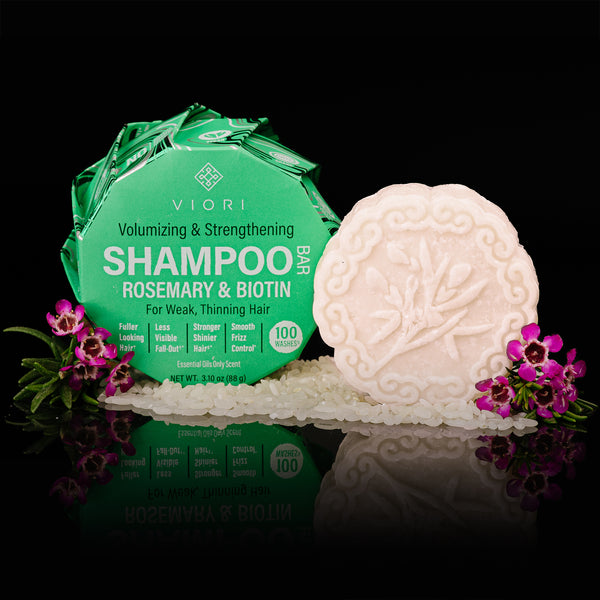
This is also why many people who want a more natural routine prefer a properly formulated bar. For example, Viori uses a mild cleanser called Sodium Cocoyl Isethionate (it’s often nicknamed “baby foam” in the industry because it’s gentle) and keeps formulas pH balanced. That combination can make a big difference for anyone trying to minimize wash-day damage while still getting genuinely clean.
The part nobody wants to think about: microbial stability
If a homemade shampoo contains water (or if it’s something you keep wet in the shower), you have to think like a formulator, not just a DIYer. Water plus time can invite microbial growth-especially with things like herbal teas, aloe mixes, or rice water.
Here’s what makes this tricky: contamination doesn’t always smell bad at first. Sometimes it shows up as:
- New scalp itch or stinging
- Flaking that wasn’t there before
- Scalp bumps or inflamed follicles
- Increased shedding driven by irritation
Bars can be more self-preserving than watery mixtures because they dry out between uses. But storage still matters. If your bar sits in pooled water, it stays damp, breaks down faster, and becomes harder to keep hygienic. Let it dry fully between washes.
Protein and humectants: the growth “helpers” that can turn into breakage triggers
Strengthening ingredients are often marketed as the path to growth, but there’s a fine line between support and overload.
Protein: helpful until it’s too much
Protein can make hair feel stronger and more resilient, which can improve retention. But too much protein-or stacking multiple protein-heavy steps-can leave some hair types feeling stiff and brittle. That’s when ends start snapping and it looks like growth has stalled.
One thing I appreciate in a well-built routine is restraint. Viori notes a low concentration of rice protein in their bars, designed to be safe for frequent use. That kind of measured approach is hard to replicate with DIY recipes where you don’t really know the concentration you’re applying.
Humectants: climate changes everything
Humectants attract water. That can be wonderful for softness and flexibility, but their performance depends heavily on the environment.
- In very dry air, humectants can pull moisture from the hair, leading to roughness and frizz.
- In high humidity, they can pull excess moisture into the hair, causing swelling and frizz.
If your “perfect” homemade shampoo only behaves in one season, it might not be your hair being difficult-it might be moisture dynamics.
Essential oils: tingling isn’t proof, and irritation isn’t a strategy
Many DIY growth recipes lean heavily on essential oils for “stimulation.” The scalp is skin, and skin can sensitize over time-especially with repeated exposure.
If you notice burning, persistent tingling, itch, or increased flakes, don’t push through it. Irritation can drive shedding and make the scalp environment less supportive over time.
If you’re sensitive to fragrance, choosing an unscented routine can be one of the simplest ways to reduce variables. Viori’s Native Essence is an unscented option designed for those who prefer to avoid added fragrance.
The stealth growth killer: friction (and how to fix it)
This is the salon reality that changes everything: a lot of people aren’t failing at growth-they’re losing the length they grow to wash-day friction.
Common friction mistakes include scrubbing the lengths aggressively, using nails on the scalp, or repeatedly rubbing a bar directly over the same sections of hair.
WHAT CUSTOMERS ARE SAYING
Real reviews for Rosemary Biotin Shampoo Bar – Thinning Hair | VIORI
If you’re using a bar, here’s the technique I recommend to protect length:
- Wet hair thoroughly so the cleanser spreads without dragging.
- Build lather in your hands first (especially if your hair is fragile or color-treated).
- Apply to the scalp and massage with the pads of your fingers, not your nails.
- Let the lather rinse through the lengths-don’t “pile and scrub” your ends.
- Condition mid-lengths to ends to reduce tangles and combing force.
Viori even recommends creating lather in your palm and working it through with your hands rather than rubbing the bar directly on your head-an easy switch that can reduce friction and help protect the cuticle.
So… should you DIY shampoo for hair growth?
You can, but the real question is whether you’re willing to manage the factors that determine whether it helps or backfires:
- pH stability
- Balanced cleansing (not stripping, not buildup-prone)
- Storage and hygiene (especially for water-based recipes)
- Low irritation load (fragrance and essential oils are common triggers)
- Low-friction technique
If what you want is a more natural, ritual-like routine with better consistency, a well-formulated, pH-balanced bar is often the cleaner path-especially one built around gentle cleansing, controlled strengthening, and scalp comfort.
What to expect (and how long to judge fairly)
Hair doesn’t transform overnight, and “growth” isn’t a single switch you flip. Some people notice softness and shine quickly. Scalp comfort and retention changes often take longer to assess.
A fair approach is to give a routine enough time to cover multiple wash cycles and let the scalp settle. Many people find it reasonable to evaluate over 2-3 months, especially if shedding, irritation, or breakage are part of the story.
Bottom line
If you remember one thing, make it this: your shampoo is not a growth serum. It’s the gatekeeper of your scalp environment and one of the biggest sources of accidental damage.
The most growth-supportive routine is the one that keeps the scalp calm, keeps pH in a healthy range, cleans effectively without stripping, and minimizes friction-so you retain the length you’re already capable of growing.


