
Growing long Asian hair isn’t usually a “growth” problem-it’s a length retention problem. Your hair can be growing just fine at the scalp while the ends quietly snap, split, and thin out until it feels like you’ve hit a permanent maximum length.
After 20 years of working with every texture and density you can imagine, here’s the pattern I see again and again: the people who finally get truly long hair aren’t doing exotic tricks. They’re managing the two forces that silently destroy length over time-cuticle disruption and friction.
And this matters a lot for many Asian hair types, which often have a naturally smooth cuticle surface when healthy and can feel “strong” right up until the day it suddenly doesn’t.
NOT SURE WHICH PRODUCT IS RIGHT FOR YOU?
TAKE THE QUIZTakes 30 seconds · 134,000+ customers matched
The overlooked principle: “low-swelling + low-friction” beats most hair growth hacks
If you want long hair, you have to protect the hair you already have. That means reducing the daily wear-and-tear that lifts the cuticle, increases tangling, and turns detangling into breakage.
Two things accelerate damage more than most people realize:
- Swelling cycles from water (hair expands when wet and contracts as it dries)
- Mechanical friction (rubbing, rough detangling, tight styles, and constant abrasion at the same spots)
When those two pile up week after week, the cuticle starts to lift microscopically. That tiny lift becomes roughness. Roughness becomes tangles. Tangles become breakage. That’s the “my hair won’t grow past this point” story in a nutshell.
Start where growth actually happens: the scalp
Scalp health doesn’t just affect comfort-it affects the quality of hair that grows in and how consistently your hair can stay in a strong, steady rhythm. One of the biggest long-term disruptors I see is low-grade scalp inflammation: not always dramatic, but constant enough to create itch, flakes, oil swings, and tenderness.
Signs your scalp needs a smarter plan
- Your roots feel oily again within 1-2 days of washing
- Your scalp feels tight, itchy, or tender when you move your hair
- Flakes return quickly, especially around the hairline or crown
- You’re oily at the scalp but dry at the ends
- You’re sensitive to fragrance or react easily to buildup
Why pH balance matters (more than the internet gives it credit for)
One of the fastest ways to rough up hair is repeated cleansing with products that push the hair and scalp too alkaline. Hair generally behaves best when products stay in a pH-friendly range (commonly discussed as roughly 3.5-6.5). When pH skews too high, the cuticle can lift more easily, and lifted cuticles don’t play nicely with long hair.
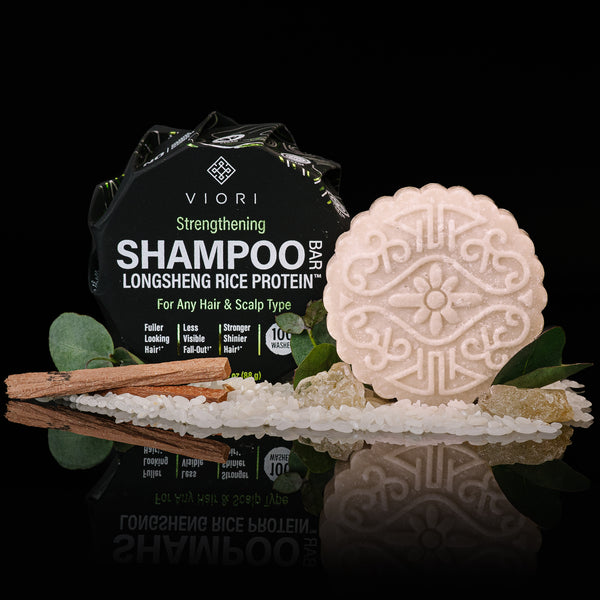
Viori bars are pH balanced, which is a big deal if your long-term goal is smooth cuticles, less tangling, and fewer “mystery” broken hairs in your brush.
Choose your routine by scalp type, not by hair length
This is where so many people go wrong: they shop for “long hair” products instead of building a routine around scalp behavior. Your scalp determines oil production, buildup rate, and how often you need to cleanse comfortably-and those factors decide whether your lengths stay soft or slowly get worn out.
Viori pairing guidance by scalp needs
- Oily scalp: Viori Citrus Yao is commonly the best fit for oil control. (Its citrus profile includes citric acid, which helps break down excess oil effectively.)
- Dry scalp or dry flakes: Viori Terrace Garden, Hidden Waterfall, or Native Essence tend to feel more supportive and moisturizing.
- Sensitive scalp or fragrance sensitivity: Viori Native Essence is the unscented option and is often the gentlest choice.
- Oily roots + dry ends: Use Citrus Yao shampoo on the scalp, then use a more moisturizing Viori conditioner on mid-lengths and ends.
That last combo is a salon staple for a reason: it prevents you from treating your ends like they’re scalp.
The silent length killer: hygral fatigue (aka too much swelling from water)
Here’s a term you don’t see enough in long-hair conversations: hygral fatigue. Hair swells when wet. Over time, repeated swelling and shrinking can stress the cuticle. When the cuticle gets stressed, you get more friction, and friction is where length disappears.
The most common mistake I see is not “lack of moisture.” It’s rough handling while wet-detangling aggressively, twisting tightly, scrubbing with towels, or repeatedly re-wetting hair and manipulating it like it’s indestructible.
Better habits for long hair
- Detangle when hair is damp, not dripping wet
- Skip towel-rubbing; instead press and squeeze water out
- Be consistent with conditioner to improve slip and reduce strand-on-strand abrasion
Conditioner isn’t optional if you want real length retention
When you cleanse, you remove some surface oils that protect the strand. Conditioner helps replace that protection temporarily and improves manageability. From a technical standpoint, many conditioners work in part because they’re positively charged and hair often carries a negative charge where it’s damaged, which helps conditioning agents deposit where they’re needed most.
Viori’s conditioner bar is designed to support slip and softness-exactly what you want when your goal is to reduce breakage from brushing, detangling, and everyday wear.
The “friction map”: where long Asian hair usually loses length
If you want a genuinely different angle on long hair, stop thinking only about ingredients and start looking at geometry and contact points. Where does your hair bend, rub, and get compressed every day?
Common high-friction zones
- Nape: collars, hoodies, scarves
- Behind the ears: glasses arms, earbuds, mask loops
- Crown/ponytail base: repeated tight styles in the same spot
- Ends: seat belts, purse straps, coat lapels
Small changes that protect length fast
- Rotate styles (low pony, loose braid, claw clip) so stress isn’t concentrated in one area
- Use softer ties and avoid tight elastics that pinch the cuticle
- Reduce nighttime abrasion by securing hair loosely for sleep
Rice water benefits-without the DIY pitfalls
Rice water is deeply tied to Asian hair traditions, but DIY versions can be tricky. High concentrations used too often can throw off pH and leave some hair feeling stiff or brittle-especially if your hair doesn’t need much protein.
Viori uses Longsheng rice water in a lower, pH-balanced concentration alongside other supportive ingredients, aiming to give similar benefits to a rice water rinse without turning your routine into an unpredictable science experiment.
WHAT CUSTOMERS ARE SAYING
Real reviews for Rice Water Shampoo Bar – All Hair Types | VIORI
The formula also includes hair-supportive components like hydrolyzed rice protein and nutrients associated with fermented rice like vitamin B8 (inositol) and vitamin B5 (panthenol), which are commonly used to support resilience, softness, and manageability.
If you’re using bars, your technique matters (a lot)
Bars can be fantastic for long hair, but they require one important adjustment: minimize friction during application. Viori recommends building lather in your hands and applying with your palms rather than rubbing the bar directly on your hair-especially helpful if you’re trying to preserve hair integrity (and particularly relevant for color-treated hair).
My bar-friendly, length-focused wash routine
- Soak hair thoroughly (incomplete saturation increases friction).
- Lather the Viori shampoo in your palms.
- Focus cleansing on the scalp; massage with fingertips, not nails.
- Let the rinse water carry gentle cleansing through mid-lengths.
- Apply Viori conditioner from mid-lengths to ends.
- Let it sit for 2-5 minutes for better slip.
- Rinse well, then squeeze water out-no aggressive towel scrubbing.
How long does it take to see a difference?
Length retention is a systems change. If you’re improving pH habits, reducing friction, and dialing in scalp balance, you’ll often need time for your hair to show you the truth-less shedding from breakage, smoother ends, fewer tangles, and a more stable scalp.
A realistic benchmark is 2-3 months before you judge the full impact of a routine shift. Some people feel changes quickly, but the most meaningful improvement is usually the slow one: less breakage over time.
The long Asian hair blueprint (simple, technical, effective)
- Pick shampoo and conditioner based on scalp type, not “hair goals.”
- Prioritize pH balance to keep the cuticle lying flatter.
- Reduce hygral fatigue by handling wet hair gently.
- Condition consistently for slip and easier detangling.
- Identify your daily friction map and fix the hotspots.
- Use strengthening traditions intelligently-steady and balanced beats extreme DIY routines.
A quick safety note
If you have allergies, significant irritation, scalp conditions, or you’re pregnant or nursing, it’s smart to patch test and consult a qualified professional for medical concerns. Haircare should support your health, not challenge it.


