
“Shampoo bar” sounds simple-until you try one that leaves your hair squeaky, tangled, or coated and you start wondering whether bar shampoo is the problem. It isn’t. The real issue is that a lot of “how to make bar shampoo” advice online quietly mixes up two completely different products: soap bars shaped like shampoo, and true shampoo bars engineered to behave like modern liquid shampoo.
If you want a bar that cleans well, rinses cleanly, and leaves hair smooth and bouncy, you’re not really doing soapmaking. You’re doing solid surfactant formulation-the same kind of thinking used in professional cosmetic labs, just in a solid format.
In this post, I’m going to show you what rarely gets discussed: a great shampoo bar is basically material science for the shower. It’s a compressed system that has to wake up with water, generate lather fast, deliver cleansing evenly, and then dry down hard again so it doesn’t turn to mush.
First, decide what you’re making: soap bar or true shampoo bar
This is the fork in the road that changes everything. Many DIY tutorials use “shampoo bar” as a catch-all term, but hair responds very differently depending on the underlying chemistry.
NOT SURE WHICH PRODUCT IS RIGHT FOR YOU?
TAKE THE QUIZTakes 30 seconds · 134,000+ customers matched
Soap-based bars (saponified oils)
These are made with oils and lye. They can cleanse, but they’re usually alkaline, and that matters because alkaline products can increase cuticle swelling and friction-two things that show up as roughness, frizz, and tangling on a lot of hair types. Hard water can also make things worse, creating that dull, waxy feel people often mistake for “buildup from oils.”
True shampoo bars (solid surfactant bars)
This is what most people expect today when they buy a shampoo bar: a product that feels like shampoo, just without the bottle. These bars are built around a mild cleanser and can be designed to be pH balanced, which is a big reason they tend to feel cleaner and more predictable on the hair.
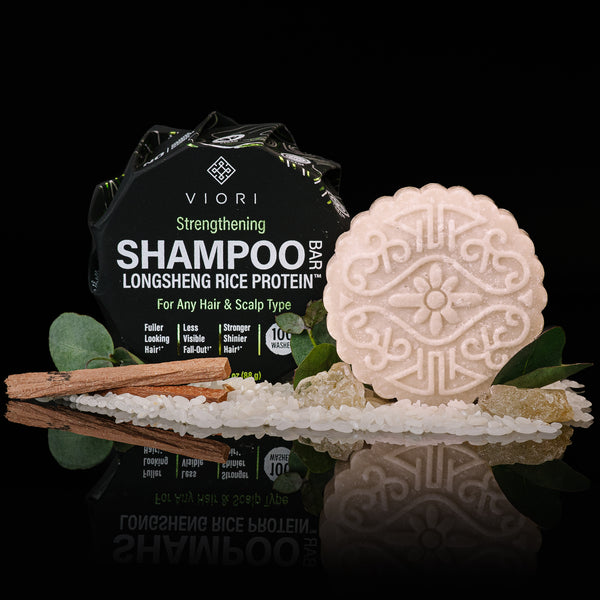
Viori’s bars fall into this second category. They’re made with a gentle cleanser (Sodium Cocoyl Isethionate) and designed with pH balance in mind-two details that are easy to overlook, but make a huge difference in the way hair behaves over time.
The under-the-radar truth: a shampoo bar is a compressed, multi-phase system
Here’s the unique angle most articles skip: a good bar isn’t “one mixture.” It’s a compressed composite-surfactant particles held inside a binder network, with conditioning agents and optional actives distributed through that structure. When water hits it, the bar doesn’t just dissolve; it creates a concentrated cleansing system that changes as you add more water and work it through your hair.
That means bar shampoo performance is determined by two things working together:
- Formula design (what you choose and how much)
- Physical engineering (particle size, wetting, compression, drying behavior)
Step one: your cleanser is also your “skeleton”
A common foundation for true shampoo bars is Sodium Cocoyl Isethionate (SCI), often described as a mild, creamy-foaming cleanser. It’s popular for a reason-it lathers well and feels gentle when formulated correctly.
But here’s what’s rarely said out loud: SCI isn’t just a cleanser choice. It’s also structural. The size and distribution of the surfactant particles influence whether a bar feels smooth and solid, or crumbly and inconsistent.
- Finer, evenly wetted particles tend to compact into a harder, longer-lasting bar.
- Dry pockets or uneven wetting can create weak points that crack, crumble, or dissolve too fast.
Step two: the binder matrix is where most DIY bars go wrong
If the surfactant is your engine, the binder system is the frame. Your binders determine whether the bar holds up in a humid bathroom, whether it drags on the hair, and whether it releases lather quickly or feels stubborn.
Professional-style bars often use a combination of fatty alcohols and fatty acids as structuring agents. Viori uses cetyl alcohol and stearic acid as binding agents-this is a smart, performance-driven approach because it helps create stability without relying on heavy oils that can flatten foam or leave a coated feel.
Think of it like a balancing act:
- Too much waxy structure can make a bar smear, slow lather, and feel “filmy” on fine hair.
- Too little structure can make a bar crumble or melt away in the shower.
Why pH is a hair behavior switch (not a marketing detail)
Hair isn’t just “dead protein.” It’s a fiber with an outer cuticle that responds to its environment. When a cleanser is too alkaline, the cuticle can lift more easily, which raises friction. Friction shows up as tangles, frizz, and that rough, cottony feeling that makes people chase more and more conditioner.
Well-made shampoo bars can be designed to be pH balanced, which supports smoother cuticle behavior and a more consistent rinse. Viori specifically notes they use a lower concentration of fermented Longsheng rice water because very high concentrations used too often can disrupt scalp and hair pH. That’s a detail you don’t hear enough in DIY circles: more “active” isn’t always better if it destabilizes the system.
Conditioning in a shampoo bar is about deposition, not dumping in oils
One of the biggest misconceptions I see is the idea that a shampoo bar becomes “more conditioning” by adding more oils and butters. Sometimes that works. Often it backfires.
Why? Because great conditioning is less about how oily something is and more about targeted deposition-getting the right ingredients to cling to the hair where they’re needed, without leaving residue everywhere else.
Hair often carries a negative charge (especially when it’s damaged), so cationic conditioning agents (positively charged) are attracted to it. Viori uses Behentrimonium Methosulfate (BTMS), a conditioning ingredient valued for slip, detangling, and smoothing. Despite the word “methosulfate” in the name, it’s used as a conditioner in haircare and is not the same thing as harsh sulfate cleansers.
The part almost nobody explains: dilution changes everything
A shampoo bar is a concentrate that becomes a dilute lather system in your hands. Many formulas are designed so that as you add water and the lather dilutes, conditioning ingredients deposit more effectively. If you overload the bar with oils, you can interfere with lather formation and rinse-off, which is how people end up stuck between “dry” and “greasy” with no in-between.
Adding “actives” like fermented rice water: the hard part is stability
It’s easy to say “add rice water.” It’s much harder to integrate fermented ingredients into a solid bar without creating problems with odor, pH drift, or texture changes.
When you add botanicals or ferments, you have to think about:
- Compatibility with surfactants and conditioning agents
- Long-term pH behavior (does it push the bar out of its ideal range?)
- Bathroom reality (steam, splash, and storage conditions)
Viori’s approach-fermented Longsheng rice water combined with other supportive ingredients, used in a controlled way-reflects something pros learn quickly: performance comes from synergy plus stability, not just one hero ingredient.
Fragrance isn’t “just scent” in a solid bar
In a bar format, fragrance can subtly affect texture and performance. It can slightly soften a bar, change how quickly it releases lather, and impact scalp comfort for sensitive users.
WHAT CUSTOMERS ARE SAYING
Real reviews for Rice Water Shampoo Bar – All Hair Types | VIORI
Viori also makes an interesting point in their FAQs: even when bars share a core formula, different scent profiles can align better with different scalp needs. Their Citrus Yao is commonly recommended for oilier scalps, while more moisturizing-feeling options like Terrace Garden or Native Essence are often preferred for dry or sensitive scalps (with Native Essence being unscented).
Manufacturing is the “hidden ingredient” that makes a bar feel professional
Two bars can have similar ingredients and still behave completely differently, because process choices change the internal structure. The big variables are:
- Wetting: powders must be evenly coated so the bar compacts without dry pockets
- Heat control: overheating can cause sweating, scent loss, and weak texture
- Compression: firm, even compaction improves durability and slows dissolution
- Set time: even though syndet bars aren’t soap, they often improve after resting as structure stabilizes
And then there’s storage. Shampoo bars last longer when they can dry thoroughly between uses. Viori’s bamboo holders are designed to support airflow and help prevent the constant dampness that causes bars to soften and melt away.
How you use a shampoo bar matters more than most people think
Technique can make or break your experience-especially if your hair is color-treated. Too much direct rubbing increases friction, and friction can lift the cuticle. Viori recommends a method I also prefer professionally: build lather in your hands first, then apply the lather through the hair with your hands instead of scrubbing the bar directly on your head.
A practical blueprint: what a great shampoo bar is built from
If you want a bar shampoo that feels like shampoo, here’s the structure to aim for. Think in functions, not just ingredients:
- Primary mild surfactant for cleansing and foam
- Support surfactants (optional) to tune mildness, foam texture, and rinse
- Structuring/binders for hardness, glide, and longevity
- Conditioning system designed for real deposition (not greasy coating)
- Humectants to manage cracking vs mushiness and improve lather feel
- Actives/botanicals only if they’re stable and compatible
- pH strategy to support long-term hair feel
- Fragrance strategy (or unscented for sensitive scalps)
- Process controls (particle size, mixing order, compression, drying)
Final thoughts
The best shampoo bars don’t succeed because they’re trendy or “all natural.” They succeed because they’re engineered to do four jobs at once: cleanse evenly, rinse cleanly, condition intelligently, and survive real shower conditions.
If you’re curious about what this looks like in a finished product, Viori is a strong example of a pH-balanced, solid surfactant bar approach-built around mild cleansing, thoughtful conditioning, and fermented Longsheng rice water used at a scalp-friendly level.
If you tell me your scalp type (oily, normal, or dry) and your hair porosity (low, medium, or high), I can help you think through what a shampoo bar should prioritize for your specific hair-whether you’re formulating from scratch or choosing a bar that’s already been engineered to perform.


