
“Natural Indian shampoo” is one of those search terms that sounds simple-until you try to pin down what it actually means. For some people it’s botanical powders and herbal rinses. For others it’s oiling before wash day. And for plenty of folks, it’s really shorthand for a goal: strong, shiny hair that grows long without constant breakage.
After 20 years of working hands-on with every texture and scalp type you can imagine, here’s the truth I don’t see discussed enough: the magic isn’t just in the herbs. It’s in the mechanics. Traditional routines often work because they manage friction, pH, and water chemistry-three factors that quietly decide whether your hair feels silky…or turns into a tangled, frizzy mess.
So let’s decode “natural Indian shampoo” in a way that’s both practical and technical-without the tired “natural vs. chemicals” argument.
What “Natural Shampoo” Really Means (If We’re Being Precise)
From a technical standpoint, anything that functions like shampoo has three jobs. Whether it’s a powder paste, a botanical rinse, or a modern bar, it must do some version of the following:
NOT SURE WHICH PRODUCT IS RIGHT FOR YOU?
TAKE THE QUIZTakes 30 seconds · 134,000+ customers matched
- Cleansing: lifting oil, sweat salts, pollution, and product residue from the scalp and hair.
- pH control: keeping the hair cuticle from lifting too much (because lifted cuticles = roughness and tangling).
- Deposition/conditioning: leaving behind something that improves feel and slip-or, if the formula is off, leaving behind buildup.
Instead of asking, “Is it natural?” a better question is: How does it cleanse, what does it do to the cuticle, and what does it leave behind? That’s where the real results come from.
The Ingredient Nobody Counts: Your Water
If you’ve ever tried a “natural” routine that sounded perfect on paper but made your hair feel waxy, dull, or weirdly frizzy-there’s a good chance the culprit was hard water. Hard water contains higher levels of minerals like calcium and magnesium, and those minerals change how hair behaves.
Here’s what hard water can do to the hair fiber over time:
- Increase surface roughness (more tangles, more friction, more frizz).
- Make cleansing feel inconsistent (you wash, but it never feels quite “clean”).
- Leave hair looking dull even when it’s freshly washed.
- Amplify buildup when combined with certain plant films or oils.
This is the under-discussed part: sometimes what people call “dryness” is actually mineral roughness + friction. And the fix isn’t always “more oil.”
Traditional Cleansing Methods Aren’t All the Same
Online, “herbal shampoo” gets treated like one category. In reality, traditional approaches can cleanse through completely different mechanisms-and those mechanisms matter.
1) Saponin-based cleansing (plant foaming chemistry)
Some botanicals contain saponins, which behave a bit like natural cleansing agents. They reduce surface tension and help lift oils and dirt.
- Why people love it: it can feel gentle and less stripping than harsher cleansing systems.
- Where it can go wrong: the strength can vary a lot by batch, and it may struggle with heavy styling buildup.
2) Mucilage-based cleansing (slip-first cleansing)
Other botanicals create mucilage, a gel-like polysaccharide film. These routines are often less about deep cleansing and more about improving glide, detangling, and softness.
- Why it works: less friction during detangling can mean better length retention over time.
- Watch-outs: film + hard water can equal buildup, especially for fine or low-porosity hair.
3) Powder/particle cleansing (adsorption + abrasion)
Some routines rely on powders or clays that absorb oil-and sometimes “scrub” it away through mechanical action.
- Why people reach for it: it can reduce oil without a strong cleanser and may add root volume.
- The part rarely mentioned: repeated abrasion can contribute to cuticle wear over time, especially on long or damaged hair.
In plain terms: every wash day has a “friction cost.” If your routine quietly increases friction, you may not notice the damage immediately-but you’ll feel it in a few months as tangling, frizz, and breakage.
Oiling Before Shampoo: It’s Not Just “Nourishment”-It’s Friction Control
Pre-wash oiling is often framed as feeding the hair. That’s part of it, but the most practical benefit is mechanical: oil can work like a lubricant. In hair science, this falls under tribology-the study of friction and wear.
When oiling works well, it often helps by:
- Reducing combing force (less snapping and mid-length breakage).
- Lowering wash-day friction when hair is wet and more fragile.
- Softening the swelling-and-shrinking cycle that can stress the cuticle over time.
But oiling can backfire if your cleanser can’t remove the oil effectively-especially in hard water-leading to limp roots, coated lengths, and more frequent washing (which means more friction cycles).
pH: The Quiet Difference Between “Silky” and “Straw-Like”
Hair tends to behave best in a mildly acidic environment. When cleansing pushes the hair too alkaline, the cuticle lifts, and that usually shows up as:
- More tangling
- More frizz
- Less shine
- More color fade
- More breakage over time
Many traditional routines used acidic rinses (often without calling them “pH balancing”), which helped flatten the cuticle again. Modern haircare can achieve a similar outcome by being pH balanced from the start.
A Modern, Consistent Way to Get the “Ritual Results”
If your goal is what people often associate with natural Indian haircare-healthy scalp comfort, stronger strands, shine, and length retention-consistency matters. The most reliable routines usually include:
- A gentle but effective cleanser (so you don’t have to over-wash).
- Real slip in conditioning (to cut down detangling friction).
- pH balance (to keep the cuticle from staying lifted).
- A plan for residue and water minerals (especially if your water is hard).
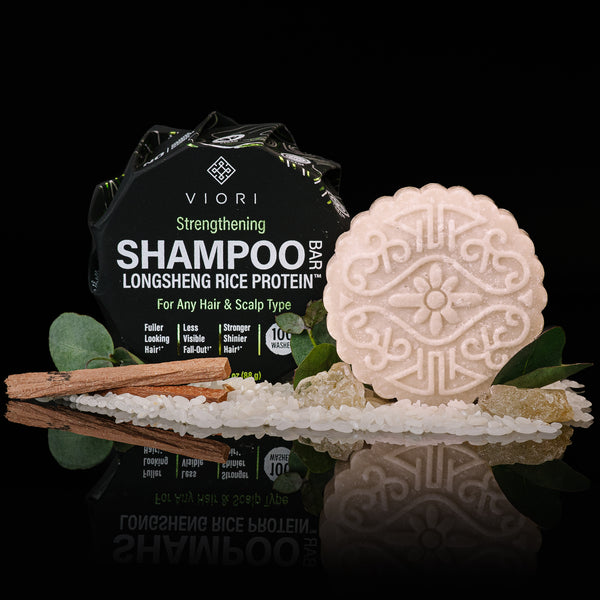
This is where a well-formulated bar can make life easier. Viori shampoo and conditioner bars are designed to be pH balanced and gentle, using a mild cleanser called Sodium Cocoyl Isethionate (SCI). They also include fermented Longsheng rice water and hair-supporting ingredients like hydrolyzed rice protein, plus vitamins such as B5 (panthenol) and B8 (inositol).
One detail I appreciate from a technical standpoint: Viori uses a lower concentration of rice water, because overly concentrated rice water used too often can disrupt the scalp and hair’s pH. The goal is similar benefits in a safer, more balanced format.
WHAT CUSTOMERS ARE SAYING
Real reviews for Rice Water Shampoo Bar – All Hair Types | VIORI
How to Choose the Right Approach for Your Hair (Without Guessing)
If you want a routine that actually matches your hair and scalp, use this quick framework.
Step 1: Identify your scalp oil rate
- Oily scalp: feels oily 1-2 days after washing
- Normal scalp: feels oily around day 3
- Dry scalp: feels oily day 4+ (or not much at all)
Step 2: Check your porosity (simple water test)
After brushing, place a clean strand in a glass of water:
- Floats: low porosity (often buildup-prone)
- Stays in the middle: medium porosity
- Sinks: high porosity (often more damaged and needs more conditioning support)
Step 3: Match cleansing + conditioning to your needs
As a general rule, oily/low-porosity hair tends to do best with lighter, cleaner-rinsing routines, while dry/high-porosity hair usually thrives with more slip, moisture support, and gentler handling.
Within Viori’s lineup, the bar choice is typically guided by scalp type:
- Citrus Yao: commonly favored for normal-to-oily scalps (it includes citric acid in the scent profile, which helps break down oil).
- Terrace Garden and Hidden Waterfall: often chosen for normal-to-dry scalps.
- Native Essence: an unscented option that’s especially popular for fragrance sensitivity and gentle care.
The Bottom Line: The Best “Natural Indian Shampoo” Minimizes Wear Per Wash
If you remember one thing, make it this: the secret isn’t chasing the most traditional ingredient list. The secret is choosing a method that reduces wear per wash.
Healthy, long, glossy hair is usually the result of a routine that manages:
- Friction (wash day and detangling)
- pH (cuticle control)
- Water minerals (hard water buildup and roughness)
- Wash frequency (fewer stress cycles over time)
Do that-whether you lean more traditional, more modern, or a thoughtful blend of both-and you’ll be much closer to the results people associate with “natural Indian shampoo,” without the frustration and trial-and-error.


