
The “no poo” method gets tossed around like it’s one simple decision: shampoo or no shampoo. But in real life (and especially in real hair), it’s not binary-it’s a shift in how you manage oil, residue, scalp biology, pH, and friction. That’s why one person swears no poo “fixed everything,” while the next person ends up with waxy roots, frizzy lengths, and an itchy scalp.
After 20 years as a stylist, I’ve learned that no poo works best when you treat it less like a trend and more like a system. If you understand what shampoo used to accomplish chemically-and how your new routine replaces (or fails to replace) those functions-you can predict results with surprising accuracy.
No Poo Isn’t One Method-It’s a Spectrum
Most no poo conversations skip the most important detail: you’re still cleansing. You’re just changing how cleansing happens. Whether you use water-only, mechanical techniques, powders, or a gentler cleansing bar, you’re trying to solve the same three problems.
NOT SURE WHICH PRODUCT IS RIGHT FOR YOU?
TAKE THE QUIZTakes 30 seconds · 134,000+ customers matched
The Three Jobs Every Cleansing Routine Must Do
- Remove oil-based soils (sebum, waxes, styling residue, environmental film)
- Remove water-based soils (sweat salts, dust, minerals, pollution particles)
- Reset the hair surface so the cuticle lies flatter and the hair feels smooth, shiny, and manageable
No poo routines often do an okay job on the first point (oil) and unintentionally ignore the third (surface reset). That’s when you hear “My hair is technically clean, but it feels awful.”
The Truth About “Detox”: It’s Usually Film, Not Magic
When someone quits traditional shampoo and gets that sticky, coated, draggy feeling, it’s commonly blamed on “detox.” In the salon world, we see something more concrete: film formation. It’s predictable, it has causes, and it has solutions.
What That Waxy/Coated Feeling Usually Comes From
- Hard water minerals clinging to the hair and reacting with residue, leaving a dull, coated texture
- Alkalinity (even accidental) lifting the cuticle, which increases roughness and makes buildup stick more easily
- Powders and clays leaving fine particulate residue that changes hair friction and “slip”
Here’s the key: many people keep waiting for this to pass because they assume it’s a transition. Sometimes it is. But often it’s not “transition”-it’s the wrong chemistry for your water and hair type.
Sebum Doesn’t Automatically “Condition” Your Lengths (It’s a Physics Issue)
A rarely discussed no poo reality: scalp oil doesn’t glide down the hair shaft the way people imagine. Sebum moves through friction and transfer, and that process slows down dramatically if you have long hair, textured hair, dense hair, or rough/porous cuticles.
That’s why no poo can create the classic mismatch: oily scalp, dry ends. It’s not that your scalp “won’t balance.” It’s that your lengths may never receive enough sebum to behave like they’re conditioned-especially if the cuticle is already compromised from heat, lightening, or everyday wear and tear.
Your Scalp Is an Ecosystem: No Poo Can Help or Backfire
Your scalp has its own living environment-oil production, hydration levels, and a microbiome that reacts to changes in cleansing. For some people, reducing harsh cleansing steps lowers irritation and improves comfort. For others-especially those who deal with oiliness plus flaking-leaving more sebum behind can keep the cycle going.
So if no poo feels soothing for your friend but makes your scalp feel heavy, itchy, or flaky, it doesn’t mean you “did it wrong.” It often means your scalp needs a different oil-management strategy.
The Missing Conversation: Hair Has a “Charge State”
This is the part I wish more no poo content talked about: hair isn’t just a strand-it’s a charged fiber. When the hair surface is rough and negatively charged, it grabs onto other strands, grabs onto residue, and builds friction fast. That’s when you get tangles, frizz, and that “squeaky but not in a good way” feeling.
Traditional conditioning works because it uses positively charged conditioning agents that bind to the hair and reduce friction. Many strict no poo routines remove shampoo but don’t replace that slip-and-smooth function in a consistent way.
The “Friction Budget”: A No Poo Concept Almost Nobody Talks About
If you take one idea from this post, make it this: every routine has a friction budget. Hair-especially wet hair-doesn’t tolerate endless scrubbing, rubbing, and aggressive detangling. And some no poo routines unintentionally increase friction because they rely on extra brushing, extra massaging, and extra manipulation to “move” oils and get hair to feel clean.
Over time, high friction can roughen the cuticle, increase tangling, and make buildup stick more easily. That can create a loop where you scrub more because hair feels worse, and hair feels worse because you scrub more.
How Viori Fits the “No Poo” Mindset (Without the Common Pitfalls)
Many people are drawn to no poo because they want fewer harsh ingredients, a calmer scalp, and less waste. If that’s your goal, you don’t necessarily have to choose between “traditional shampoo” and “water only.” A lot of clients do best with a middle ground: gentle cleansing plus controlled conditioning-especially when pH and friction are managed properly.
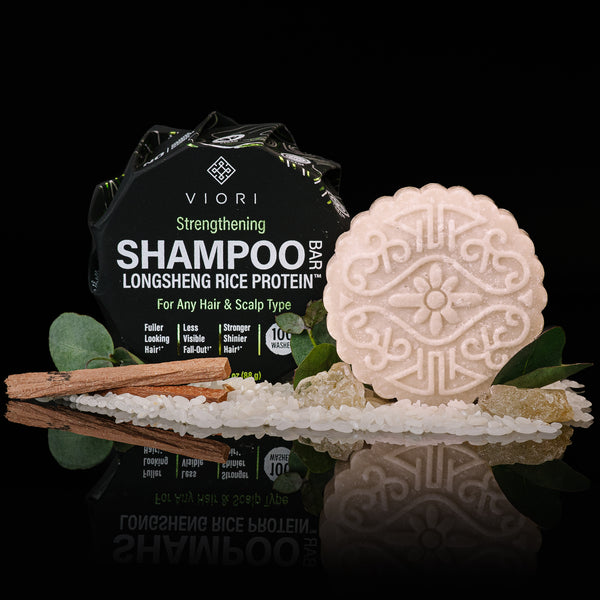
Viori’s approach lines up with the parts of no poo that matter most in the real world: it’s pH balanced, uses a mild cleanser (Sodium Cocoyl Isethionate) in the shampoo bars, and uses a proven conditioning agent (Behentrimonium Methosulfate) in the conditioner bars to improve slip and cuticle feel. Viori also uses fermented Longsheng rice water in a lower concentration to help support hair goals without the pH disruption that can happen when rice water is used too strong or too often.
If you’re trying to get away from harsh cleansing but you keep hitting the same no poo problems-film, frizz, or inconsistent results-this kind of balanced system is often the difference between “I gave up” and “this finally makes sense.”
Picking a Viori Option Based on Scalp Needs
- Citrus Yao: commonly favored for normal-to-oily scalp types (the citric-acid-related oil breakdown is a big reason it feels cleaner at the root)
- Terrace Garden: often chosen for dry-to-normal scalp types when you want extra moisture support
- Hidden Waterfall: a versatile option many people enjoy for balanced, “in-between” hair and scalp behavior
- Native Essence: unscented and typically the most comfortable choice for fragrance-sensitive or reactive scalps
Try No Poo Like a Pro: A Simple, Structured Way to Test It
If you want to experiment without wasting months guessing, treat it like a controlled trial. You’re not looking for perfection on day three-you’re looking for a routine that behaves predictably.
WHAT CUSTOMERS ARE SAYING
Real reviews for Rice Water Shampoo Bar – All Hair Types | VIORI
Step 1: Identify Your Scalp Type by Oil Rebound
- Oily scalp: feels oily 1-2 days after washing
- Normal scalp: feels oily around day 3
- Dry scalp: feels oily day 4 or later
Step 2: Consider Porosity (Because It Changes Everything)
Low-porosity hair tends to show buildup faster, while high-porosity hair tends to lose moisture faster and feel rough more easily. If you’ve struggled with no poo feeling heavy or coated, porosity and water quality are often the culprits-not your willpower.
Step 3: Reduce Direct Friction-Especially on Fragile or Color-Treated Hair
If you’re using bars, one of the simplest ways to protect the cuticle is to build lather in your hands and apply it with your palms rather than rubbing the bar directly against the hair. Less friction usually means better softness, better shine, and less color fade risk over time.
Step 4: Give It a Real Evaluation Window
Hair and scalp changes can be immediate for some people, but for others it’s a slow recalibration. A consistent 2-3 month window is a fair timeline to judge results-especially if you’re trying to improve scalp comfort, frizz patterns, or overall manageability.
Who Should Be Cautious With Strict No Poo?
Strict no poo can be challenging if you’re dealing with any of the following:
- Very hard water (high risk of residue and dullness)
- Fine hair that collapses easily and needs clean lift at the roots
- Heavy styling product use (films are harder to remove without a cleanser)
- Color-treated hair that can’t tolerate extra manipulation and friction
- Oily scalp with persistent flaking (often needs more intentional oil control)
If you still love the no poo philosophy, you can absolutely aim for gentler routines-just choose a method that controls oil and residue without driving up friction and cuticle damage.
The Real Goal: Control Oil, pH, and Friction at the Same Time
No poo isn’t about suffering through months of greasy roots to prove a point. The best hair routines-no poo or not-do three things well: they manage oil, respect pH, and keep friction low. When those pieces are in place, your scalp calms down, your hair behaves, and your “routine” stops feeling like a daily negotiation.


