
If you’ve been hunting for an organic hair growth shampoo, you’ve probably noticed a pattern: lots of big promises, not much explanation. As a stylist, I’ll give you the version that actually holds up in real life (and in the mirror): shampoo doesn’t “create” new follicles. What it can do-when it’s formulated and used correctly-is help you keep more of the hair you’re already growing.
That distinction matters because most “my hair won’t grow” complaints aren’t about growth rate. They’re about retention: breakage, shedding triggered by irritation, or a scalp that’s quietly inflamed and unhappy. Fix retention, and hair suddenly looks like it’s taking off-even though the biology of growth didn’t magically change overnight.
The part nobody talks about: “growth shampoo” is usually retention shampoo
Here’s the rarely discussed truth: the fastest way to get “growth results” from a shampoo is to stop sabotaging your length. The best routines don’t rely on trendy stimulants-they focus on micro-damage control and scalp stability.
NOT SURE WHICH PRODUCT IS RIGHT FOR YOU?
TAKE THE QUIZTakes 30 seconds · 134,000+ customers matched
When clients switch into a gentler, more balanced routine, what they often notice first is less hair on the brush, fewer snapped ends, and hair that feels smoother. That’s not marketing magic. That’s physics, chemistry, and lower friction.
Common reasons hair “won’t grow” (even when it is)
- Breakage from a rough cuticle and high friction during washing or detangling
- Scalp irritation (itch, tightness, flaking) that can nudge shedding upward
- Over-cleansing that strips the barrier and leads to oil rebound
- Mechanical damage from aggressive scrubbing, towel-rubbing, and harsh brushing
“Organic” doesn’t automatically mean “scalp-friendly”
I love naturally derived formulas-but I also see people get into trouble when they assume “organic” is a guarantee of gentleness. Your scalp doesn’t respond to a label. It responds to dose, delivery, and pH.
1) pH is the silent deal-breaker
If there’s one technical detail that deserves more attention in hair growth conversations, it’s pH balance. Hair and scalp products typically behave best in the 3.5-6.5 range. When a cleanser runs too alkaline, the cuticle can lift and swell. Over time, that can mean more tangles, more friction, more breakage-and hair that feels rough no matter how many masks you use.
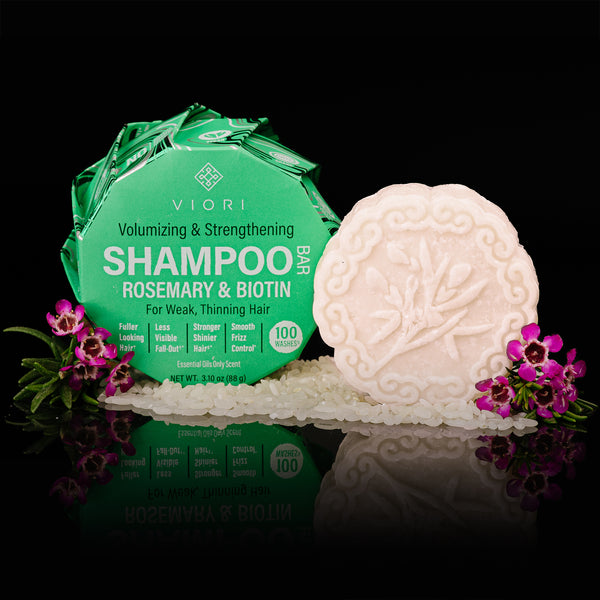
Viori emphasizes that their bars are pH balanced, and that’s not a throwaway claim. In practice, it’s one of the most “growth supportive” features a cleanser can have because it helps preserve the cuticle-the outer layer that determines slip, shine, and strength.
2) Essential oils can be helpful… or a headache
Essential oils can feel refreshing and smell incredible, but on a sensitive scalp they can also stir up irritation. And chronic irritation is the kind of slow-burn problem that can quietly derail retention.
If you know your scalp is reactive (or you’re simply trying to reduce variables), an unscented option is often the smartest baseline. Viori’s Native Essence is unscented and is commonly the best starting point for people who are fragrance-sensitive.
3) “Strengthening” can backfire when protein is overdone
Protein is a tool, not a lifestyle. It can improve the feel and resilience of damaged hair-but too much, too often (especially on hair that’s already stiff or low-porosity) can tip into brittleness. One detail I appreciate about Viori is their note that they use a low concentration of rice protein, designed to stay in a safer range for regular use.
The real scalp science: growth support is inflammation management
When you strip away the hype, a truly growth-supportive shampoo does four things well: it cleans without over-stripping, calms the scalp, keeps hydration steady, and reduces friction so hair doesn’t snap.
That’s also why scalp concerns like flaking have to be approached with nuance. Oily flaking and dry flaking don’t behave the same way, and they don’t benefit from the same approach.
- For oily scalp concerns, Viori often points people toward Citrus Yao because it’s better aligned with oil control.
- For dry scalp concerns, Viori often recommends Hidden Waterfall, Terrace Garden, or Native Essence shampoo as more moisturizing options.
Fermentation: the “organic-adjacent” detail that’s genuinely interesting
Most articles talk about botanical ingredients as if “more” automatically equals “better.” What’s usually missing is the concept of bioavailability-whether an ingredient is prepared and delivered in a way that’s actually useful for hair and scalp.
Viori uses fermented Longsheng rice water and notes something important: high concentrations of rice water used too frequently can disrupt pH. Their approach is designed to keep rice water in a pH-balanced format at a lower concentration, aiming for similar hair-supporting benefits without inviting the pH problems that can show up when people overdo DIY-style routines.
They also highlight fermentation-associated nutrients often discussed in hair science circles, including inositol (Vitamin B8) and panthenol (Vitamin B5), alongside hydrolyzed rice protein. From a stylist’s perspective, this combination can be especially helpful for retention because it’s associated with improved manageability-less snagging, easier detangling, and a smoother feel that reduces breakage over time.
What actually matters most: the cleanser and the conditioning system
If you want to get picky (and you should), look beyond buzzwords and focus on the mechanics. Viori uses Sodium Cocoyl Isethionate (SCI) as a cleanser-widely considered a mild cleansing option. Mild cleansing tends to be a retention win because overly harsh cleansing can lead to tightness, irritation, and the kind of dryness that makes hair tangly and fragile.
On the conditioning side, Viori uses behentrimonium methosulfate as a conditioning ingredient. Despite the name, it’s commonly used in hair care as a conditioning agent rather than a stripping cleanser. The practical takeaway is simple: better slip equals less force when you comb, and less force means less breakage.
The bar shampoo mistake that can cost you length: friction
This is the part I wish every bar user knew from day one: how you apply a bar matters. Rubbing a bar directly over your hair can increase friction and rough up the cuticle-especially if your hair is color-treated, high-porosity, curly/coily, or simply fine and fragile.
WHAT CUSTOMERS ARE SAYING
Real reviews for Rosemary Biotin Shampoo Bar – Thinning Hair | VIORI
Viori specifically recommends building lather in your hands and applying with your palms and fingers rather than rubbing the bar directly on your head. That small technique shift can make a big difference in how much hair you retain.
A stylist-friendly checklist for a legitimate “organic growth shampoo”
If you’re evaluating what belongs in your routine, here’s what I’d prioritize for real-world results:
- pH balance to support cuticle smoothness and scalp comfort
- Mild cleansing that removes oil and buildup without stripping
- Scent options (including unscented) for sensitive scalps
- Slip and conditioning support to reduce combing force and breakage
- Thoughtful protein levels that strengthen without tipping into brittleness
- Scalp-type guidance so oily and dry needs aren’t treated the same way
An 8-12 week “growth support” routine that’s actually realistic
If your goal is fuller-looking hair over the next few months, build your plan around calm scalp + low breakage. Here’s a simple structure that works for most people:
- Wash based on your scalp timeline (not a trend). If you’re oily by day 1-2, cleanse accordingly. If you’re dry and comfortable until day 4+, don’t over-wash.
- Condition consistently. Shampoo removes some protective sebum; conditioning helps protect the strand while your natural oils replenish.
- Rinse well and finish cooler if frizz or roughness is an issue.
- Detangle gently with a wide-tooth comb and start from the ends.
- Commit to a true test window. Hair changes are slow; give a routine time to show retention benefits.
The bottom line
When “organic hair growth shampoo” is done right, it’s less about chasing a miracle and more about building a scalp-and-hair environment where growth can finally be seen. The most convincing formulas and routines focus on pH balance, low irritation, gentle cleansing, and reduced friction-because that’s how you keep hair on your head and keep it from snapping off.
Viori fits into this practical, science-forward definition of growth support with pH-balanced shampoo and conditioner bars, a mild cleanser system, and fermented Longsheng rice water designed to support strength, shine, and manageability-key ingredients in the retention game.


