
Tea tree shampoo has become the knee-jerk answer for almost everything: itchy scalp, flakes, greasy roots, “my hair just feels gross.” And when the label says organic, it’s tempting to assume you’re getting the purest, gentlest version of that fix.
But after 20 years behind the chair, I can tell you this: most people don’t get better results from tea tree because it’s tea tree. They get better (or worse) results because of what’s quietly happening underneath the marketing-your scalp barrier, the cleansing system, the product’s pH, and how all of that interacts with oil and buildup on your head.
This post is a technical deep dive, but I’ll keep it practical. If you’ve ever thought, “Tea tree worked for a week… then my scalp freaked out,” you’re exactly who I wrote it for.
What “Organic” Really Means in a Tea Tree Shampoo
Organic generally describes how an ingredient was grown and handled before it became part of a formula. That’s valuable from a sourcing perspective-but it doesn’t automatically guarantee a product will be gentler, safer, or more consistent on the scalp.
NOT SURE WHICH PRODUCT IS RIGHT FOR YOU?
TAKE THE QUIZTakes 30 seconds · 134,000+ customers matched
Here’s what “organic tea tree shampoo” still doesn’t promise:
- Consistency from bottle to bottle (essential oils can vary naturally)
- Scalp comfort (even organic essential oils can irritate sensitive skin)
- Good hair feel (a harsh cleanser can rough up lengths no matter how clean the ingredient list looks)
The overlooked issue: oxidation
Tea tree oil contains aromatic compounds that can oxidize when exposed to air, heat, and light. Oxidation can make an essential oil more likely to trigger sensitivity. That’s one reason some people tolerate a tea tree shampoo at first and then start noticing itching, tightness, or a “hot” scalp feeling later-especially if the product lives in a warm, steamy shower environment.
The Big Misunderstanding: “Dandruff” Isn’t One Problem
Most people say dandruff when they really mean “flakes.” In real life, flakes show up for different reasons, and they don’t all respond to the same approach.
In the salon, I typically see three common patterns:
- Oily flaking (often greasy, clings to the scalp, shows up quickly after washing)
- Dry flaking (powdery, scalp feels tight, often worsened by overwashing)
- Inflamed/itchy scalp with minimal flaking (often linked to sensitivity, buildup, stress, or chronic conditions)
Tea tree is often discussed as “antimicrobial,” but scalp issues aren’t always solved by going to war with microbes. More often, they’re solved by improving the scalp environment-balancing oil, reducing residue, keeping the barrier calm, and making sure the formula doesn’t irritate you into a scratch cycle.
Tea Tree Is Oil-Soluble-So It Behaves Like an Oil
Here’s a detail that explains a lot of real-world results: tea tree oil is lipophilic, meaning it prefers oil. That means it naturally wants to mix with:
- sebum (your scalp’s natural oil)
- oily buildup
- styling residue
- the lipid portion of your scalp barrier
This is why tea tree can feel fantastic on a truly oily scalp: it “fits” that environment. But it can feel harsh when your scalp is already dry or freshly stripped-because now the same compounds can sit on stressed skin and feel like too much.
The “Tingle Trap”: Sensation Is Not Proof It’s Working
Tea tree often creates that cool, minty tingle. A lot of people take that as evidence the product is doing something therapeutic. Sometimes it’s just a sensory effect-your scalp’s nerve endings responding to a stimulating ingredient.
If the tingle crosses into burning, stinging, or escalating itch over time, that’s not a detox. It’s often a sign your barrier is getting irritated or you’re becoming sensitized (especially if your scalp is already reactive).
The Real Deal-Breaker: The Cleanser System Matters More Than the “Hero Ingredient”
If someone tells me, “Tea tree shampoo dried out my hair,” I’m usually not blaming tea tree first. I’m looking at the surfactants-the cleansing agents that decide how aggressively oil is removed and how your hair cuticle feels afterward.
A well-designed cleanser system should remove oil and grime without leaving the scalp tight or the lengths rough. That’s why I pay attention to milder cleansers when a client wants “scalp clean” benefits without turning their ends into Velcro.
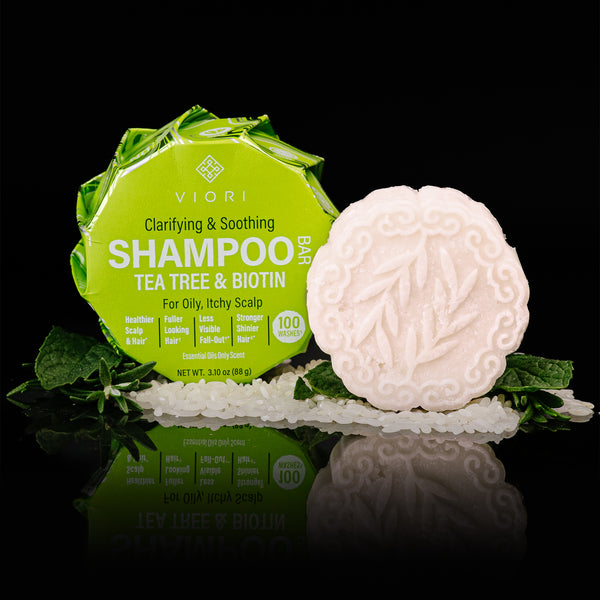
For example, Viori uses Sodium Cocoyl Isethionate (SCI) as the cleanser in its shampoo bars-often nicknamed “baby foam” in formulation circles because it’s known for being a gentler cleansing option compared to many traditional harsh systems. In my experience, that type of cleanser choice can make a noticeable difference in scalp comfort and hair softness over time.
pH: The Quiet Variable That Decides Shine, Frizz, and Scalp Comfort
If you only take one technical concept from this post, make it pH. pH influences how the cuticle behaves-whether it lies smoother or lifts and grabs onto everything.
Viori notes that hair products generally perform best in a pH range of about 3.5-6.5, and that formulas that skew too alkaline can contribute to dryness and damage long-term.
Here’s why that matters for tea tree shampoos specifically: you can temporarily reduce oil and flakes, but if the pH and cleansing system are too aggressive, you may trigger a cycle that looks like this:
- You cleanse hard to feel “fresh.”
- Your hair feels rougher and frizzier over time (cuticle disruption).
- You compensate with heavier conditioners or styling products.
- Residue builds faster.
- Your scalp feels greasy/itchy again sooner.
- You cleanse even harder, and the loop continues.
This is one of the most common patterns I see when someone says, “My scalp is oily but my ends are dry, and nothing makes sense.” It makes perfect sense-your scalp and your ends are living in two different worlds.
When Tea Tree Shampoo Makes Sense (and When It’s a Bad Bet)
Tea tree tends to be most helpful when the underlying issue is truly oil-driven.
Tea tree may be a good fit if you have:
- an oily scalp that feels greasy within 1-2 days after washing
- greasy flakes or waxy buildup
- itch that correlates with sweat and oil
- a scalp that feels better immediately after a thorough cleanse
Tea tree can be risky if you have:
- a dry, tight scalp with powdery flaking
- frizz-prone lengths and dry ends
- known sensitivity to fragrance or essential oils
- a history of reacting to “cooling” or “tingly” products
If you fall into that second group, an approach built around moisture, barrier support, and low-irritation formulas often works better-sometimes even choosing an unscented option to reduce potential triggers.
WHAT CUSTOMERS ARE SAYING
Real reviews for Tea Tree Shampoo Bar – Oily & Itchy Scalp | VIORI
A Pro Technique Most People Don’t Use: Zone Cleansing
This is one of the simplest ways to get scalp benefits without sacrificing the lengths: treat your scalp and your ends differently.
- Scalp: cleanse where oil, sweat, and buildup live.
- Mid-lengths and ends: keep cleansing gentler (let the lather rinse through), then condition thoroughly.
This technique is especially useful for anyone who loves the idea of a clarifying, scalp-focused wash but hates the dry, tangly aftermath.
It’s also why application method matters with bars. Viori recommends building lather in your hands and applying with your fingers rather than rubbing the bar directly on your head-less friction, less cuticle disruption, and often better results (especially for color-treated hair).
How to Judge an “Organic Tea Tree Shampoo” Like a Pro
If you want to shop smarter, evaluate the whole system-not just the headline ingredient.
Here’s the checklist I’d use:
- What’s the cleanser system? Mild enough for frequent use, or designed as an occasional reset?
- Is it pH balanced for hair? This can make or break frizz, shine, and scalp comfort.
- How intense is the fragrance/essential oil load? Stronger isn’t better for sensitive scalps.
- What’s your scalp type? Oily, normal, and dry scalps need different strategies.
- How is it stored? Heat and steam can accelerate oxidation over time.
Final Takeaway: Tea Tree Is a Tool, Not a Foundation
Organic tea tree shampoo can be fantastic-when it’s matched to the right scalp type and built on a smart cleanser system and balanced pH. But tea tree isn’t a substitute for fundamentals.
If your goal is long-term scalp comfort and consistently good hair days, prioritize:
- a well-designed, gentle cleansing approach (like the SCI-based cleansing used in Viori shampoo bars)
- pH-balanced formulas
- reliable conditioning (Viori explains it well: cleansing removes protective oils; conditioner helps protect strands while natural sebum replenishes)
- choosing products based on scalp type, not trends
If you want, share how quickly your scalp gets oily after washing (1-2 days, 3 days, or 4+ days), plus whether your ends are dry or color-treated-and I’ll tell you the most sensible way to approach a tea tree-style routine without falling into the itch/dryness/buildup loop.


