
Most people hear “pre-shampoo” (or “pre-shampu”) and assume it’s just a trendy extra step-usually something like slathering oil on dry hair and calling it self-care. In the salon, I’ve learned it’s far more practical than that. Done with intention, pre-shampoo is wash-day engineering: it helps control how your hair absorbs water, how much friction it experiences, and how evenly it can be cleansed and conditioned.
Here’s the angle that doesn’t get enough attention online: pre-shampoo isn’t primarily about “adding moisture.” It’s about managing what happens to hair when it’s wet-because that’s when strands are most fragile, most swollen, and most likely to tangle, stretch, and snap.
Why pre-shampoo works (the water-swell problem nobody explains)
Hair is a fiber. When it gets wet, it swells; when it dries, it contracts. Over time, that repeated swell-and-shrink cycle can rough up the cuticle and contribute to frizz, knots, and breakage-especially if your hair is porous, chemically treated, or naturally coarse.
NOT SURE WHICH PRODUCT IS RIGHT FOR YOU?
TAKE THE QUIZTakes 30 seconds · 134,000+ customers matched
Pre-shampoo helps by creating a “buffer” on the hair so water doesn’t rush in as aggressively. Think of it like a controlled wetting strategy: less sudden swelling, less friction, and (for many people) fewer tangles during the wash.
Pre-shampoo isn’t one thing-there are three types (and they feel totally different)
1) Lipid pre-shampoo (oils/butters)
This is the version most people know. A lipid pre-shampoo puts a water-resistant layer on the hair that can slow water uptake and improve slip. It’s especially helpful if your ends feel fragile or if your hair tangles the second it gets wet.
The biggest mistake I see is using a heavy oil routine on hair that doesn’t need it. Low-porosity hair, in particular, can feel coated fast-because it tends to resist absorption and hold onto residue more easily.
2) Conditioner pre-shampoo (the “charge management” method)
This is the method I wish more people talked about, because it’s not a vibe-it’s physics. Hair, especially damaged hair, often carries more negative charge. Conditioner ingredients tend to be positively charged, which helps them cling to the hair shaft, reduce static, and increase slip.
When you use conditioner as a pre-shampoo, you’re not just making hair feel soft. You’re reducing friction before cleansing even begins, which can mean less snapping during detangling and less roughness after rinsing.
Viori’s conditioner bar is a great candidate for this style of pre-shampoo because it’s built for real conditioning performance and uses behentrimonium methosulfate (a conditioning ingredient that’s commonly used for slip and manageability, and not a harsh cleansing sulfate).
3) Film/slip pre-shampoo (surface smoothing)
Some pre-shampoo routines are less about “oil” and more about making the hair behave-smoothing the surface so it doesn’t grab onto itself. If your biggest complaint is tangles (not dryness), this approach can be the most noticeable.
What pre-shampoo changes about your shampoo step
Shampoo is surfactant chemistry-cleansing molecules lift and suspend oils and buildup so they can rinse away. When you pre-shampoo, you’re changing how that cleansing power gets distributed across the scalp and lengths.
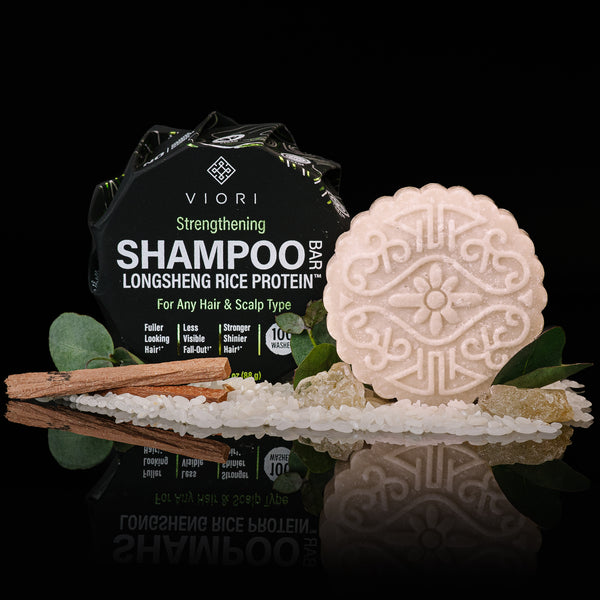
Viori shampoo bars use sodium cocoyl isethionate (SCI), a gentle cleanser often nicknamed “baby foam” because it can cleanse without the aggressive stripped feel people associate with harsher detergents. With a smart pre-shampoo, the cleanser can focus where you actually need it most-your scalp-while your ends stay more protected.
The most effective strategy: treat your scalp and lengths like two different materials
This is the pro move: your scalp is skin, and your lengths are fiber. They don’t need the same treatment. Pre-shampoo shines when you use it to create selective cleansing.
- Pre-shampoo the mids and ends (where hair is older, drier, and more damage-prone)
- Keep the scalp mostly free so shampoo can remove oil and buildup effectively
- Cleanse the scalp thoroughly and let the lather rinse through the lengths
This also pairs beautifully with Viori’s best practice for bar use: build lather in your hands and apply with your hands rather than rubbing the bar directly on your head. Less friction = happier cuticle = smoother hair.
pH matters-and pre-shampoo is the “insurance policy” for your cuticle
Hair tends to perform best in a mildly acidic range (commonly cited as around pH 3.5-6.5). When products skew too alkaline, the cuticle can lift more, which may increase roughness and dryness over time. Viori bars are formulated to be pH balanced, which supports more consistent cuticle behavior.
Pre-shampoo adds another layer of protection because it reduces the amount of cuticle stress caused by hot water, rough handling, and detangling while the hair is swollen and stretchy.
How to choose a pre-shampoo routine (without guessing)
If your hair is high-porosity
High-porosity hair usually wets fast, dries fast, frizzes easily, and tangles readily. It often benefits from a more protective pre-shampoo on the lengths.
WHAT CUSTOMERS ARE SAYING
Real reviews for Rice Water Shampoo Bar – All Hair Types | VIORI
- Best match: lipid pre-shampoo or conditioner pre-shampoo on mids/ends
- Viori direction: if your scalp runs normal-to-dry, many people do well leaning more moisturizing with Terrace Garden or Native Essence
If your hair is low-porosity
Low-porosity hair often resists wetting and can be buildup-prone, so heavy pre-shampoo can backfire.
- Best match: a light conditioner pre-shampoo mainly for detangling, minimal oils
- Viori direction: if your scalp leans oily or gets greasy quickly, Citrus Yao is often a smart first try because citrus-related components are known for better oil breakdown and it’s commonly recommended for normal-to-oily scalps
If you have oily roots and dry ends
This is one of the most common combinations I see. The answer isn’t to “pick one product and hope.” It’s to split your routine on purpose.
- Pre-shampoo: ends only
- Shampoo: scalp-focused
- Condition: mids/ends thoroughly
Within the Viori lineup, a classic pairing is Citrus Yao shampoo for the scalp, with a more moisturizing conditioner option (like Hidden Waterfall, Terrace Garden, or Native Essence) focused on the ends.
Three salon-style pre-shampoo protocols you can actually repeat
Protocol 1: “Selective Shield” (best all-around)
- Lightly wet your hair.
- Apply your pre-shampoo to mids/ends only (oil or Viori conditioner worked into the lengths).
- Let it sit for 5-20 minutes.
- Lather Viori shampoo in your hands and cleanse the scalp (don’t claw with nails).
- Rinse and let the runoff cleanse the lengths.
- Condition mids/ends and let it sit a few minutes before rinsing.
Protocol 2: “Detangle-First” (for tangly, fragile, curly hair)
- Apply Viori conditioner to dry or slightly damp mids/ends.
- Finger-detangle gently.
- Rinse lightly (you don’t need to remove every trace).
- Cleanse the scalp with shampoo.
- Condition normally and rinse well.
Protocol 3: “Minimal Buildup” (for low-porosity hair)
- Use a very small amount of pre-shampoo only where you tangle.
- Keep processing time short (2-5 minutes).
- Shampoo the scalp thoroughly and rinse longer than you think you need to.
- Condition lightly on ends and rinse well.
Troubleshooting: what your results are trying to tell you
- “My hair feels coated.” You likely used too much pre-shampoo for your porosity, or it got on your scalp. Use less, keep it on the ends, and rinse longer.
- “My roots are oily faster.” Pre-shampoo drifted upward, or your cleanse wasn’t scalp-targeted enough. Keep pre-shampoo mid-length to ends only and focus shampoo on the scalp.
- “My ends still feel dry.” Often this is friction + hot water + rough handling. Use cooler water, reduce manipulation, and let conditioner sit at least 5 minutes for a deeper effect.
The bottom line
Pre-shampoo is not an extra step for the sake of having an extra step. It’s a way to make your wash day more controlled: less swelling stress, less friction damage, and better results from the shampoo and conditioner you’re already using.
If you want to dial this in precisely, match the method to your scalp type and porosity-and keep the routine scalp-focused for cleansing, length-focused for protection. That’s where Viori’s pH-balanced bars and gentle-but-effective cleansing approach can fit in beautifully.


