
When someone sits in my chair and tells me, “My hair just won’t grow,” I don’t start by blaming their genes or suggesting they chase the latest miracle ingredient. More often than not, their hair is growing-it’s just not staying.
That’s the real reason rice has earned such a strong reputation in hair care. Not because it flips a magical switch at the follicle, but because it can support the part of the “growth” story that gets ignored online: length retention.
In other words, rice can help your hair look like it’s growing faster by helping it break less, tangle less, and wear down less. That’s a very different promise than “instant new growth,” but it’s the one that tends to show up in the mirror.
NOT SURE WHICH PRODUCT IS RIGHT FOR YOU?
TAKE THE QUIZTakes 30 seconds · 134,000+ customers matched
Hair growth isn’t just about the scalp-it’s also about the hair fiber
Here’s the simplest way to think about it: your hair length is a balance sheet. You’ve got length coming in, and you’ve got length going out.
- Length gained = what your follicles produce during the growth phase
- Length lost = breakage, split ends creeping upward, friction damage, heat/UV stress, and chemical wear
If those ends are snapping off as quickly as the roots are producing new length, it will feel like your hair “stopped growing.” In reality, you’re just not getting to keep what you’ve earned.
The under-discussed angle: rice can improve your hair’s “survival rate”
Most hair-growth articles stay fixated on the follicle. That’s important, of course-but it’s not the whole picture. Hair that’s already outside the scalp is no longer living tissue. So topical hair care can’t “feed” it the way food feeds the body.
What topical care can do is change how the hair behaves day to day-how it handles brushing, washing, styling, and environmental stress. That’s where rice-based routines often shine: they’re frequently associated with smoother feel, better resilience, and less breakage over time.
Why fermented rice water gets more attention than plain rice water
People love DIY rice rinses, but the part that rarely gets explained clearly is that concentration and pH can make or break the experience. Viori addresses this directly: using rice water at too high a concentration, too often, can disrupt the hair and scalp’s pH balance. That’s why their formulas use a lower, safer concentration of fermented Longsheng Rice Water™ inside a pH-balanced system.
That pH detail matters because hair generally behaves best in a mildly acidic range. When products run too alkaline, the cuticle can lift more, which often leads to roughness, tangling, and increased breakage. If your goal is longer hair, that’s exactly what you want to avoid.
Rice protein doesn’t “repair” hair like a bandage-here’s what it actually does
One of the biggest misconceptions I see is the idea that protein “rebuilds” hair from the outside. Hair is a dead fiber once it leaves the scalp-so protein can’t regenerate it like skin heals.
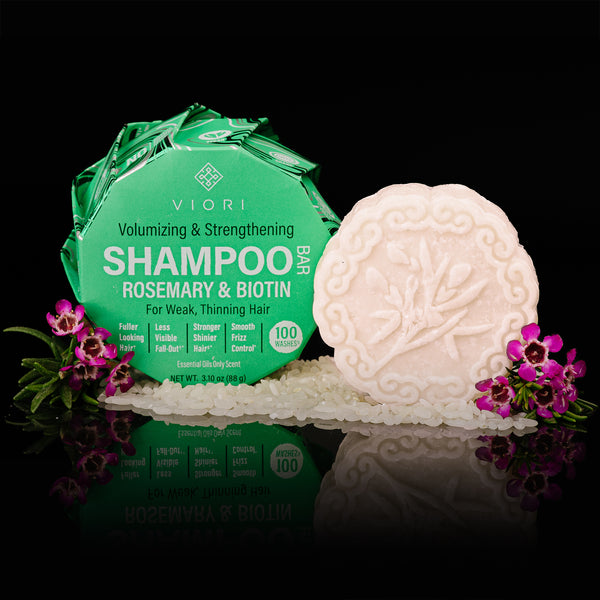
But hydrolyzed proteins (including hydrolyzed rice protein) can be extremely helpful because they can deposit along the hair and support the surface, especially where the cuticle is rough or compromised. Done well, that typically shows up as:
- Less snapping during brushing and detangling
- More shine because the cuticle lies flatter
- Better body and a fuller look, especially for fine hair
- Improved “soft strength”-hair feels flexible instead of fragile
Viori also notes they use a low concentration of rice protein. That’s a smart call, because too much protein too frequently can make some hair types feel stiff or brittle. In the salon, I’ve always found that balanced routines win over aggressive ones.
The scalp piece people overlook: comfort affects consistency
Another reason rice-based routines can look like “growth boosters” is more practical than people realize: a comfortable scalp supports consistent habits. When the scalp is itchy, tight, flaky, or reactive, people tend to over-scrub, over-wash, under-wash, or constantly switch products-none of which helps long-term results.
Viori’s bars are formulated to support scalp health and help reduce dryness and irritation, and they highlight ingredients like aloe vera and bamboo extract in that context. The goal isn’t a dramatic overnight transformation-it’s a scalp that behaves well enough for you to stick with a routine long enough to judge it fairly.
A bar-specific detail that can sabotage “growth results”: friction
This is a big one, and it almost never gets mentioned in rice hair-growth posts because most of those are written around liquid rinses, not bars.
Any time you add friction-especially by rubbing a bar directly on the hair-you risk lifting the cuticle and creating tangles. Tangles lead to aggressive brushing. Aggressive brushing leads to breakage. And breakage is the quiet thief of length.
Viori even calls this out for color-treated hair and recommends a gentler technique: lather in your hands, then apply with your fingers instead of grinding the bar against your strands.
Porosity: why rice works brilliantly for some people and only “fine” for others
If you’ve ever tried something everyone raved about and thought, “Why doesn’t this feel the same on me?”-porosity is often the answer.
Viori describes a simple porosity test (the float test) and explains how different porosities behave. The takeaway is this:
WHAT CUSTOMERS ARE SAYING
Real reviews for Rosemary Biotin Shampoo Bar – Thinning Hair | VIORI
- High porosity hair (often damaged, dry, or chemically processed) tends to respond dramatically to balanced moisture + protein support because it’s trying to hold itself together.
- Low porosity hair can be more prone to buildup and may need lighter, more cleansing routines to keep hair buoyant and fresh.
So when someone says rice “made their hair grow,” what they often mean is it helped their hair stop breaking-especially if they had higher porosity or more wear and tear along the mid-lengths and ends.
So… does rice help hair grow?
Here’s the most honest, professional answer: rice-based hair care can help hair appear to grow faster by improving length retention. That means fewer broken ends, less friction loss, and better day-to-day resilience.
Viori notes results can vary-some people notice changes quickly, while others need consistency over time. In my experience, if you’re assessing anything related to hair length, 8-12 weeks is a much more realistic window than “after one wash.”
A practical, retention-first way to use rice-based care
If your goal is longer hair, you’ll get the best return when you treat rice as one part of a bigger plan: protect the fiber you already have while keeping the scalp comfortable.
- Reduce breakage before chasing growth: detangle gently, especially when wet, and avoid rough towel-drying.
- Support the cuticle: condition consistently-this is how you reduce friction and tangling.
- Match your bar to your scalp type: Viori generally recommends Citrus Yao for normal-to-oily scalps and Terrace Garden, Hidden Waterfall, or Native Essence for normal-to-dry scalps (with Native Essence being a go-to for fragrance sensitivities).
- Use bar technique that protects your ends: build lather in your hands, apply with fingers, and keep scrubbing focused on the scalp-not the lengths.
The bottom line
If you’re hoping rice will force your hair to grow overnight, you’ll likely be disappointed. But if you’re willing to approach “hair growth” the way stylists do-by prioritizing strength, slip, cuticle behavior, and scalp comfort-rice becomes a very smart tool.
Because the secret to longer hair usually isn’t making hair grow faster. It’s helping your hair stop breaking so you can finally see the length you’ve been producing all along.


