
Rice hair masks get talked about like they’re a single, foolproof “secret” for shinier, stronger, faster-growing hair. In practice, they’re more like a DIY chemistry experiment: the results depend on how the mixture behaves on your hair and scalp, in your bathroom, under your water and climate conditions.
After 20 years behind the chair, I can tell you this: rice treatments can be beautiful when they’re done thoughtfully. But the internet rarely covers the real reasons they’re inconsistent-things like pH drift, starch film behavior, protein sensitivity, and even friction from application.
Let’s unpack what a rice hair mask is actually doing at the fiber level, why it can feel like magic after one wash, and why some people end up with hair that feels stiff, coated, or strangely frizzy.
What a Rice Hair Mask Is Really Doing to Your Hair
Most rice-based masks (and rice-water routines) work through a blend of three effects: surface coating, reinforcement, and fermentation byproducts. The trick is that each one can help-or backfire-depending on your porosity, your scalp balance, and how concentrated the treatment is.
NOT SURE WHICH PRODUCT IS RIGHT FOR YOU?
TAKE THE QUIZTakes 30 seconds · 134,000+ customers matched
1) Starch: The “Glass-Hair” Film (Temporary, Powerful, and Easy to Overdo)
Rice contains starch made up primarily of amylose and amylopectin. When starch hydrates (and especially when it’s warmed), it can create a thin film on the hair. That film can make hair feel smoother, look shinier, and even feel a bit thicker.
Here’s the part people don’t talk about: starch films are humidity-reactive. In damp air, they can re-swell and feel tacky or heavy. In dry air, they can stiffen and feel rough. That’s one reason the same mask can make one person’s hair feel silky and another person’s hair feel “crispy.”
2) Rice-Related Proteins: Strength Support… or Stiffness
Hair is mostly keratin, and when it’s damaged, the cuticle surface becomes uneven. Protein and protein-like materials in rice-based treatments can deposit along the strand and temporarily improve the feel of strength and smoothness.
But protein has a personality. On the wrong head of hair-or used too often-protein can push hair into a stiff, brittle feeling. That doesn’t always show up immediately; sometimes it sneaks in after a few treatments when the hair starts to tangle more easily or snap instead of stretch.
3) Fermentation Byproducts: The Quiet Game-Changer
When rice water is fermented, you may see increased levels of compounds often discussed in haircare science, including inositol (Vitamin B8) and panthenol (Vitamin B5)-related benefits. These are associated with improved manageability, softness, and overall hair feel.
Fermentation can also change the acidity of the mixture. And that leads us to the most important (and most overlooked) variable of all.
The “Make-or-Break” Variable Nobody Measures: pH
If a rice hair mask works for you, there’s a good chance your mixture landed in a pH range your scalp and cuticle liked. If it didn’t, you may have felt dryness, frizz, tangling, or irritation-and assumed “rice just doesn’t work for me.”
Uncontrolled soaking and fermenting can cause pH to drift unpredictably based on temperature, timing, water minerals, and even how clean the container is. Hair and scalp generally do best when products stay within a gently acidic band.
- Too acidic can feel tight or irritating on the scalp and can make fragile hair feel extra stressed.
- Not acidic enough can leave the cuticle feeling rougher, which shows up as dullness, frizz, and tangles.
- Inconsistent pH is why one batch can feel amazing and the next one feels like it “ruined” your hair.
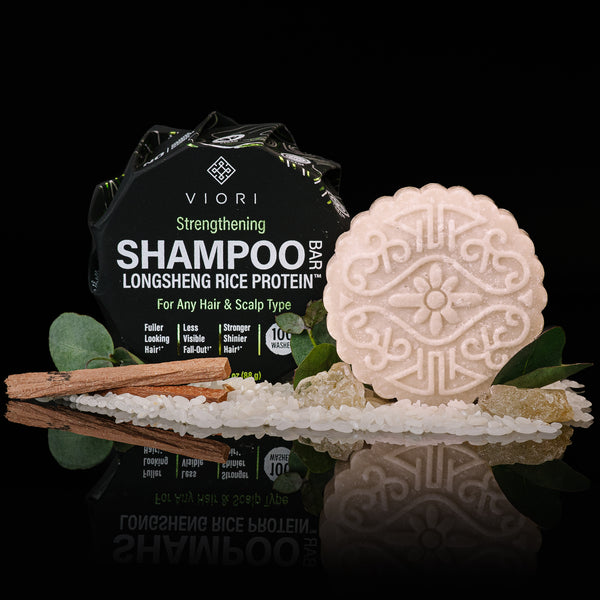
This is one reason Viori takes a different approach from heavy DIY rice routines: Viori uses a lower concentration of fermented Longsheng rice water in formulas designed to stay pH balanced. High concentrations of rice water used too often can disrupt hair and scalp pH, so stability and balance matter.
The “Biofilm” Problem: When DIY Rice Becomes a Microbiology Experiment
Here’s a unique angle that deserves more airtime: once you combine water + starch + time, you’ve created an environment that can support microbial growth. “Fermented” doesn’t automatically mean “controlled fermentation,” and your scalp can tell the difference.
When a mixture isn’t stable, a few things can happen:
- Increased irritation potential for sensitive or reactive scalps
- Inconsistent performance from batch to batch
- Residue buildup that makes hair feel coated at first, then progressively rougher or harder to detangle
If you love the idea of rice-based care but hate the unpredictability, this is where a well-formulated, self-contained system can be a relief. Viori’s bars are designed to be pH balanced and consistent in use, without you having to “babysit” a mixture on the counter.
Porosity: Why Your Results Don’t Match Your Friend’s
Porosity is your hair’s ability to absorb and retain moisture. It also helps predict how your hair will respond to starch films and protein deposition.
Low Porosity Hair: More Likely to Feel Coated
Low porosity hair has a compact cuticle that resists absorption. It often does best with lighter routines and can be more prone to buildup from heavy films.
- Starch films can sit on top and create drag.
- Protein can make the hair feel rigid quickly.
- Hair may look shiny but feel oddly “not touchable.”
High Porosity Hair: Often Loves Rice-With Boundaries
High porosity hair absorbs easily, but it also loses moisture easily. A rice-based film or light protein support can improve smoothness and reduce frizz. The key is not turning it into a daily coating ritual.
- Too frequent use can lead to stiffness.
- Not rinsing thoroughly can lead to residue and tangling.
- Balance (and conditioner) becomes non-negotiable.
The Hidden Damage Trigger: Friction During Application
A lot of rice-mask routines involve aggressive rubbing, scrubbing, or rough detangling. That friction can lift the cuticle and lead to breakage-especially on color-treated hair or already compromised ends.
If you want the benefits without the backlash, apply and rinse like a pro:
- Handle lengths gently; don’t scrub your mids and ends.
- Detangle with patience, ideally with plenty of slip and a wide-tooth comb when appropriate.
- Rinse thoroughly, especially at the nape and behind the ears where residue likes to hide.
That same “reduce friction” logic shows up in Viori’s guidance for color-treated hair: rather than rubbing product directly on the head, it’s often better to work product through with your hands to minimize cuticle disruption.
The Real Secret Isn’t the Recipe-It’s the Frequency
If there’s one adjustment that fixes most rice-mask issues, it’s this: treat rice as a periodic treatment, not a constant routine. Hair rarely needs heavy film-formers and protein-style reinforcement every wash.
Watch for these “too much” signals:
WHAT CUSTOMERS ARE SAYING
Real reviews for Rice Water Shampoo Bar – All Hair Types | VIORI
- Hard, squeaky, or straw-like feel (often stiffness overload)
- Increased tangling (cuticle friction or residue)
- Dullness that shows up after initial shine
- Scalp tightness or itch (possible pH or sensitivity issue)
A More Consistent Way to Get “Rice Mask” Benefits
If what you’re chasing is the classic rice-mask finish-smoothness, shine, strength support, and scalp comfort-consistency matters more than trends. Viori’s approach is built around a key reality: rice water can be beneficial, but high concentrations used too often can disrupt pH. Using a lower, pH-balanced concentration of fermented Longsheng rice water alongside other nourishing ingredients helps create similar benefits in a format that’s easier to use regularly.
Viori’s bars are also designed to support hair goals people often associate with rice routines-like moisturizing, strengthening, increasing natural shine, and improving scalp comfort-without relying on a DIY mixture that changes week to week.
Choosing the Right Viori Option for Your Scalp Type
Scalp type is the foundation. If the scalp is off-balance, the lengths usually follow.
- Oily scalp (oily in 1-2 days): Viori Citrus Yao is commonly the best match; citrus is known for breaking down oil effectively, and this option includes citric acid.
- Dry scalp (oily 4+ days after washing): Viori Terrace Garden, Hidden Waterfall, or Native Essence tend to be great choices for a more moisturizing feel.
- Sensitive scalp or fragrance sensitivity: Viori Native Essence is the unscented option and is typically the gentlest route.
And yes, I’m going to say the thing that makes the biggest difference long term: conditioner helps protect hair after cleansing. Cleansing removes some natural sebum, and conditioner can help replace that protective feel while your scalp rebuilds its natural balance.
How to Tell If Your Routine Is Working (A Simple Pro Check)
Don’t judge a rice routine only by the “right after rinse” moment. Use this quick, stylist-style evaluation:
- Slip during rinse: smooth is good; squeaky is a warning.
- Drying feel: soft-flexible is ideal; hard-brittle means pull back.
- Day-2 behavior: balanced roots + smooth ends is a win; greasy roots + rough ends often signals buildup or imbalance.
Final Thoughts
Rice hair masks aren’t nonsense-and they’re not miracle work, either. They’re a blend of starch films, protein-style reinforcement, and fermentation byproducts, all sitting on top of the biggest variable of all: how your hair and scalp respond to pH, residue, and frequency.
If you love the rice concept but want fewer surprises, a steady, pH-balanced option like Viori’s fermented Longsheng rice water approach can give you many of the same goals-shine, softness, manageability, and scalp comfort-without turning your shower into a trial-and-error lab.
If you’d like to dial this in, start with your scalp type (oily, normal, or dry) and choose accordingly. You can also explore Viori’s collections directly at https://viori.com.


