
Rice hair wash sounds simple-so simple, in fact, that most of the advice online reduces it to a feel-good rinse and a few before-and-after photos. But the results people get (good and bad) aren’t random. They’re usually the predictable outcome of a handful of technical variables: pH control, protein dose, residue management, and how well the method matches your scalp type and hair porosity.
After 20 years behind the chair, here’s the angle I don’t see discussed nearly enough: it’s not the “rice” that makes or breaks you. It’s what fraction of rice chemistry actually deposits on your hair, how evenly it deposits, and whether the routine keeps your cuticle in a healthy range instead of quietly roughing it up over time.
What “Rice Hair Wash” Usually Means (And Why That Matters)
When someone says they wash their hair with rice water, they’re often talking about one of three completely different mixtures. Each behaves differently on the hair fiber, and each has its own failure points.
1) Soaked or rinsed rice water (starch-forward)
This is the cloudy water left after soaking or rinsing rice. It tends to be rich in starches and soluble polysaccharides, which are natural film-formers. That film can make hair feel smoother, thicker, and sometimes less frizzy.
NOT SURE WHICH PRODUCT IS RIGHT FOR YOU?
TAKE THE QUIZTakes 30 seconds · 134,000+ customers matched
The catch is that film-formers can stack. On the wrong hair type-or simply used too often-starch residue can lead to that familiar spiral: hair starts feeling “strong,” then suddenly feels stiff, dull, and tangly.
2) Diluted, well-strained rice water (lower residue, still inconsistent)
Some people dilute heavily and strain carefully, which can reduce residue. But it’s still hard to repeat the same concentration every time, so results can swing week to week.
3) Fermented rice water (chemistry-shifted)
Fermentation changes the mix of small molecules in the water and is often associated with compounds like inositol (vitamin B8) and panthenol (vitamin B5). It’s also where things get tricky, because fermentation can introduce the most overlooked variable in rice washing: pH drift.
The Quiet Dealbreaker: pH Drift and Cuticle Wear
Hair products work best in a mildly acidic range-generally pH 3.5 to 6.5. When your routine repeatedly pushes too high (too alkaline), the cuticle can lift more easily. That doesn’t always feel dramatic on day one, but it shows up over time as increased friction, frizz, and breakage.
DIY rice water can be unpredictable here. The pH can shift depending on your water hardness, rice type, soak time, fermentation time, temperature, and storage. In other words, two batches made the “same way” can behave differently on your hair.
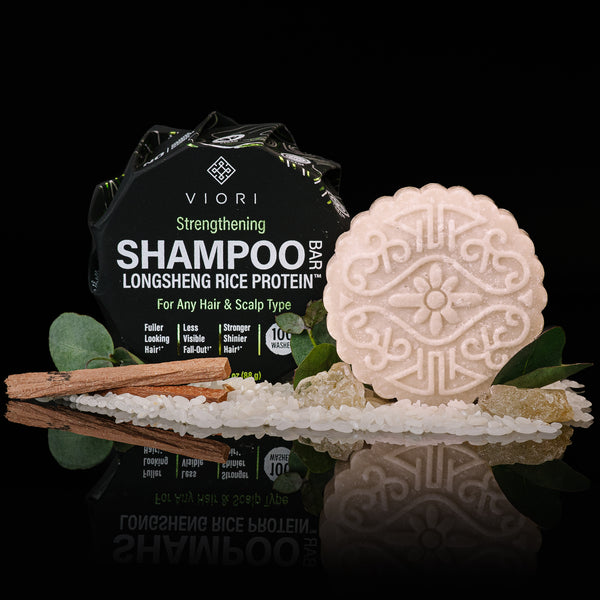
This is one reason a controlled, balanced format matters. Viori uses a lower concentration of fermented Longsheng rice water because higher concentrations of rice water, used too often, can disrupt the hair and scalp’s pH. Their bars are formulated to be pH balanced so you can get rice-wash-style benefits without playing chemistry roulette in your shower.
Protein vs. Starch: “Strengthening” Can Mean Two Totally Different Things
One of the biggest misunderstandings around rice hair wash is that any “strong” feeling equals healthier hair. Sometimes it is. Sometimes it’s just coating.
Starch strength (film formation)
Starches can create a temporary film that boosts slip and gives hair a thicker, fuller feel. That can be helpful-until the film builds unevenly, attracts grime, or makes hair feel coated and draggy.
Protein support (targeted deposition)
When you see rice used intelligently in haircare, the star is often hydrolyzed rice protein. “Hydrolyzed” matters because the protein is broken into smaller pieces that are more likely to deposit where hair is rough or compromised.
Viori includes hydrolyzed rice protein along with fermented Longsheng Rice Water™ and other conditioning ingredients. They also note the protein level is a low concentration, intended to be safe for frequent use-important if you’ve ever experienced the brittle, straw-like feeling that can happen when protein routines are overdone.
Your Scalp Isn’t a Side Note (It’s the Whole Foundation)
Most rice-wash content focuses on the hair shaft. But your scalp is living tissue with its own oil production and sensitivity patterns. Residues that your lengths can “tolerate” may still bother your scalp, especially if you’re oily or prone to flakes.
One practical way to think about it is: if your scalp already runs oily, adding residue without enough cleansing can feel like pouring another layer on top of the problem.
How Viori approaches scalp type and scent options
- Citrus Yao is commonly recommended for normal-to-oily scalps, in part because citrus components (including citric acid) help break down oil.
- Terrace Garden, Hidden Waterfall, and Native Essence are often favored for normal-to-dry scalps.
- Native Essence is unscented and is a frequent choice for people who are sensitive to fragrance or have reactive scalps.
The Porosity Paradox: Who Rice Washing Helps Most (And Who It Can Trip Up)
If I could give every client one “cheat code,” it would be this: your hair’s reaction to rice routines has a lot to do with porosity-your hair’s ability to absorb and hold moisture and product.
Low porosity hair
Low porosity hair has a tighter cuticle structure. It often resists absorption but clings to residue. That means it can look fabulous after a light treatment… and then suddenly feel coated if you repeat it too often.
This is why lighter, more cleansing approaches tend to suit low porosity better. Viori’s guidance often aligns with this, suggesting lighter, more cleansing options for low porosity routines.
High porosity hair
High porosity hair absorbs quickly and loses moisture quickly. It often responds well to controlled protein plus conditioning because it’s trying to patch a rough, lifted cuticle surface. The risk is overdoing it-protein can help, but too much can make high porosity hair feel rigid.
WHAT CUSTOMERS ARE SAYING
Real reviews for Rice Water Shampoo Bar – All Hair Types | VIORI
The Most Overlooked Variable: How the Product Deposits on Hair
Here’s something you rarely see mentioned: even if the ingredients are great, the outcome depends on how evenly the treatment lands and how much friction you create during application.
DIY rinses deposit unevenly
Most DIY rice rinses hit the crown first and the ends last. Ends are more porous, so they “grab” more. The result can be patchy: some areas feel soft, others feel stiff, and the ends get crunchy.
Bars can increase friction if used incorrectly
With shampoo and conditioner bars, the biggest technical risk is friction-especially on fragile or color-treated hair. Viori recommends lathering in your hands and applying with your palms rather than rubbing the bar directly on your head, which can help reduce cuticle disturbance and better preserve color.
If You’re Doing DIY Rice Hair Wash, These Guardrails Save Hair
If you love experimenting, I’m not here to take that away from you. I just want you to do it with the same common sense we’d use in a salon: control the variables and watch for early warning signs.
- Don’t chase intensity. More concentrated and more frequent is usually where rice routines turn on people.
- Learn the signs of protein overload. Hair feels hard, rough, tangly when wet, and snaps more easily. If that shows up, back off immediately.
- Be cautious with fermentation. If you can’t measure pH, don’t treat fermented rice water like a daily staple.
- Rinse like you mean it. Residue is the fastest path from “shiny” to “why is my hair so weird lately?”
- Match it to your scalp. Oily scalps generally need cleaner routines; dry scalps usually need more moisture and gentleness.
The Takeaway: Rice Hair Wash Works Best When It’s Controlled
Rice-based washing can be a beautiful tool for shine, softness, and manageability-especially when the routine keeps the cuticle happy and avoids residue stacking. The biggest determinants of success aren’t hype-driven; they’re technical:
- pH control
- protein dose
- residue management
- porosity and scalp matching
- low-friction application
If you want the benefits associated with rice hair wash but prefer something more consistent than DIY, a pH-balanced system like Viori-with fermented Longsheng Rice Water™ and hydrolyzed rice protein-can deliver the concept in a way that’s repeatable, practical, and easier on the hair over the long run.


