
Rice has become one of the most talked-about hair treatment ingredients in recent years, but most of what you’ll find online is either overly romantic (“ancient secret!”) or overly simple (“it’s just protein!”). The truth is more interesting-and a lot more useful. Rice can genuinely improve the way hair looks and feels, but the results depend on a handful of technical details that almost never get explained: pH, dosage, fermentation control, and how well a product can deposit conditioning benefits onto the hair fiber.
After 20 years behind the chair, I’ve learned to pay less attention to trendy claims and more attention to what hair is actually doing: how it behaves when wet, how it detangles, how it responds after the third or fifth wash-not just the first. Rice is a perfect example of that. Used well, it can make hair feel smoother and more resilient. Used carelessly (especially in high concentrations or inconsistent DIY batches), it can leave hair feeling stiff, coated, or “off” in a way that’s hard to describe until you’ve felt it.
So let’s talk about rice in hair treatment the way a stylist and a formulator would: not as a magic trick, but as a chemistry-and-performance story you can actually use.
Rice isn’t one ingredient-it’s a whole “hair system”
When people say “rice,” they’re usually imagining rice water. But hair doesn’t experience rice as a single, simple ingredient. Depending on the preparation and the formula, rice-based hair care can include a mix of components that behave very differently on the scalp and along the strand.
NOT SURE WHICH PRODUCT IS RIGHT FOR YOU?
TAKE THE QUIZTakes 30 seconds · 134,000+ customers matched
- Fermented rice water components that change as the rice is processed and fermented
- Hydrolyzed rice protein that can form a fine, strengthening-feeling film on the hair
- Rice bran oil that adds lubrication and helps reduce friction
- Starches and sugars that can improve slip in the right dose, but can also contribute to buildup if they’re not controlled
This is why rice can feel incredible in one routine and disappointing in another. It’s not only about whether rice is present-it’s about the balance of what’s included and the consistency of how it’s delivered.
The make-or-break variable most people ignore: pH
If you take only one technical concept from this entire post, let it be this: pH matters, and it matters even more when you’re using something like rice water that people often DIY at home.
Hair and scalp generally perform best in a mildly acidic range. When a product drifts too alkaline, the cuticle can lift more than you want, which tends to show up as:
- more frizz and a rougher texture
- tangles and snapping from higher friction
- dullness (raised cuticle scatters light instead of reflecting it)
- faster fading for color-treated hair (especially when you add friction)
- scalp irritation in more sensitive users
The reason DIY rice water can be unpredictable is that fermentation at home is rarely controlled. The pH can shift batch to batch, and that’s why some people report a confusing pattern: “My hair loved it… until it didn’t.”
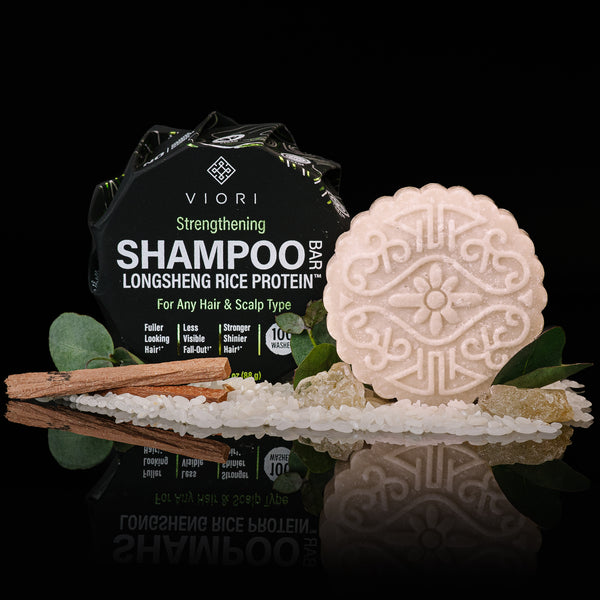
This is one place where a controlled, finished formula has a major advantage. Viori specifically uses a lower concentration of Longsheng rice water because rice water at high concentration can disrupt hair and scalp pH when used too often. Their bars are also designed to be pH balanced, which is one of the most important long-game details for keeping hair healthy and consistent over time.
Rice protein isn’t just “strength”-it’s friction management
“Stronger hair” is often described like it’s purely structural, but in the salon, what we see and feel day-to-day is usually friction. Hair that tangles less, detangles faster, and snags less during combing tends to break less over time. That’s why rice protein can be so helpful: it often works by forming a very fine film on the surface of the hair that smooths out micro-roughness.
In the right amount, that can mean:
- better slip during washing and detangling
- less snagging and less friction-based breakage
- more shine because the surface reflects light more evenly
But here’s the part that rarely gets said out loud: protein films can go from “supportive” to “stiff” if they’re overdone. Too much protein, too often, or layered with other heavy film-formers can leave hair feeling:
- stiff or overly textured
- rough when wet
- “grabby” and harder to detangle
Viori notes they use a low concentration of rice protein, which is a smart choice for everyday usability. Most people don’t need a heavy protein hit daily-they need a steady, balanced approach that supports hair without making it rigid.
The “deposition” secret: ingredients don’t matter if they don’t land where they’re needed
This is one of the most under-discussed parts of hair treatment science: delivery and deposition. You can have beautiful ingredients on paper, but if the formula doesn’t help those ingredients spread evenly, adhere appropriately, and rinse cleanly, the results won’t be consistent.
Damaged hair tends to carry more negative charge in compromised areas. That’s why conditioners often use cationic (positively charged) conditioning agents-they’re attracted to the areas that need the most help, improving slip and cuticle feel where it counts.
Viori’s conditioner includes a cationic conditioning agent (behentrimonium methosulfate), which is widely used in hair care for smoothing, detangling, and improving manageability. In practical terms, that kind of conditioning system can help rice-based benefits feel more even and more predictable wash to wash.
Fermented rice: it’s not just hype if it’s controlled
Fermentation gets marketed as “more nutrients,” and it can be-but the more meaningful advantage is repeatability. A controlled fermentation process can help create a more reliable ingredient profile and user experience than a kitchen-counter ferment that changes with temperature, time, and handling.
Viori points out that fermentation increases levels of vitamin B8 (inositol) and vitamin B5 (panthenol), both of which are well known in hair care for supporting conditioning feel, resilience, and overall manageability. The key is that the rice water is used in a safe, pH-balanced amount that can fit into a consistent routine.
Rice water at home vs. rice in a finished formula
DIY rice water is basically a variable experiment. Sometimes it’s fine. Sometimes it’s phenomenal. And sometimes it leaves you wondering what happened to your hair.
The common variables that make DIY unpredictable include:
- unknown concentration
- pH drift
- residue from starches/sugars
- inconsistent fermentation outcomes
- interactions with hard water or existing buildup
A finished rice-based system is designed to control those variables-especially pH, dose, and rinsability. That’s the logic behind Viori’s approach: fermented Longsheng rice water is included, but in a way that’s designed to be stable, balanced, and usable as part of a normal routine rather than a once-in-a-while experiment.
WHAT CUSTOMERS ARE SAYING
Real reviews for Rice Water Shampoo Bar – All Hair Types | VIORI
How to make rice work for your hair (without the common problems)
If rice has ever made your hair feel amazing one week and strange the next, you’re not imagining it. Here are stylist-level adjustments that usually fix the issue quickly.
- If hair starts to feel stiff or brittle: pull back on protein layering from other products and prioritize hydration + slip. Rice works best when it’s balanced, not stacked.
- If roots feel coated or heavy: focus cleansing on the scalp, apply conditioner from mid-length to ends, and rinse thoroughly. Low-porosity hair especially can feel weighed down if conditioner creeps too close to the root.
- If your scalp gets itchy with DIY rice water: suspect pH inconsistency and switch to a pH-balanced rice-based product format instead.
- If your main goal is shine: stop chasing “more rice” and start chasing cuticle alignment-pH balance, gentle cleansing, and proper conditioning are what make shine stick around.
Where Viori fits into a rice-focused routine
If you want rice benefits with fewer variables, Viori’s bars are built around a controlled approach: fermented Longsheng rice water used in a lower concentration to avoid frequent-use pH disruption, paired with a pH-balanced formula designed for consistent cleansing and conditioning.
And because scalp needs and hair-length needs aren’t always the same, you can tailor your approach based on how your hair behaves:
- Citrus Yao is commonly recommended for normal-to-oily scalps because it contains citric acid, which helps break down oil effectively.
- Terrace Garden and Native Essence are often favored for normal-to-dry scalps, with Native Essence being the go-to for people who want an unscented option.
- Hidden Waterfall is a flexible middle ground that many people with mixed needs enjoy.
If you’re color-treated, one practical tip from Viori’s guidance is worth repeating: because bar formats involve friction, it’s often better to build lather in your hands and apply with your fingers rather than rubbing the bar directly on the hair. Less friction usually means better cuticle behavior-and better color longevity.
Final thoughts: rice is powerful, but precision is the point
Rice in hair treatment isn’t a gimmick. The real magic just isn’t mysterious-it’s technical. When rice is used in a way that respects pH, keeps protein dose reasonable, and relies on a formula that can deposit and rinse cleanly, the results can be beautifully consistent: smoother hair, better manageability, healthier shine, and less friction-based breakage over time.
That’s why I’m a bigger fan of controlled, pH-balanced rice-based systems-like Viori-than unpredictable DIY experiments. Not because DIY never works, but because hair responds best to routines that are repeatable, balanced, and gentle enough to maintain.


