
Rice milk for hair gets talked about like it’s a softer, creamier version of rice water-simple swap, same benefits. In the salon, I see something very different: rice milk routines can be incredible for the right head of hair, and frustrating for the wrong one. The reason isn’t hype or bad luck. It’s chemistry-specifically how rice solids sit on the hair shaft, how your cuticle behaves, and whether your routine keeps the scalp and hair in a healthy pH range.
If you’ve ever had that “Week 1: shiny and smooth, Week 4: stiff and tangly” experience, you’re not alone. What’s rarely discussed online is that many rice milk products (and DIY mixes) act like film formers. That film can be your best friend or your worst enemy depending on your porosity, your wash habits, and how much friction you use.
What “Rice Milk” Usually Means in Haircare (and Why It Doesn’t Act Like Rice Water)
In haircare, “rice milk” typically describes a milky dispersion made from rice (or rice extract) that contains more suspended solids than rice water. That single detail changes everything, because those solids-especially rice starches-can leave a soft coating behind.
Depending on how it’s made, rice milk may contain a mix of:
NOT SURE WHICH PRODUCT IS RIGHT FOR YOU?
TAKE THE QUIZTakes 30 seconds · 134,000+ customers matched
- Starches (the main players in that “silky coating” feel)
- Sugars and minerals
- Small amounts of protein (unless a formula adds more)
- Occasional lipids (especially if bran components are present)
The overlooked detail: starch film is the whole story
Rice starches can dry down into a thin film on the cuticle. In the short term, that film can make hair look smoother and feel fuller because it fills microscopic roughness on the surface of the strand. Over time, though, the same film can start to layer-especially on certain hair types-leading to buildup, dullness, or a “coated but somehow dry” texture.
Rice Milk vs. Rice Water vs. Hydrolyzed Rice Protein
These three get lumped together constantly, but they behave differently on hair-so it’s normal to love one and dislike another.
- Rice milk (higher solids): tends to coat the hair more quickly and can build up more easily.
- Rice water (more watery): acts more like a rinse, usually with less coating-though concentration and frequency matter a lot.
- Hydrolyzed rice protein (pre-broken down): deposits in a more targeted way on damaged areas, often improving the feel of strength, shine, and resilience.
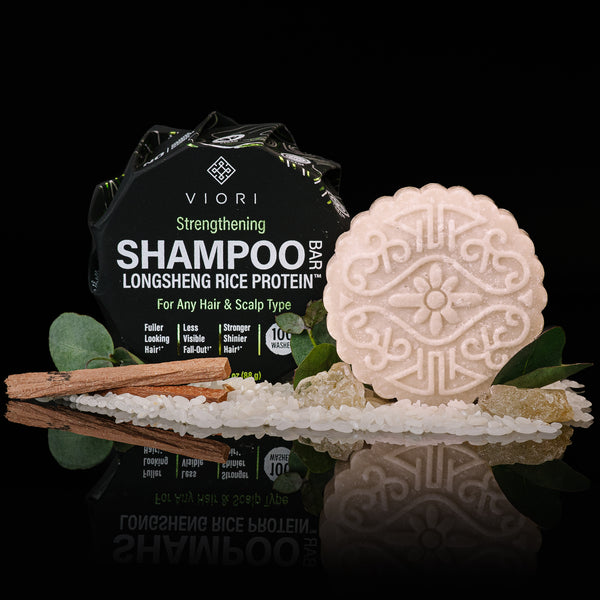
This is one reason I’m such a believer in using a controlled, pH-balanced rice approach instead of constantly experimenting with unpredictable mixtures. Viori, for example, uses a lower concentration of Longsheng rice water specifically because very high-concentration rice water used too often can disrupt the hair and scalp’s pH. Their bars are formulated to stay pH balanced, which matters more than most people realize.
The Real Make-or-Break Factor: Hair Porosity
If I could rewrite the internet’s hair advice in one sentence, it would be this: porosity decides whether rice milk feels “volumizing and glossy” or “waxy and heavy.”
A quick porosity test you can do at home
To get a general idea of your porosity, try this simple test:
- Brush your hair to remove tangles.
- Take a single strand and place it in a glass of water.
- Watch where it settles:
- Floats = low porosity
- Stays mid-glass = medium porosity
- Sinks = high porosity
It’s not a perfect lab-grade measurement, but it’s useful enough to guide smarter product choices.
Low porosity hair: why rice milk can feel “coated” fast
Low porosity hair has a tighter cuticle and tends to resist absorption. Rice milk’s film can sit on the surface, building up sooner and leaving hair feeling heavy, dull, or weirdly dry even though it’s “covered.” That’s the buildup paradox: coated hair isn’t the same as balanced hair.
Low porosity hair often does better with:
- Lighter cleansing and conditioning
- Less layering of leave-ins and oils
- More attention to rinse quality and frequency
High porosity hair: why rice milk can look like a miracle (at first)
High porosity hair has a more open or damaged cuticle, so it can soak up products quickly-but it also loses moisture quickly. A rice milk film can temporarily “patch” roughness and reduce frizz, which is why it can look so good after the first few uses.
The catch is consistency. High porosity hair usually thrives on a routine that balances conditioning + gentle cleansing + controlled protein, rather than random heavy treatments. Viori bars include supportive ingredients like hydrolyzed rice protein, plus conditioning agents and botanicals, built into a pH-balanced format designed for regular use.
pH: The Silent Dealbreaker in Rice-Based Routines
Here’s what most trend-style advice skips: hair and scalp are happiest in a mildly acidic range. Viori notes that hair products generally need a pH between 3.5 and 6.5, and that overly alkaline products can dry hair out and damage it long term.
With DIY rice routines in particular, pH can swing depending on:
- Fermentation timing and storage conditions
- Concentration (how “strong” the mixture is)
- Water quality and mineral content
That’s why two people can follow the same “recipe” and get totally different outcomes. A consistent, pH-balanced product system removes a lot of that guesswork.
Why Rice Milk Sometimes Turns on You After a Few Weeks
In the salon, I see this pattern all the time:
- Week 1-2: smoother feel, more shine, nicer body
- Week 3-6: stiffness, tangling, dullness, or an odd “coated” texture
What’s usually happening is simple: film layering increases friction between strands. At first the film makes the cuticle feel sleek; later, too much of it can make hair snag and tangle. Sometimes it also affects how evenly hair wets and dries, which can show up as frizz and roughness.
And here’s the part that surprises people: the fix isn’t always “more moisture.” Sometimes the fix is less coating, better cleansing technique, and a routine that stays pH balanced.
How to Get Rice-Derived Benefits Without the Common Pitfalls
If you want the shine-and-strength side of rice without the heaviness, focus on technique and scalp logic-not just ingredients.
WHAT CUSTOMERS ARE SAYING
Real reviews for Rice Water Shampoo Bar – All Hair Types | VIORI
1) Reduce friction (especially if your hair is color-treated)
Because bar products require some friction by nature, technique matters. Viori recommends building lather in your hands and applying it through your hair rather than rubbing the bar directly on your head-this can help minimize unnecessary cuticle agitation and is a smarter approach for color-treated hair.
2) Condition like a pro: placement matters
Conditioner is positively charged, which helps it cling to the hair fiber and offer protection after cleansing. Apply it mid-lengths to ends first, then decide whether your scalp needs any at all.
3) Pick your bar based on scalp behavior, not just hair length
Viori’s recommendations are rooted in scalp type (which is exactly how I think about hair in a consultation):
- Oily scalp: Citrus Yao is commonly recommended because it helps break down oil effectively.
- Dry scalp: Hidden Waterfall, Terrace Garden, or Native Essence are often better options.
- Sensitive scalp or fragrance sensitivity: Native Essence is the gentlest, fragrance-free choice.
If you’re oily at the roots but dry at the ends (very common), you can split the routine: use an oil-controlling shampoo choice at the scalp and a more moisturizing conditioner choice on the ends.
4) Give your hair enough time to respond
Hair routines aren’t one-wash experiments. Viori suggests giving products 2-3 months before deciding they aren’t for you, which is realistic-especially if you’re correcting dryness, irritation, or breakage patterns that developed over time.
Where Viori Fits in the Rice Conversation
If rice milk has felt hit-or-miss for you, a pH-balanced fermented rice approach can be the calmer, more consistent path. Viori uses Longsheng Rice Water™ in a concentration designed for regular use, alongside other supportive ingredients, in bars that are pH balanced and built to support scalp comfort and hair manageability.
When rice routines work beautifully, it’s usually because they match the person’s porosity, they’re not over-layered, and they’re supported by a routine that keeps the cuticle behaving. That’s not a trend-that’s hair science.


