
After twenty years behind the chair, I can tell you that most "breakthrough" hair treatments are just old ideas in new packaging. But every once in a while, something comes along that makes me lean in and pay attention.
Rice rosemary water is one of those things.
Now, before you roll your eyes at yet another hair care trend, hear me out. This isn't about rice water or rosemary-both of which have had their viral moments on social media. This is about what happens when you combine them, and why that combination creates something genuinely more interesting than either ingredient alone.
Let's dive deep into the science, the tradition, and the practical application of this underexplored pairing.
The Chemistry Love Story: Why Rice Water and Rosemary Are Better Together
When Fermentation Meets Essential Oils
Here's what most people don't know about fermented rice water: it creates an acidic environment, usually hovering around a pH of 4.5 to 5.5. That might sound technical, but it's actually the key to understanding why rosemary works so much better when combined with rice water.
Rosemary contains volatile compounds-think of them as delicate, beneficial molecules that don't stick around long in the wrong conditions. The main players are 1,8-cineole, camphor, α-pinene, and borneol. In neutral or alkaline environments, these compounds break down quickly. But in the mildly acidic world created by fermented rice water? They stabilize and become more effective at penetrating the hair and scalp.
It's like creating the perfect environment for these compounds to do their job instead of evaporating into thin air.
The Protein Shuttle System
Fermented rice water contains small protein fragments-hydrolyzed proteins ranging from 150 to 2,000 Daltons, if you want to get technical. These proteins don't just coat your hair; they can actually bind with rosemary's beneficial compounds, particularly rosmarinic acid and carnosic acid.
Think of it as a delivery system. The rice proteins form a protective film on your hair shaft while simultaneously carrying rosemary's anti-inflammatory and antioxidant compounds deeper into the cuticle layer. You're getting surface benefits and deeper treatment at the same time.
In two decades of working with hair, I've learned that the best treatments work on multiple levels-and this natural combination does exactly that.
The Scalp Microbiome: A Perspective Rarely Discussed in Beauty
Let's talk about something most hair care conversations completely ignore: your scalp's microbiome.
NOT SURE WHICH PRODUCT IS RIGHT FOR YOU?
TAKE THE QUIZTakes 30 seconds · 134,000+ customers matched
Just like your gut, your scalp has a complex ecosystem of bacteria and yeasts. When that ecosystem gets out of balance, you get problems-dandruff, itching, inflammation, even hair loss.
Here's where rice rosemary water gets really interesting: these two ingredients target different problematic microorganisms.
Fermented rice water, with its organic acid content, shows selective activity against certain malassezia yeasts-the ones associated with dandruff and seborrheic dermatitis. Meanwhile, rosemary's compounds demonstrate broader antibacterial properties, particularly against Staphylococcus bacteria that contribute to scalp inflammation.
The result? Balanced microbiome modulation rather than scorched-earth antimicrobial warfare. You're suppressing problematic overgrowth without eliminating the beneficial flora your scalp needs. This is a far more sophisticated approach than many aggressive dandruff treatments that disrupt your entire scalp ecosystem.
The Sebum Regulation One-Two Punch
If you've struggled with oily hair, you know the frustration: you can manage it temporarily, but it always comes back with a vengeance.
Rice rosemary water approaches oil control from two different angles simultaneously, and this is where the combination really shines.
The immediate effect: Rice water's starch content absorbs excess sebum at the scalp surface. You get instant cosmetic benefits-less grease, more volume.
The longer-term effect: Rosemary extract has shown potential to influence 5-alpha-reductase activity in preliminary research. This is the enzyme that converts testosterone to DHT-a key player in both androgenic hair loss and sebaceous gland activity.
Translation: immediate surface oil management from rice water, combined with potential regulation of sebum production at the source from rosemary. It's the difference between mopping up water and fixing the leak.
(This is similar to how Viori's Citrus Yao formulation addresses oil control through citric acid, though via a different biochemical pathway.)
The pH Sweet Spot: Technical Elegance in Action
If you've ever had your hair professionally colored, your stylist has probably lectured you about pH. There's a reason we obsess over it.
Rice rosemary water naturally creates what chemists call an amphoteric buffering system. The amino acids from rice protein resist pH changes in both directions, and when you add rosemary (which contains various organic acids and bases), you get a surprisingly stable solution that naturally hovers in the ideal hair care range: 4.5 to 5.5.
Why does this matter?
- At this pH, your hair cuticle lies flat, maximizing shine and smoothness
- Hair color is preserved best at this range
- It matches your scalp's natural pH, minimizing irritation
- Rosemary's active compounds remain most stable in this environment
Many DIY treatments fail because the pH is wrong. Rice rosemary water gets it right naturally, without complicated adjustments.
Beyond the Surface: The Circulation Hypothesis
Rosemary has long been associated with improved scalp circulation-that tingling sensation people describe isn't just in their heads. The leading theory involves rosemary's monoterpenes causing mild vasodilation through TRPM8 receptor activation (the same receptors activated by menthol).
But here's what rarely gets discussed: the small proteins in rice water may actually enhance this effect.
Peptides in the 500-1000 Dalton range can penetrate the outer layer of your scalp, potentially carrying rosemary's active compounds to the deeper layers where blood vessels reside. Better circulation means better nutrient delivery to hair follicles, which means healthier hair growth.
This potential synergy-rice water helping rosemary's circulation-boosting compounds reach deeper-could theoretically make the combination more effective than either ingredient alone.
Protecting Modern Hair: The Oxidative Stress Shield
Your hair faces unprecedented challenges in the modern world: UV radiation, pollution, thermal styling tools reaching 450°F, chemical treatments, hard water minerals. All of these create oxidative stress-essentially, they rust your hair from the inside out.
Rice rosemary water provides what I call "complementary antioxidant coverage."
From rice: Gamma-oryzanol, ferulic acid, and other antioxidants that primarily prevent lipid peroxidation. This protects the lipid layer of your hair cuticle-the outer protective shield.
From rosemary: Carnosic acid and rosmarinic acid-some of the most potent natural antioxidants known, with ORAC values exceeding vitamin E. These excel at neutralizing free radicals in aqueous environments, protecting your hair's protein matrix.
Together, they provide comprehensive protection across both the fatty and watery components of your hair structure. It's like having both a raincoat and an umbrella instead of just one or the other.
The Protein Repair Perspective
For damaged, porous hair-especially chemically treated or heat-damaged strands-protein treatments are often essential. But not all proteins are created equal.
Rice protein is particularly rich in two amino acids: cysteine and glutamic acid.
Cysteine can form temporary disulfide bonds with your hair's keratin structure, providing immediate strengthening. Think of it as creating temporary scaffolding inside damaged areas.
Glutamic acid helps retain moisture due to its water-loving properties. It's like installing tiny sponges throughout your hair shaft.
Rosemary appears to enhance these effects by maintaining optimal pH for these interactions. Some research even suggests that certain rosemary compounds may inhibit protein-degrading enzymes, potentially extending how long these strengthening effects last.
For my clients with bleached, highlighted, or heat-damaged hair, this protein-protection combination addresses both immediate damage and ongoing degradation.
The Psychology Factor: Why the Experience Matters
Here's something I've learned after thousands of client consultations: the best treatment in the world is worthless if people won't use it consistently.
This is where rice rosemary water offers underappreciated advantages.
The fermentation process removes much of rice water's characteristic starchy odor-which, let's be honest, many people find off-putting. Rosemary's aromatic profile not only masks any remaining grain scent but provides genuine aromatherapeutic benefits. Studies link rosemary scent to improved focus and reduced cortisol levels.
Why does stress reduction matter for a topical hair treatment? Because stress hormones like cortisol can negatively impact hair growth cycles. While you're not absorbing significant amounts of rosemary through your scalp, the olfactory experience during application could provide complementary stress-reduction benefits through a completely different pathway.
Beautiful hair starts with consistent care, and consistent care happens when treatments are pleasant to use.
The Fermentation Variable: Not All Rice Water Is Created Equal
Here's a critical point that DIY tutorials often miss: fermentation time and conditions dramatically alter rice water's composition and effectiveness.
Short fermentation (24-48 hours at room temperature): Primarily increases B-vitamin content and creates mildly acidic pH. This is generally safe and effective for most people.
Extended fermentation (5-7 days): Can increase certain beneficial compounds but also risks producing excessive acetic acid (vinegar) or enabling unwanted microbial growth. Too long, and you might end up with something too harsh for your scalp.
Traditional methods-like those used by the Red Yao tribe and incorporated into Viori's Longsheng Rice Water™-involve specific temperature controls and fermentation durations optimized over centuries. These aren't arbitrary details; they're the difference between an effective treatment and one that's potentially too harsh or microbiologically unstable.
If you're making rice rosemary water at home, fermentation control is your most critical variable.
Timing Matters: Hair's Circadian Rhythm
Here's something that sounds almost too scientific to be true: your hair follicles have circadian rhythms.
Hair growth is most active during certain hours, and scalp circulation follows daily patterns. Preliminary research suggests that treatments promoting circulation might be most effective when applied during periods of naturally increased follicular activity-typically evening hours.
Additionally, your scalp's permeability to topical compounds varies throughout the day due to changes in skin hydration and temperature. Evening application of rice rosemary water might enhance penetration of key compounds when your scalp is warmer and more hydrated.
Does this mean morning application is worthless? No. But if you're optimizing every variable for maximum effectiveness, timing could be another factor to consider.
Color-Treated Hair: Navigating a Delicate Balance
A significant portion of my professional practice involves color-treated clients, and rice rosemary water presents both opportunities and considerations for this group.
WHAT CUSTOMERS ARE SAYING
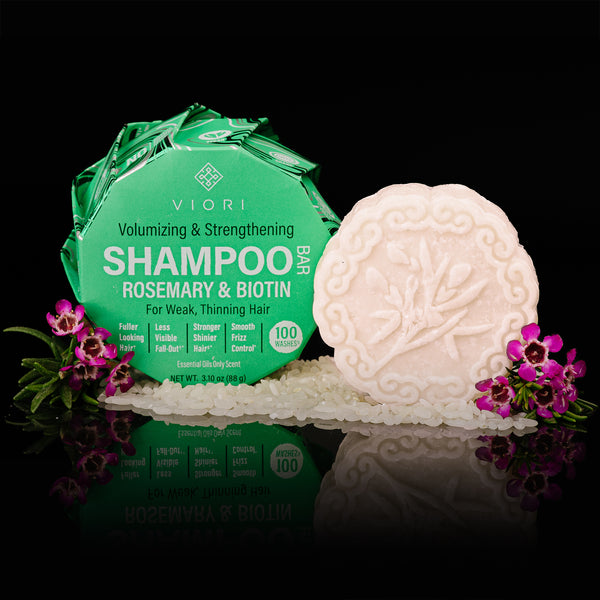
Real reviews for Rosemary Biotin Shampoo Bar – Thinning Hair | VIORI
The benefits:
- The acidic pH helps seal the cuticle, which is essential for color retention
- The antioxidants protect color molecules from oxidative fading
- Carnosic acid from rosemary functions as a natural photostabilizer, protecting against UV-induced color fade
The potential concern: If rice water isn't properly prepared or contains excessive starch, it can create buildup that dulls color. This is where formulation matters enormously.
Viori addresses this complexity by using precisely controlled concentrations of rice water that provide benefits without buildup, combined with pH-balancing ingredients that protect color integrity-whether in their Citrus Yao for oily scalps or Hidden Waterfall for moisture-needing hair.
If you're doing DIY preparations, ensure you're using fermented rice water (which has less starch) rather than the starchy water from simply rinsing rice.
The Hard Water Complication
In professional consultations, I always ask about water quality. It's one of those unsexy factors that dramatically affects outcomes.
Hard water-high in calcium and magnesium-can interfere with both rice water and rosemary preparations in two ways:
- Mineral ions bind to rice proteins, reducing their effectiveness and potentially causing buildup
- They precipitate certain compounds in rosemary extract, creating cloudiness and reducing bioavailability
The solution? Either use distilled water for preparation, or incorporate gentle chelating agents. Some practitioners add a small amount of citric acid (beyond what fermentation produces naturally) to sequester metal ions.
This is one of those details that separates "works okay sometimes" from "consistently effective."
The Sustainability Conversation: Beyond Marketing Buzzwords
Sustainability has become such a marketing term that it's easy to become cynical. But there are legitimate environmental and ethical considerations with rice rosemary water.
The reality:
- Rice cultivation has significant water and methane footprints
- Rosemary cultivation is more sustainable but requires specific Mediterranean-type climates
- For these ingredients to represent ethical beauty choices, sourcing matters enormously
This is where Viori's approach offers a model worth examining. They directly source from the Red Yao tribe, ensuring rice cultivation supports traditional sustainable farming practices that have existed for centuries. They purchase rice at a 2X premium markup and donate 5% of profits back to the tribe for education, elderly care, and mountain preservation.
This "beauty with purpose" model addresses the reality that ingredient sourcing has human and environmental dimensions that chemistry alone cannot capture.
When you're choosing between DIY preparations and professionally formulated products, the sustainability equation includes not just ingredients but entire supply chains and their impact on communities.
The Honesty Hour: What We Don't Know
Professional integrity requires acknowledging limitations, so let's be clear: while both rice water and rosemary have individual research supporting their benefits, controlled clinical studies specifically examining their combination are essentially nonexistent.
The synergistic effects I've described are based on:
- Known chemistry of individual compounds
- Theoretical interactions based on chemical properties
- Professional observations over years of practice
- Traditional use patterns
This doesn't invalidate the approach. Many effective treatments in both medicine and cosmetics began with traditional use and theoretical chemistry before formal clinical validation. However, you should maintain appropriate expectations and understand that individual responses will vary.
We need more research. Until then, we're working with promising chemistry, traditional wisdom, and professional experience-which isn't nothing, but isn't the same as double-blind clinical trials either.
Professional Application Protocol: What I Actually Recommend
After twenty years of hands-on experience, here's my practical protocol for clients interested in rice rosemary water treatments:


