
If you’ve ever gone down the rabbit hole of rice water for 4C hair growth before and after pictures, you’ve probably seen the same thing over and over: a jaw-dropping “two months later” photo where the hair looks longer, thicker, and somehow more alive. And look-sometimes the results are absolutely real. But what those photos prove is often misunderstood.
After 20 years behind the chair working with tight coils, here’s the honest truth: most rice-water “growth” pictures aren’t showing faster hair growth from the follicle. They’re showing something 4C hair cares about even more-length retention. And if you’ve been stuck at the same apparent length for years, that distinction can be the difference between frustration and finally seeing progress.
The rarely discussed truth: rice water often “creates growth” by improving retention
Let’s separate two things that get blended together online:
NOT SURE WHICH PRODUCT IS RIGHT FOR YOU?
TAKE THE QUIZTakes 30 seconds · 134,000+ customers matched
- Hair growth: what your scalp produces (follicles doing their job)
- Length retention: what actually stays attached to your head after wash day, detangling, styling, and everyday friction
Here’s the part people don’t say plainly enough: many people with 4C hair are growing hair consistently-they’re just losing nearly the same amount through breakage. So when something helps you keep your ends intact, it can look like your hair suddenly “started growing.” In reality, it may have been growing all along.
Why 4C hair is so sensitive to retention changes
4C hair has a beautiful structure, but that structure also makes it more vulnerable to mechanical stress. Tight bends along the strand create more points where the cuticle can lift and catch. Add dryness at the ends (because scalp oils have a harder time traveling down coily hair) and you’ve got a perfect recipe for tangles, knots, and breakage.
So when rice-water-based routines make hair more manageable-less snagging, less roughness, more slip-you may not be “speeding up growth.” You’re often reducing what’s breaking off. And that is a legitimate win.
Why before-and-after pictures can be wildly misleading on 4C hair
If there’s one hair type where photos can lie without intending to, it’s 4C. Shrinkage alone can turn the same head of hair into two completely different “lengths” depending on what’s happening that day.
The most common “false growth” causes in photos
- Different stretch level (banded hair vs. shrunken wash-and-go)
- Different moisture level (hydrated coils hang differently than dry coils)
- Different detangling quality (fewer snags = longer-looking sections)
- Different styling tension (pulling hair slightly, posture changes, camera angle)
- Product film (some routines temporarily smooth and weigh the hair so it appears longer)
This is why one “after” photo can look like three inches of growth when it’s really the same length-just stretched, better conditioned, and less tangled.
What rice water is actually doing (and why fermentation and pH matter)
Rice water isn’t a single ingredient with a single effect. The results depend on how it’s made and how it’s used-rinsed vs. soaked vs. boiled, fermented for how long, applied how often, and at what concentration.
From a hair-fiber perspective, rice-water-based care may contribute a mix of:
- Film-forming starches that can reduce friction and temporarily improve feel
- Rice-derived proteins/amino acids that can support strength and reduce breakage when used appropriately
- Inositol (vitamin B8) and panthenol (vitamin B5), which are often associated with better conditioning and overall hair behavior-especially when rice is fermented
The part most people skip: pH can make or break your results
For 4C hair, pH isn’t just a “science flex.” It affects how the cuticle behaves. When the cuticle is lifted and the surface is rougher, you get more tangles, more knots, and more breakage-especially during detangling.
This is one reason DIY rice water can be unpredictable: fermentation and concentration can swing, and your hair can go from “this feels amazing” to “why is my hair snapping?” without you changing anything besides the batch.
The downside that doesn’t get enough airtime: overload can backfire
Here’s a pattern I’ve watched play out for years: someone sees dramatic rice-water before/after photos, gets excited, then starts using strong treatments too often. The hair may feel firmer at first-sometimes even look longer because it’s smoother and more controlled-then suddenly it feels stiff and breaks more easily.
Signs you may be overdoing it
- Hair feels hard, brittle, or wire-like instead of flexible
- Tangles increase, especially at the ends
- More snapping during detangling
- Ends feel rough even after conditioning
- Hair looks dull or “coated”
With 4C hair, strength is important-but flexibility is just as critical. Stiff hair under tension is more likely to snap.
How Viori helps you get rice-water benefits without the DIY extremes
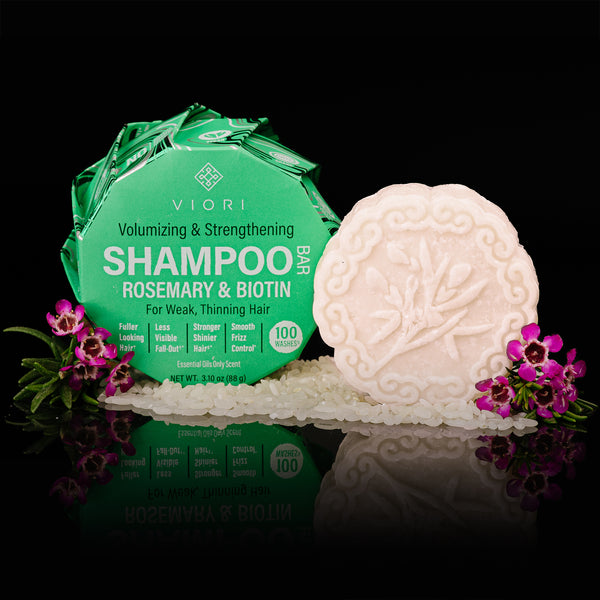
If you like the idea of rice water but want a more consistent experience, Viori takes a measured approach. Viori uses fermented Longsheng rice water in a lower concentration because higher concentrations of rice water used too often can disrupt hair and scalp pH. The bars are designed to support moisturized, stronger-looking hair while staying pH balanced.
Choosing the best option is less about hair “texture” and more about your scalp type:
- Citrus Yao: typically a great match for normal-to-oily scalps (and often helpful when oil control is the priority)
- Terrace Garden, Hidden Waterfall, or Native Essence: often preferred for normal-to-dry scalps
- Native Essence: the unscented option, a smart pick if you’re fragrance-sensitive
The big advantage here is consistency: a routine you can repeat reliably is the one that produces the most believable before-and-after results over time.
How to take credible 4C “before and after” growth pictures (without fooling yourself)
If you want photos that actually tell the truth, you have to control for shrinkage and styling differences. Here’s a simple way to do it.
WHAT CUSTOMERS ARE SAYING
Real reviews for Rosemary Biotin Shampoo Bar – Thinning Hair | VIORI
Step 1: Pick one stretching method and stick to it
Choose one and repeat it every single time you document:
- Banding (same number of bands, same placement, same tension)
- Twist stretch (same twist size, same dry time)
- Low-heat blow-stretch (same tool, same settings, same section size)
Step 2: Photograph under the same conditions
- Same location and lighting
- Same camera distance
- Same angle and posture
- Same point in your wash cycle (for example: fully dry, Day 1)
Step 3: Add a number to back up the photo
Pictures are persuasive, but measurements keep you honest. Try one:
- Measure one reference section (crown or nape) in a stretched state every 4 weeks
- Use a “measurement shirt” and note where the hair hits
- Track retention signals: detangling time, broken hairs vs. shed hairs, and whether your perimeter looks denser
A realistic timeline: what “after” usually looks like when things are working
Healthy 4C progress tends to show up in stages:
- After 1-3 washes: better feel, smoother look, less frizz; hair may appear longer because shrinkage is reduced
- Weeks 4-8: detangling gets easier, breakage decreases, ends begin to look fuller
- Weeks 8-12: true retention becomes clearer in photos and measurements
That’s why a 2-3 month window is usually the sweet spot for evaluating results. It gives retention time to show itself.
The bottom line
If rice-water-based care makes your 4C hair easier to detangle, less prone to knots, and gentler at the ends, your “before and after” pictures may look like a growth miracle. Most of the time, the miracle is simpler-and more sustainable: you’re finally keeping the length you were already growing.
If you want, I can help you choose a Viori bar direction based on your scalp type and suggest a photo method that makes your before-and-after tracking accurate and consistent-so you’re not guessing, and you’re not getting fooled by shrinkage.


