
Rice water has become one of those “too good to ignore” hair trends-because for some people, it genuinely seems to work. Hair feels stronger, looks shinier, and suddenly the length that used to stall out at the shoulders starts to show up. But here’s the part that rarely gets explained well: rice water usually doesn’t make your hair grow faster at the root. What it often does is help you keep the length you’re already growing.
And the reason that matters is simple: most “my hair won’t grow” complaints are actually breakage problems, scalp irritation problems, or both. Rice water can help-sometimes dramatically-but only when the chemistry and the routine are done in a way your hair and scalp can tolerate long-term.
Why “hair growth” is usually about retention
In the salon, when someone says they want hair growth, they’re usually describing one (or more) of these situations:
- Ends that snap before they can get longer
- Mid-length breakage that makes hair look thinner over time
- Increased shedding tied to scalp stress, oil imbalance, or irritation
- Frizz and dullness that make length look shorter than it is
So when rice water “works,” what you’re often seeing is not a miracle growth spurt-it’s less breakage, less tangling, and a healthier scalp environment. That combination makes your natural growth rate finally show up as visible length.
NOT SURE WHICH PRODUCT IS RIGHT FOR YOU?
TAKE THE QUIZTakes 30 seconds · 134,000+ customers matched
The overlooked science: hair growth is a friction problem
This is my favorite angle because it’s the one almost nobody talks about: hair retention is partly a friction and wear issue. Every day, your hair is exposed to tiny mechanical stresses-brushing, detangling, towels, hoodies, elastics, sleeping, even just hair rubbing against hair.
When the cuticle is rough or lifted, strands snag each other more easily. That means higher detangling force, more stress on weak points, more micro-cracks, and more breakage. Anything that improves slip and supports the cuticle laying flatter can help you keep length.
What rice water actually contains (and why DIY is unpredictable)
Rice water isn’t one standardized ingredient. It can contain a shifting mix of compounds depending on the type of rice, how long it’s soaked, whether it’s fermented, the temperature, and even how it’s stored. In practical terms, that means your results can vary wildly from batch to batch.
Depending on the method, rice water may contain:
- Starches and polysaccharides that can leave a smoothing film (or feel heavy if they build up)
- Amino acids and small peptides that support the hair’s feel and resilience
- Inositol (Vitamin B8) often discussed in relation to strengthening and improved hair behavior
- Panthenol (Vitamin B5) and related humectant effects in certain processed/fermented formats
- Organic acids that can shift the pH (a big deal for both scalp comfort and cuticle behavior)
This is why one person tries rice water and raves… while another tries it and ends up with roughness, tangles, or an itchy scalp.
Fermentation: helpful, but “stronger” can be the problem
Fermented rice water gets a lot of hype, and fermentation can be beneficial. But the benefit isn’t simply that it’s “more powerful.” Fermentation changes the profile of the liquid-especially the acid balance and pH-and that can make it either more compatible with hair… or much more irritating.
One important detail I appreciate about Viori’s approach is that they use a lower concentration of fermented Longsheng rice water because high concentrations used too often can disrupt hair and scalp pH. That’s not a scare tactic; it’s a real-world issue I see when people get overzealous with strong DIY rinses.
pH is the make-or-break factor (and it’s why DIY often backfires)
If I could wave a wand and add one sentence to every rice water tutorial online, it would be this: pH control is everything.
Hair and scalp generally do best with products in a mildly acidic range-roughly 3.5-6.5. When your routine swings too far outside that range too often, you may see:
- Raised cuticle that leads to frizz, dullness, and tangling
- Increased breakage from repeated swelling and stress on the fiber
- Scalp barrier disruption that shows up as itch, flakes, tightness, or irritation
- More shedding in people whose scalps react to irritation or imbalance
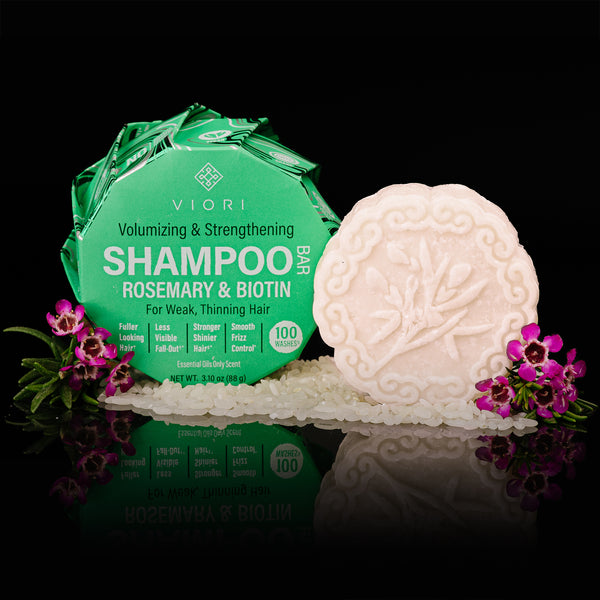
Viori’s bars are formulated to be pH balanced, which is a big reason a rice-water-based routine can be more sustainable when it’s delivered through a controlled formula instead of a “kitchen batch” that changes every time.
Rice water vs. “protein overload”: what’s usually happening
Rice water is often described as a protein treatment, and sometimes it behaves like one. But many “protein overload” stories are really describing buildup + friction.
Here’s the difference:
- Hydrolyzed rice protein (commonly used in well-designed formulas) tends to be more predictable and easier to distribute evenly.
- Starch-heavy DIY rice water can leave a stiff film that makes hair feel rough, dry, or “snappy,” especially if it accumulates over time.
Viori notes they use a low concentration of rice protein. For many hair types-especially dry, porous, or already breakage-prone hair-this kind of restraint can be a benefit, because it supports strength without tipping into that stiff, coated feeling some people get from stronger treatments.
Why product format matters: rinse vs. cleanser vs. conditioner
Another under-discussed detail is deposition-how well helpful ingredients actually stay on the hair where you want them. A quick rinse is short contact time and can be inconsistent. A cleanser can deliver actives, but it also removes oils. A conditioner is often the best vehicle for reducing friction because it’s designed to cling to the hair’s surface.
Viori explains conditioner in a way I wish more brands did: shampooing removes some of the hair’s protective sebum, leaving strands more vulnerable. Conditioner is positively charged, which helps it adhere to the hair fiber and improve slip, softness, and resilience until natural oils replenish.
A realistic timeline: what to expect (and when to judge)
Hair can feel different quickly-sometimes after one wash. But visible “growth” takes time because you’re changing breakage patterns, not rewriting biology overnight.
A practical expectation looks like this:
- Slip, shine, and frizz reduction: often within a few washes
- Less breakage: typically shows over a few weeks
- Visible length and fullness changes: usually 8-12+ weeks
Viori recommends giving it 2-3 months before giving up. That’s a realistic window for hair to settle into a new routine and for you to see whether length retention is improving.
WHAT CUSTOMERS ARE SAYING
Real reviews for Rosemary Biotin Shampoo Bar – Thinning Hair | VIORI
How to use rice-water benefits without the common mistakes
If you want rice water for “growth,” your best strategy is to protect the scalp, minimize friction, and avoid residue. Here’s a practical way to think about it.
1) Choose based on scalp type first
Your scalp sets the tone. If it’s irritated, overly oily, or overly dry, everything downstream suffers.
- Oily or greasy scalp: Viori typically recommends Citrus Yao, since citrus elements (including citric acid) help break down oil and can help you go longer between washes.
- Dry scalp or dry hair: Viori often points to Terrace Garden, Hidden Waterfall, or Native Essence as more moisturizing options.
- Sensitive scalp or fragrance sensitivity: Native Essence is the unscented choice and is generally the gentlest route.
2) Don’t skip conditioner if you care about length
Conditioner is not just “extra softness.” It’s friction control. Less friction means fewer knots, lower detangling force, and less breakage-especially around fragile ends.
3) If you’re oily at the roots but dry on the ends, split your routine
This is one of the most common hair profiles I see. Viori even suggests a mix-and-match approach: use a more oil-controlling shampoo choice at the scalp, and a more moisturizing conditioner choice on the mid-lengths and ends.
4) Color-treated hair: reduce mechanical stress
Bar formats can involve more friction if you rub them directly on the hair. Viori recommends building lather in your hands and applying with your fingers rather than rubbing the bar straight onto your head-especially important for color-treated hair where excess friction can lift the cuticle and allow color to fade faster.
The takeaway
Rice water can be a fantastic tool in a hair-growth routine-if your goal is what most people actually need: healthier scalp conditions and stronger length retention. The biggest mistakes happen when people chase intensity instead of consistency: too strong, too frequent, too unpredictable, and suddenly the scalp is irritated and the hair is snapping.
If you want the benefits without the gamble, a controlled, pH-balanced format matters. That’s where Viori stands out in the rice-water conversation: fermented Longsheng rice water in a pH-balanced formula, designed to be safe for regular use, with thoughtful concentration levels and conditioning support to reduce friction-the silent culprit behind so much “my hair won’t grow” frustration.


