
Twenty years ago, when I first started cutting hair, I never thought I'd end up obsessed with fermentation biochemistry. But here I am, reading research papers at midnight about pH levels and cellular signaling pathways-all because rice water has become the most misunderstood beauty ritual I've ever encountered.
The problem? Everyone's oversimplifying it. "Just rinse some rice, let it sit, pour it on your hair"-as if that's the whole story. Then I watch clients walk in frustrated because their DIY rice water turned their hair into straw, or worse, did absolutely nothing despite weeks of effort.
After years of research, consultations with cosmetic chemists, and countless hours studying the Red Yao women's traditions, I've learned something critical: the real magic isn't in rice water itself-it's in the fermentation, and most people are getting it completely wrong.
Let me walk you through what actually happens at the molecular level, why shortcuts fail, and what you need to know to get real results.
Why Fermentation Changes Everything
Here's what shocked me when I first learned this: unfermented rice water and fermented rice water aren't just different-they're completely distinct substances at the molecular level.
When you ferment rice water, you're creating a biochemical factory. Naturally occurring yeasts and bacteria break down rice starches and produce two compounds that change the game: inositol (Vitamin B8) and panthenol (Vitamin B5).
This isn't some wellness blog theory-it's documented science that explains why the Red Yao women's 2,000-year-old ritual works while a quick rice rinse falls flat.
What These Compounds Actually Do to Your Hair
Inositol penetrates your hair shaft and influences the lipid composition of cell membranes within your follicles. This matters because healthy hair growth requires your scalp cells to communicate efficiently. Think of inositol as improving the "conversations" between cells about growth cycles. It optimizes the signaling pathways that tell your dermal papilla cells-the specialized cells orchestrating hair growth-when and how to grow.
NOT SURE WHICH PRODUCT IS RIGHT FOR YOU?
TAKE THE QUIZTakes 30 seconds · 134,000+ customers matched
Panthenol works differently but synergistically. It binds to hair proteins and creates a protective film, but more importantly, once absorbed, it converts to pantothenic acid (B5), which is essential for fatty acid metabolism in your sebaceous glands. Better quality sebum means better natural hair protection and a healthier scalp environment.
Here's the kicker: fermentation increases these compounds by 3-5 times compared to fresh rice water. The Red Yao women have known this intuitively for 2,000 years. Science is only now catching up.
The pH Problem That Can Actually Damage Your Hair
I need to tell you something that might surprise you: improperly prepared rice water can damage your hair, and most DIY instructions online are setting people up for failure.
Fresh rice water typically has a pH of 5.5-6.5, which sounds perfect since hair's natural pH is 4.5-5.5. However, fermented rice water can drop to pH 3.5-4.0. While this acidity helps close the hair cuticle after nutrients have been absorbed, there's a critical window you need to understand.
Rice water left fermenting beyond 5-7 days continues becoming more acidic, potentially reaching pH levels below 3.0. At that point, you're essentially applying a mild acid treatment that strips your hair's natural protective lipid layer.
This is why clients tell me rice water made their hair dry and brittle-they over-fermented it, following advice that said "the longer the better."
The optimal fermentation window is 24-72 hours at room temperature (68-72°F). The Red Yao women perfected this timing over centuries of observation, creating what we'd now call a "controlled fermentation environment."
This is one reason I appreciate how Viori formulates their products. They use fermented Longsheng rice water at a specific concentration that's pH-balanced to between 4.5-5.5 for safe daily use. Getting this right requires precision that's difficult to achieve in a jar on your counter.
The Protein Overload Problem Nobody Talks About
Rice water contains hydrolyzed rice protein, and here's where another critical issue emerges: protein overload is real, and it can actually cause the breakage you're trying to prevent.
Your hair is approximately 91% keratin protein. The beauty industry loves to say "more protein equals stronger hair," but that's dangerously oversimplified. Hair needs a precise balance of protein and moisture.
Here's what happens: hydrolyzed rice protein (with a molecular weight of 500-1000 Daltons) can penetrate your hair cuticle. Once inside, these proteins temporarily reinforce the cortex structure. This is fantastic for damaged, porous hair that has gaps in its protein structure.
But if you have healthy, low-porosity hair? Those tightly packed cuticles have minimal gaps. Forcing protein into hair that doesn't need it creates rigidity without flexibility-like making a wooden beam thicker but not actually stronger. It becomes more prone to snapping under stress.
How to Identify Your Hair Type
Low-porosity hair (use rice water sparingly-once every 10-14 days):
- Floats in water
- Takes forever to dry
- Repels moisture and products sit on top
- Doesn't absorb color easily
High-porosity hair (can handle more frequent rice water-every 5-7 days):
- Sinks in water immediately
- Dries very quickly
- Absorbs products instantly
- May look dry or frizzy despite moisturizing
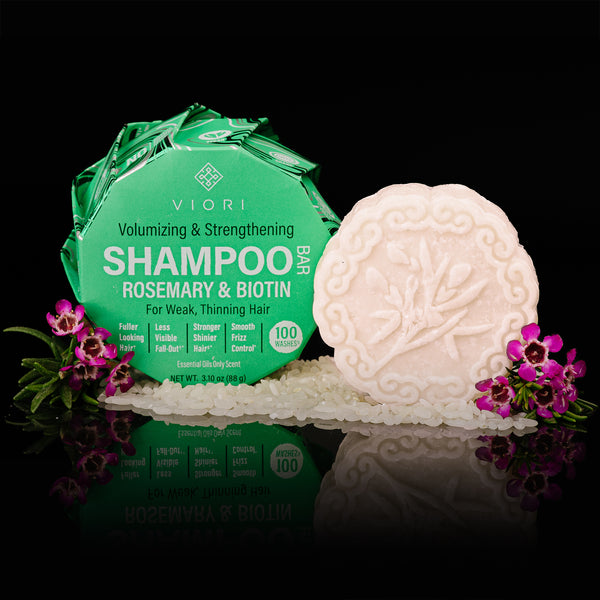
This is why properly formulated products make such a difference. Viori's bars contain hydrolyzed rice protein at carefully calibrated levels, balanced with moisturizing ingredients like cocoa butter, shea butter, and rice bran oil. This prevents protein overload while delivering strengthening benefits where they're actually needed.
The Starch Buildup Nobody Warns You About
Here's an uncomfortable truth about DIY rice water: the starch content can create buildup that actively prevents hair growth.
When you rinse rice, you're releasing surface starches-primarily amylopectin and amylose. These form a film on your hair shaft. In small amounts, this creates shine and slip. In excess, it causes problems:
- Prevents moisture absorption
- Attracts dirt and pollutants
- Creates an environment for bacterial growth on your scalp
- Weighs down fine hair, causing breakage at the root
Most rice water tutorials have you using the cloudy, starch-heavy water from the first or second rinse. Ironically, traditional Red Yao preparation involves multiple rinses before fermentation-they're removing excess surface starch while retaining the beneficial compounds locked within the rice grain itself.
The fermentation process partially breaks down these starches into smaller glucose units, making them less likely to create problematic buildup. But even fermented rice water should be diluted (typically 1:2 or 1:3 with water) for most hair types.
Here's something fascinating: Longsheng rice, the specific short-grain rice variety used by the Red Yao women, has a different starch composition than common white rice. It's higher in resistant starch and has a unique amylopectin structure that's less prone to heavy buildup. The rice variety actually matters-this isn't just about any rice.
The Safety Issue Everyone Ignores
I need to address something uncomfortable that wellness influencers consistently skip: rice naturally accumulates arsenic from soil and water.
Rice plants are particularly efficient at absorbing arsenic because their growth in flooded paddies creates conditions where arsenic is more bioavailable. All rice contains some level of arsenic-both organic and inorganic forms.
When you make rice water, you're extracting water-soluble compounds from rice, including arsenic. Studies show that rinsing and soaking can remove 10-30% of arsenic content, but it's not eliminated entirely.
Is topical exposure to arsenic in rice water dangerous? Research here is limited, but we know:
- Scalp skin is highly permeable-hair follicles provide direct channels
- Repeated exposure to low-level toxins can accumulate over time
- Arsenic is a known endocrine disruptor that can actually cause hair loss at certain exposure levels
This is precisely why responsible product formulation matters. Viori carefully rinses their rice through multiple cycles, and the fermentation process further reduces arsenic levels. The pH is monitored closely throughout production because arsenic absorption through skin increases at pH extremes. These aren't luxuries-they're safety necessities that DIY preparation cannot ensure.
If you're making rice water at home: Use organic rice from regions with known low soil arsenic levels (Himalayan regions generally have lower levels than U.S.-grown rice). Always rinse rice thoroughly-at least 4-5 times until water runs relatively clear-before beginning fermentation.
Your Scalp Microbiome and Hair Growth
Let me share something that represents the cutting edge of hair science: your scalp microbiome's role in hair growth and how fermented rice water influences it.
Your scalp hosts a complex ecosystem of bacteria, fungi, and other microorganisms. This isn't just passive-it actively influences hair follicle health through several mechanisms:
- Immune modulation: Beneficial bacteria help regulate inflammatory responses around hair follicles
- Metabolite production: Microbes produce compounds that follicle cells use as growth signals
- pH maintenance: The microbiome helps maintain optimal scalp pH through metabolic byproducts
- Pathogen competition: Beneficial organisms crowd out harmful ones that damage follicles
Fermented rice water introduces postbiotics-beneficial compounds produced during fermentation that can favorably shift your scalp microbiome composition. The organic acids (particularly lactic acid) create conditions that favor beneficial bacteria while discouraging problematic organisms like Malassezia fungi, which cause dandruff and can impede hair growth.
Here's a fascinating possibility: the Red Yao women's remarkable hair health may be partially due to generations of fermented rice water use creating a favorable scalp microbiome that's passed from mother to daughter through early-life exposure. We're just beginning to understand how microbiome composition affects hair growth, but early research is compelling.
Modern commercial shampoos with harsh sulfates and antibacterial agents strip the scalp microbiome clean, creating a blank slate that's quickly colonized by whatever organisms arrive first-often not the beneficial ones. A properly formulated product with fermented rice water and gentle, natural cleansers preserves microbiome diversity, which appears increasingly important for long-term hair health.
The Water Quality Factor Nobody Considers
Here's a practical factor that dramatically affects results but gets zero attention: the water you use matters as much as the rice.
Municipal tap water often contains:
- Chlorine/chloramines: Oxidizing agents that can damage the beneficial compounds in fermented rice water
- Hard water minerals: Calcium and magnesium that bind to proteins and create buildup
- pH variations: Some municipal water is alkaline (pH 8-9), which can neutralize the beneficial acidity of fermented rice water
The Red Yao women use fresh mountain spring water-naturally soft, slightly acidic, mineral-rich water that's ideal for their preparation. If you're using hard tap water with high mineral content, you're creating a fundamentally different product.
WHAT CUSTOMERS ARE SAYING
Real reviews for Rosemary Biotin Shampoo Bar – Thinning Hair | VIORI
Professional solution: Use filtered or distilled water for both rice rinsing and fermentation. If you must use tap water, let it sit open for 24 hours to allow chlorine to evaporate before use.
Why Ancient Wisdom Beats Modern Shortcuts
The Red Yao women's 2,000-year-old tradition wasn't arbitrary-it was refined through generations of careful observation and passed-down knowledge. They intuitively understood principles that modern science is only now articulating:
- Fermentation timing and temperature control for optimal compound production
- Multiple rinsing cycles to remove excess starch while retaining beneficial compounds
- Specific rice variety selection (Longsheng rice has unique properties)
- Consistent, long-term use rather than expecting instant results
- Integration with overall scalp health practices (their diet, environment, and lifestyle all support hair health)
The modern trend of rice water use often strips away this nuanced knowledge in favor of quick, simplified instructions that promise results in weeks. This is why outcomes vary wildly-many people aren't actually replicating the traditional practice, just a superficial version of it.
I've seen countless clients try DIY rice water for a month, see minimal results, and give up-never realizing that the Red Yao women use their ritual consistently throughout their entire lives. This is a long-game practice, not a quick fix.
The Gene Expression Frontier
Here's truly cutting-edge territory: emerging research suggests that topical compounds like those in fermented rice water might actually influence gene expression related to hair growth.
Certain molecules can cross the dermal barrier and influence transcription factors-proteins that control which genes are "turned on" or "turned off" without altering DNA sequence itself (this field is called epigenetics).
Inositol and panthenol-our fermentation-derived compounds-have demonstrated potential effects on gene expression in dermal papilla cells, the specialized cells at the base of hair follicles that orchestrate the growth cycle:
- Inositol may influence genes related to the Wnt/β-catenin pathway, crucial for initiating the anagen (growth) phase of hair cycling
- Panthenol has been shown to influence keratinocyte proliferation genes and may upregulate genes related to keratin synthesis
Could regular application of properly prepared fermented rice water create epigenetic changes that promote hair growth? We don't have definitive human studies yet, but the mechanism is scientifically plausible.
This would explain why traditional users see such dramatic results-they're not just coating hair with beneficial substances, they may be gradually influencing gene expression patterns in their follicles over years of consistent use.
This is speculative but grounded in real molecular biology. It's also why patience matters-if you're influencing gene expression, results won't be immediate.
Honoring Tradition with Modern Precision
This depth of understanding is exactly why I respect what Viori has built. They source Longsheng rice directly from the Red Yao women's terraced rice paddies-not as a marketing story, but because this specific rice variety cultivated for nearly 1,000 years has unique biochemical properties.
Their fermentation process follows the traditional Red Yao ritual, taking 7-10 days under carefully controlled conditions to produce optimal levels of inositol and panthenol while managing pH and minimizing safety concerns.
But they also recognize that pure fermented rice water has limitations:


