
The Red Yao women of Longsheng, China have hair that reaches over six feet long and stays dark and lustrous well into their eighties. Their secret? Fermented rice water. But here's what took me twenty years in the beauty industry to fully understand: it's not just about rinsing rice and slapping it on your head. The real magic happens during fermentation-a process that completely transforms ordinary rice water at the molecular level.
I've watched countless hair trends sweep through salons and vanish just as quickly. Rice water isn't one of them. This ancient practice is backed by legitimate biochemical science, but there's a massive gap between those quick "rinse and apply" tutorials you see everywhere and what actually delivers Red Yao-worthy results. Today, I'm pulling back the curtain on the molecular mechanisms that make rice water genuinely effective-and why doing it wrong could actually damage your hair.
Fermentation: This Is Where Everything Changes
Let me be blunt: soaking some rice and pouring the water on your hair won't give you six-foot-long, enviably thick hair. What sets the Red Yao tradition apart is controlled fermentation-and this process fundamentally rewrites rice water's chemical composition.
The Chemical Transformation You're Missing
During fermentation, several critical changes occur that turn mild rice water into a hair growth powerhouse:
Inositol Gets Supercharged
Yes, regular rice water contains inositol (Vitamin B8). But fermentation changes the game entirely. Microorganisms break down rice starches during fermentation, dramatically increasing how much inositol your hair can actually absorb and use. Without fermentation, most of it literally washes down the drain.
What makes inositol extraordinary is where it goes. Unlike ingredients that just sit on your hair's surface, inositol penetrates deep into the hair cortex-the inner structural layer-and stays there even after you rinse. It continues working for days after application, reducing friction between strands and preventing breakage.
Here's why that matters: growing long hair isn't just about how fast it grows from your scalp. It's about keeping the length you're growing instead of losing it to breakage every time you brush, style, or even sleep on your pillow. Inositol is your hair's bodyguard against that constant damage.
pH Gets Naturally Balanced
NOT SURE WHICH PRODUCT IS RIGHT FOR YOU?
TAKE THE QUIZTakes 30 seconds · 134,000+ customers matched
As beneficial bacteria ferment the rice water, they produce lactic acid-yes, the same ingredient you'll find in expensive professional treatments. This creates a pH of around 4.5-5.5, which perfectly matches your hair's natural acidity.
When your hair products match this pH, your cuticle layer lies flat and smooth, creating that glossy, light-reflecting shine you see in shampoo commercials. This pH level also maintains your scalp's acid mantle-the protective barrier that keeps your scalp healthy and balanced.
But there's more. Lactic acid gently dissolves dead skin cells and product buildup on your scalp-the kind of buildup that clogs follicles and slows growth. Unlike harsh sulfate cleansers that strip everything indiscriminately, this is targeted, cellular-level clarification that doesn't compromise your scalp's natural protection.
Vitamin B5 Levels Skyrocket
Fermentation significantly boosts panthenol (Vitamin B5), one of the most researched ingredients in cosmetic science. Panthenol is a humectant, meaning it attracts and binds moisture. But its real superpower lies deeper.
At the molecular level, panthenol penetrates your hair shaft and binds directly to your natural hair proteins. This creates a coating that actually increases each strand's diameter-which is exactly how you get fuller, more voluminous-looking hair. If you're dealing with thinning, this volumizing effect can be genuinely transformative.
Panthenol also reduces scalp inflammation, which matters more than most people realize. Many cases of suppressed hair growth trace back to inflammatory scalp conditions. By supporting scalp health at this fundamental level, panthenol addresses growth from the ground up.
The Protein Trap: Why More Can Actually Damage Your Hair
Here's where I need to get technical, because this is where most DIY rice water attempts go wrong. Rice water is extraordinarily high in hydrolyzed rice protein. While protein is essential for hair structure (your hair is about 95% keratin protein), there's a tipping point where too much protein becomes actively damaging.
What Protein Overload Actually Looks Like
Your hair needs a delicate balance between protein and moisture. Protein provides structure and strength. Moisture-from water and natural oils-keeps hair flexible and elastic. Tip too far toward protein, and you get what professionals call protein overload.
Signs you've crossed that line:
- Stiff, straw-like texture that feels brittle to the touch
- Increased breakage despite your "strengthening" treatments
- Loss of curl pattern if you have textured hair
- Dull appearance with no movement or bounce
This is exactly why I never recommend using undiluted rice water daily. And it's why professionally formulated products like Viori's use carefully calibrated concentrations of Longsheng rice water. They've done the chemistry work to find that sweet spot-enough protein to strengthen without overwhelming your hair's natural balance.
Think of Protein Like Fertilizer
Too little, and your garden won't thrive. Too much, and you'll burn your plants. The exact same principle applies to rice protein and hair.
Professional formulations solve this by balancing rice protein with moisturizing ingredients. Viori, for example, combines Longsheng rice water with cocoa butter, shea butter, and rice bran oil-ingredients that provide the moisture and lipids necessary to maintain that critical protein-moisture equilibrium your hair needs to thrive.
This is the fundamental problem with DIY rice water: you're applying it blind, with no idea of the concentration or how it matches your specific hair type's needs. A professionally formulated product can be used safely every day because it's been balanced for ongoing use rather than occasional intense treatments.
Let's Talk About Arsenic (Yes, Really)
I believe in honest conversations about ingredients, so let's address what most rice water articles conveniently skip: arsenic content.
Rice naturally absorbs arsenic from soil and water more readily than most other crops. This is documented, peer-reviewed scientific fact. However-and this is crucial-context and processing matter enormously.
How Proper Processing Reduces Risk
Through proper rinsing and fermentation, arsenic levels in rice water can be reduced to negligible amounts. The fermentation process itself helps break down and neutralize certain compounds, while thorough rinsing removes surface contaminants.
When reputable companies formulate with rice water, they monitor pH levels closely and test for heavy metal content to ensure products meet safety standards. This is another critical area where DIY preparations fall short-without testing equipment, you have absolutely no way to verify what you're actually applying to your hair and scalp week after week.
The Scalp Microbiome: Where Ancient Practice Meets Cutting-Edge Science
Recent dermatological research has revealed something fascinating: your scalp hosts a complex microbiome-an entire ecosystem of bacteria, fungi, and other microorganisms that play a crucial role in scalp health and, consequently, hair growth.
How Fermented Rice Water Supports Your Scalp's Ecosystem
Fermented ingredients contain beneficial probiotics and postbiotics (compounds produced by beneficial bacteria). When applied topically, these can positively influence your scalp's microbial balance.
The lactic acid bacteria in fermented rice water produce compounds that:
- Inhibit potentially problematic scalp bacteria that contribute to dandruff and irritation
- Support beneficial microorganisms that maintain scalp health
- Reduce inflammation through immune system modulation
- Strengthen your scalp's protective barrier function
The Red Yao women weren't thinking about microbiomes when they developed their fermentation ritual centuries ago, but they empirically discovered a process that supports optimal scalp ecology. It's a fascinating convergence of ancient wisdom and modern scientific understanding.
Why Longsheng Rice Creates Different Results
Not all rice produces equal results for hair care. The Red Yao tribe has cultivated a specific variety of short-grain, high-starch rice in the Longsheng mountains for nearly a millennium.
The Terroir Effect in Hair Care
Like wine grapes, rice expresses the characteristics of where it's grown. The Longsheng variety contains:
- Higher starch content than many commercial rice varieties
- A specific protein profile rich in beneficial amino acids
- Natural compounds unique to this particular cultivar and growing environment
The mineral content of Longsheng mountain soil, the water used for irrigation, and even the elevation all influence the rice's biochemical composition. This is why replicating Red Yao hair care with standard grocery store rice often yields disappointing results-you're working with fundamentally different raw material.
A Natural Experiment: The Men of the Red Yao Tribe
Here's a compelling detail that provides real-world evidence for rice water's effectiveness: Red Yao men don't have the same remarkably long, gray-free hair as the women. Traditionally, they don't wash their hair with fermented rice water.
Think about what this tells us. The men and women share the same genetic pool, eat similar diets, and live in the same environment. The primary variable that differs? The use of Longsheng rice water for hair care.
While this isn't a controlled scientific study, it's compelling circumstantial evidence suggesting the rice water ritual plays a significant role beyond what genetics or diet alone would provide.
Temperature Matters More Than You Think
Here's a detail most rice water tutorials completely miss: the temperature of your final rinse significantly impacts your results.
The Science of the Cuticle Response
Your hair cuticle responds predictably to temperature:
- Warm or hot water causes the cuticle to swell and lift open
- Cool or cold water causes the cuticle to contract and lie flat
After applying any conditioning treatment-whether DIY rice water or a rice water-based conditioner-rinsing with cool or cold water helps seal the cuticle shut. This locks in beneficial compounds and creates a smoother surface that reflects more light, giving your hair that glossy, healthy shine.
This is why professional stylists always recommend a final cool water rinse. It's not an old wives' tale-it's based on the physical properties of the hair cuticle and how it responds to temperature changes.
The Viori Difference: Tradition Meets Modern Formulation
What sets professionally formulated rice water products apart from DIY preparations is the integration of complementary ingredients that address hair health from multiple angles simultaneously.
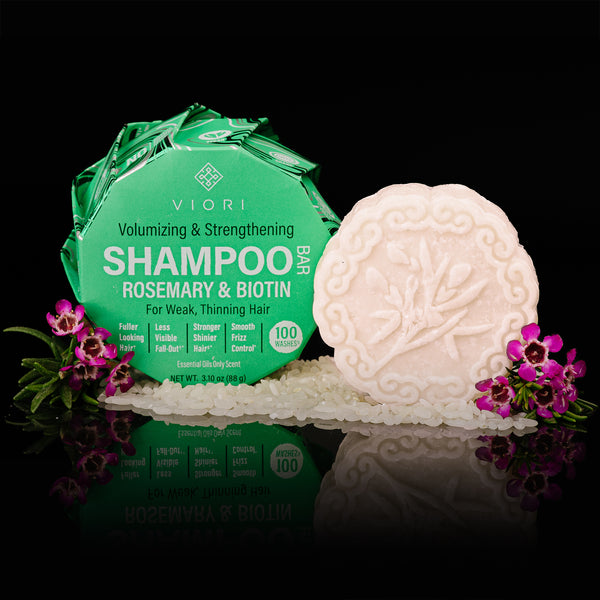
Viori's formulations combine Longsheng rice water with:
Cocoa Butter and Shea Butter: These natural butters provide the moisture and lipid content necessary to balance rice water's high protein content. They condition and soften while the rice water strengthens, creating that critical protein-moisture equilibrium your hair absolutely needs.
Bamboo Extract: Naturally rich in silica, bamboo supports hair strength and resilience. It also provides nutrients that support scalp health and may reduce dandruff and irritation.
Aloe Vera: Known for soothing and anti-inflammatory properties, aloe supports scalp health while providing lightweight moisture that won't weigh hair down.
Rice Bran Oil and Hydrolyzed Rice Protein: These ingredients work synergistically with rice water, providing additional volume, shine, and strengthening benefits that build on the foundation the rice water creates.
WHAT CUSTOMERS ARE SAYING
Real reviews for Rosemary Biotin Shampoo Bar – Thinning Hair | VIORI
This multi-ingredient approach addresses hair health holistically-something a single-ingredient DIY treatment simply cannot achieve, no matter how carefully you prepare it.
pH Precision: The Factor You Can't Afford to Ignore
Let's get genuinely technical about pH for a moment, because this is one of the most critical factors in hair care success that almost nobody talks about.
Finding the Goldilocks Zone
Hair has an isoelectric point (the pH at which it has no net electrical charge) around 3.67. At this pH, hair is in its most compact and resistant state. However, this extremely acidic pH isn't practical or comfortable for regular use on your scalp.
The ideal pH range for hair products is generally 4.5-5.5. Within this range:
- The hair cuticle remains relatively closed and smooth
- Your scalp's acid mantle is supported and maintained
- Beneficial ingredients can still penetrate where needed
- The product remains gentle enough for regular, ongoing use
Here's the fundamental problem with DIY rice water: uncontrolled fermentation results in unpredictable pH levels. If fermentation proceeds too long, the pH may drop low enough to cause scalp irritation or cuticle damage. If fermentation is insufficient, the pH may remain too high to provide optimal benefits.
Professional formulations solve this through careful pH testing and adjustment. Every batch is monitored to ensure it falls within the ideal range for both efficacy and safety-something you simply can't replicate in your kitchen without professional equipment.
Application Technique: Getting the Most from Your Products
Even with a perfectly formulated product, technique matters significantly.
The Gentle Approach for Bar Products
If you're using bar format products (like Viori offers), there's a specific technique that optimizes results while minimizing damage:
Rather than rubbing the bar directly onto your hair-which creates excessive friction and can lift the cuticle-try this instead:
- Lather the bar in your palms first, creating a rich foam
- Apply the lather to your hair using your hands, not the bar itself
- Work the product through gently, focusing on the scalp for shampoo and mid-lengths to ends for conditioner
This method provides all the cleansing and conditioning benefits while minimizing mechanical stress on the hair shaft. For color-treated hair, this gentle application becomes even more important for preserving your color by keeping the cuticle as closed as possible.
Concentration: The Goldilocks Principle
Determining the optimal concentration of rice water is genuinely complex formulation chemistry that requires laboratory testing and expertise.
The Delicate Balance
Too little rice water, and you won't achieve the strengthening, volumizing, and growth-supporting benefits. The active compounds simply won't be present in sufficient quantities to make a measurable difference.
Too much rice water, and you risk:
- Protein overload leading to brittle, breaking hair
- pH imbalances that damage the cuticle and irritate the scalp
- Scalp irritation from excessive acidity
- Buildup that makes hair feel stiff, coated, or lifeless
Professional formulators conduct extensive testing to identify the "just right" concentration. This involves laboratory analysis and real-world trials with diverse hair types to ensure broad efficacy across different hair textures and conditions.
Viori deliberately uses a carefully calibrated concentration of Longsheng rice water because rice water at high concentrations can disrupt hair and scalp pH levels if used too frequently. By balancing it with other nutrient-rich ingredients, they achieve results


