
Rice water has earned its place in haircare lore for a reason-it can make hair look shinier, feel stronger, and break less. But once you switch from a rinse-out to a leave-in, the rules change. That’s where a lot of people get amazing results… and where plenty of others end up with stiff hair, tangles, or an irritated scalp.
In my experience as a stylist, the most helpful way to think about a rice water leave-in is not “Will it grow my hair?” but “Will it help me keep the length I’m already growing?” Most of what people call “hair growth results” are actually length retention-less breakage, less friction damage, and a calmer scalp.
The part that rarely gets explained online is that a leave-in changes three variables at once: dose (how much), dwell time (how long it sits), and deposition (where it sticks). Get those three right, and rice-based routines can be a game-changer. Get them wrong, and it’s surprisingly easy to create the exact breakage you were trying to prevent.
Hair growth vs. length retention: what rice water is really doing
Hair growth starts at the follicle, and that’s influenced by things like genetics, hormones, overall health, stress, and nutrition. Most hair products-rice water included-aren’t flipping a magical “grow” switch overnight.
NOT SURE WHICH PRODUCT IS RIGHT FOR YOU?
TAKE THE QUIZTakes 30 seconds · 134,000+ customers matched
What rice water can do beautifully (when used appropriately) is support the hair you already have so it doesn’t snap off. That’s why people often notice their hair “growing” faster: they’re simply losing less length to breakage.
- Less breakage at the ends means you keep more of your growth.
- Less friction means fewer splits and fewer weak points along the strand.
- Less scalp irritation can mean less stress-related shedding for some people.
- Better shine and body can make hair look fuller and healthier quickly.
The leave-in difference: why “dwell time” can help-or hurt
A rinse-out treatment has a short window to do its job. A leave-in sits for hours, which can be fantastic for conditioning and strengthening-until it isn’t.
Longer contact time can mean more smoothing and reinforcement. But it also increases the chances of buildup, stiffness, and scalp imbalance if the formula is too strong or used too often.
This is one reason Viori takes a more measured approach with its fermented Longsheng rice water: it’s used in a lower concentration because very high concentrations of rice water can disrupt hair and scalp pH when used too frequently. Viori’s bars are also pH balanced, which matters for keeping hair feeling healthy over time.
What’s inside rice water that makes hair feel stronger?
Rice water gets described as “vitamins for hair,” but the real story is more about how rice-derived components behave on the hair fiber-especially when you leave them on.
Hydrolyzed rice protein: strength, volume, and the risk of stiffness
Hydrolyzed rice protein is protein broken into smaller pieces so it can cling to the hair more easily. On damaged or porous hair, it can create a light film that helps reinforce weak spots and reduce friction. That’s often a win for anyone trying to retain length.
The catch is that “stronger” isn’t always “better” if the hair loses flexibility. Too much protein-like film can make hair feel rigid-and rigid hair tangles more easily, which increases breakage during detangling.
Inositol (Vitamin B8): the underrated reason fermented rice is interesting
One of the most overlooked perks of fermented rice systems is inositol (Vitamin B8). It’s often discussed like a simple nutrient, but it’s more useful to think of it as something that can be retained on the hair in a meaningful way-especially when contact time increases.
That’s one reason fermented rice water is so compelling in haircare: you’re not just rinsing a trend over your hair; you’re potentially improving how the hair fiber behaves over time when the routine is controlled and consistent.
Panthenol (Vitamin B5): flexibility and softness (with a humidity footnote)
Panthenol (Vitamin B5) helps with softness and flexibility, and flexible hair tends to break less. In real-life terms, it can make the strand feel more “bendy” and less brittle.
One nuance: in very humid weather, humectant-heavy routines can sometimes make frizz more noticeable if there isn’t enough smoothing and conditioning balance. That doesn’t mean panthenol is “bad”-it just means the full routine matters.
The scalp factor: pH and microclimate matter more with leave-ins
Your scalp is skin, and it runs on balance. Leave-in products can shift that balance because they sit on the scalp longer, mixing with oil, sweat, and whatever else your day throws at you.
Uncontrolled DIY rice water is where I see the biggest issues, because fermentation can be unpredictable. The pH can drift, the byproducts vary batch to batch, and there’s a real risk of using something that simply doesn’t play nicely with your scalp.
Viori’s approach-controlled fermented Longsheng rice water, a formula designed to be pH balanced, and a concentration intended to be safe for regular use-lines up with what I consider “smart rice care”: keep it effective, keep it consistent, keep it gentle enough to stick with.
The breakage trap: “protein drag” and why it ruins length goals
There’s a very specific feel I watch for in the salon when someone is overdoing strengthening products: the hair starts to feel grabby. I call it protein drag.
Protein drag happens when a strengthening film forms unevenly. Instead of slip, you get friction. Instead of smooth detangling, you get little snags that turn into bigger tangles-and tangles are one of the fastest routes to breakage.
- Most likely to struggle: low-porosity hair, fine hair, hair that already gets a lot of strengthening products.
- Often benefits most: high-porosity hair, chemically treated hair, dry hair that breaks easily from friction.
A more professional way to do a rice water leave-in: micro-dosing and zoning
If you want the benefits without the baggage, don’t treat rice water like an everyday all-over leave-in by default. The most reliable approach is to control placement and frequency.
WHAT CUSTOMERS ARE SAYING
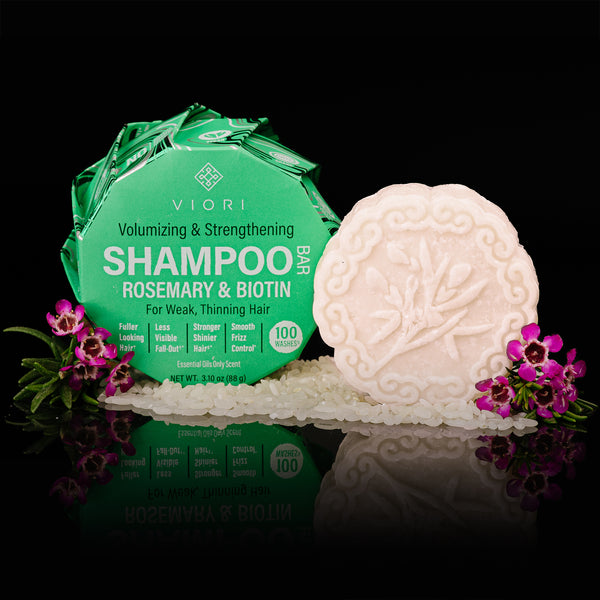
Real reviews for Rosemary Biotin Shampoo Bar – Thinning Hair | VIORI
1) Zone it: treat lengths and ends differently than the scalp
If your scalp is sensitive, oily, or breakout-prone, apply rice-based leave-in strategies mainly to the mid-lengths and ends. That’s where breakage prevention pays off the most, and it reduces the chance of scalp residue buildup.
2) Cycle it: strength days and moisture days
Instead of daily use, think in cycles. You’ll often get better hair over time by alternating strengthening-focused routines with moisture-and-slip days.
- Use rice-based leave-in strengthening 1-3 times per week (depending on your hair’s response).
- On other days, focus on conditioning, slip, and gentle detangling.
- If hair starts feeling stiff or tangly, reduce frequency before you quit entirely.
3) Match it to porosity
Porosity changes the whole equation. Low-porosity hair tends to resist absorption and can build up faster, while high-porosity hair absorbs quickly but struggles to retain moisture-so it often appreciates added reinforcement and conditioning.
Can you use Viori as a leave-in?
Viori’s conditioner bar is intended to be rinsed out, but some people do experiment with using a tiny amount as a leave-in. If you try it, keep it conservative and technique-driven.
- Use the smallest amount possible.
- Apply mostly to ends, not the scalp.
- Distribute through wet hair so it spreads evenly.
- Choose Native Essence if you prefer an unscented option, especially for fragrance sensitivity.
How to tell if it’s working (and when to pull back)
The best rice routines make hair feel stronger without making it hard. Strength should still come with movement and flexibility.
Signs you’re on the right track
- Less breakage and fewer split ends over time
- Easier detangling with less snapping
- More consistent shine (not greasy buildup shine)
- Hair feels resilient-strong but still soft
Red flags to stop or scale back
- Itching, burning, or increased flaking
- Hair feels crunchy, stiff, or unusually dry
- Tangles increase (especially at the crown and nape)
- Breakage increases during detangling
- Waxy or coated feeling that’s hard to rinse away
Bottom line: leave-in rice water is about control, not intensity
If you want to use rice water as a leave-in for “hair growth,” aim for the thing that actually changes your results long-term: length retention. The winning routine is rarely the strongest one-it’s the one you can repeat without irritation, stiffness, or breakage.
That’s why I’m a fan of controlled, pH-balanced rice-based formulations like Viori’s: you get the benefits of fermented Longsheng rice water and supportive ingredients without pushing hair and scalp into extremes.


