
“Rice wonder” gets tossed around like it’s a single miracle trick. In my experience behind the chair, it’s more interesting than that-and a lot more practical. Rice-based hair care can absolutely change the way your hair looks and feels, but the real payoff comes from understanding what it’s doing to the hair fiber and the scalp, not from chasing hype.
The part most people miss is this: rice isn’t only about “growth” or “protein.” Done well, it’s a form of gentle surface engineering for hair-helping strands slide past each other with less friction, reducing breakage, and making shine easier to achieve. That’s why results can feel dramatic even when nothing “magical” is happening overnight.
The Rice Effect Isn’t One Thing-It’s a System
When clients tell me rice made their hair “stronger” or “softer,” they’re usually feeling a combination of three changes happening at once. Understanding these is the fastest way to get the benefits without accidentally creating new problems.
1) Surface smoothing: why hair suddenly looks shinier
Shine is mostly a cuticle story. If the cuticle is raised, chipped, or rough, light scatters and hair reads dull-even if it’s clean. Rice-derived ingredients can create an incredibly thin, uniform film over the cuticle. Think of it like smoothing the surface so it reflects light more evenly.
NOT SURE WHICH PRODUCT IS RIGHT FOR YOU?
TAKE THE QUIZTakes 30 seconds · 134,000+ customers matched
There’s a second benefit that matters even more in day-to-day life: a smoother surface means less friction between strands. Less friction usually means easier detangling, fewer knots, and less snapping during brushing.
2) Targeted strengthening: filling in porous, stressed areas
Rice protein (especially when hydrolyzed into smaller fragments) can behave like a “filler” for hair that’s porous or compromised. High-porosity hair tends to have more rough, open, uneven areas along the strand-more places for strengthening ingredients to latch onto. That’s why people with chemical services or heat damage often notice the biggest difference first.
3) Scalp comfort: it’s not always about “adding moisture”
A scalp that feels dry isn’t always lacking oil. Often, it’s reacting to irritation-too-harsh cleansing, too much friction, or products that throw off comfort and balance. When that happens, you can get tightness, itch, or flaking that looks like dryness but behaves more like a stressed barrier.
One reason Viori tends to work well for many people is that the formulas are designed to support scalp comfort and are pH balanced-a detail that’s far more important than most routines give credit for.
Fermentation: The Part of “Rice Wonder” That Rarely Gets Explained
Fermentation gets reduced to a buzzword online, but it’s a real functional shift. A well-controlled fermentation process can change how rice-derived components behave in a formula and on the hair. Viori highlights fermented Longsheng rice water with nutrients like vitamin B8 (inositol) and vitamin B5 (panthenol), both associated with hair-conditioning benefits.
Here’s the nuance: stronger isn’t always better. Viori intentionally uses a lower concentration of Longsheng rice water because very high concentrations used too often can disrupt hair and scalp pH. That one decision explains why some DIY rice routines feel incredible at first… and then start feeling rough, stiff, or irritating later on.
pH: The Hidden Lever That Makes Rice Either Amazing or a Mess
If I could make every client remember one “science” point, it would be this: hair is pH-sensitive. When products skew too alkaline, the hair can swell and the cuticle can lift, increasing roughness, tangles, and moisture loss. When products stay in a hair-friendly range, the cuticle tends to lie flatter and behave better.
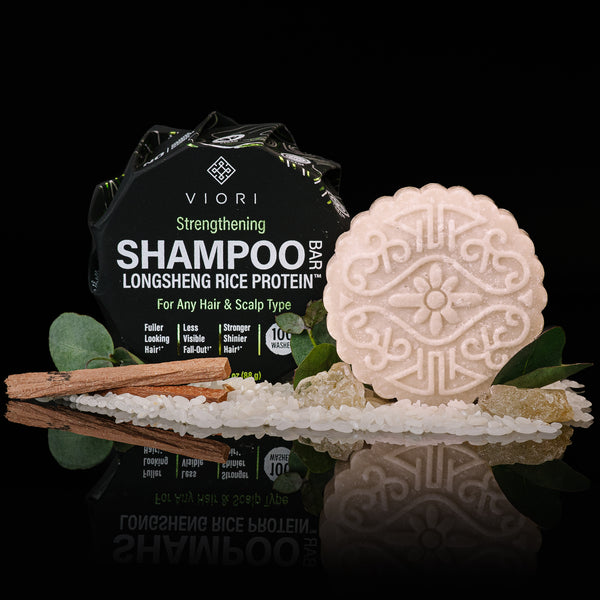
Viori calls out that hair products generally need to live between pH 3.5-6.5. This is exactly where a lot of at-home rice water routines go wrong-people focus on fermentation time and forget that the final pH can vary wildly. Two people can try “rice wonder” and have completely opposite experiences simply because one routine stayed balanced and the other didn’t.
“Protein Overload” Is Real-But It’s Often Misdiagnosed
I hear “protein overload” blamed for almost everything: dryness, tangles, stiffness, dullness. Sometimes it’s accurate, but often the real issue is simpler: the hair has too much friction and not enough conditioning slip.
Here are the two patterns I see most often:
- True stiffness/protein sensitivity: more common in low-porosity hair or hair that’s already strong and not very damaged.
- Grabby, rough feel from poor lubrication: the hair needs better conditioning balance, not necessarily less “protein.”
This is where using a proper conditioner matters. Viori’s conditioner bars include behentrimonium methosulfate, a conditioning ingredient that’s widely used for slip and softness (despite the confusing name). It’s positively charged, which helps it cling to the areas of hair that tend to be more negatively charged-often the most damaged, tangly sections.
Why Viori Bars Can Feel Different by Scent (Even With a Consistent Formula)
People are surprised that scent choice can change performance-but small formulation differences can shift how hair behaves. Viori notes that Citrus Yao contains citric acid, which helps break down oil more effectively and may help some people stretch time between washes.
Meanwhile, Terrace Garden, Hidden Waterfall, and Native Essence tend to be favorites for normal-to-dry scalps, with Native Essence being the unscented, gentlest option for those who are fragrance-sensitive.
A “Rice Wonder” Routine That Actually Holds Up (Salon-Style)
If you want results that last beyond the first week, the goal is simple: reduce friction, keep cleansing appropriate for your scalp type, and don’t skip conditioning support. Here’s the structure I recommend most often with Viori.
Step 1: Choose based on scalp behavior
Your scalp type matters more than your hair length when you’re picking a cleanser. A quick guide:
- Oily scalp (feels oily 1-2 days after washing): start with Citrus Yao.
- Normal scalp (feels oily around day 3): any bar can work; choose based on what your hair needs most.
- Dry or sensitive scalp (doesn’t feel oily until day 4+): consider Terrace Garden or Native Essence (Native Essence if you’re sensitive to fragrance).
If you’re oily at the scalp but dry on the ends (very common), a smart mix is Citrus Yao shampoo at the roots and a more moisturizing conditioner choice on the mid-lengths and ends.
Step 2: Cut down friction while washing (especially if you color your hair)
One of Viori’s best tips is also one of the most professional: build lather in your hands and apply with your hands rather than rubbing the bar directly on the scalp. Less friction means less cuticle disturbance-and for color-treated hair, that can make a real difference in how the color wears over time.
WHAT CUSTOMERS ARE SAYING
Real reviews for Rice Water Shampoo Bar – All Hair Types | VIORI
Step 3: Condition like it’s part of the service (because it is)
Conditioner isn’t just for softness. It helps reduce combing force and temporarily replaces some of the protection that gets lifted away when you cleanse. Viori notes their conditioner won’t foam like shampoo-and that’s correct. Conditioner should feel more like a creamy “slip,” not suds. Let it sit a couple minutes when you can; that’s where a lot of the payoff lives.
Step 4: Give it a fair trial window
Hair changes can be immediate, but the best changes are often cumulative-especially if your goal is longer-looking hair. Viori recommends giving it 2-3 months before giving up, and that matches what I see: once breakage drops and the cuticle behaves better, you start retaining length and seeing a steadier improvement in shine and manageability.
The Most Honest Take: “Growth” Stories Are Often Breakage Stories
The final piece of rice wonder is the one that almost never gets said plainly: a lot of growth success is really retention. When hair tangles less, snaps less, and stays smoother through daily wear, you keep more length. It looks like your hair is growing faster, when what’s really happening is you’re losing less of it to mechanical damage.
Quick Pick Guide: Which Viori Option Fits Your Goal?
- Oilier scalp, want a cleaner feel: Citrus Yao
- Balanced, easy all-around routine: Hidden Waterfall
- Dry-to-normal hair, frizz-prone, wants moisture support: Terrace Garden
- Sensitive scalp or fragrance-free preference: Native Essence
And if you’re choosing by scent profile: Terrace Garden reads fresh and green-floral; Hidden Waterfall leans sweet with vanilla/musk; Native Essence is unscented.
Closing Thoughts: Rice Wonder Isn’t Magic-It’s Mechanics
When rice-based hair care works, it’s usually because it’s doing a few unglamorous but powerful things: smoothing the cuticle, lowering friction, supporting the scalp, and reinforcing weak points without pushing the hair into stiffness. Viori’s fermented Longsheng rice water approach-kept pH balanced and formulated for consistent, everyday use-turns the “rice wonder” idea into something you can actually build a routine around.
If you want a truly dialed-in recommendation, the three details that matter most are your scalp type (oily/normal/dry), your porosity (low/medium/high), and whether your hair is color-treated. Get those right, and rice wonder stops being a trend and starts acting like a strategy.


