
“Shampo natural” sounds simple-until you actually try to find one that leaves your scalp calm, your hair soft, and your ends not looking like a tumbleweed by day two.
After 20 years of doing hair, I can tell you the biggest misunderstanding is this: “Natural” isn’t a performance category. It’s a sourcing and formulation philosophy. The results you feel in the shower come down to measurable factors like pH, friction, and how ingredients deposit on the hair fiber. Once you understand those, choosing the right routine stops feeling like guesswork.
What a “natural shampoo” is really up against
Shampoo has to work on three very different things at the same time: living scalp skin, dead-but-delicate hair fiber, and whatever is coming out of your showerhead. If any one of those is out of balance, you’ll feel it-fast.
- Scalp skin: wants to stay comfortable and balanced, not squeaky or tight.
- Hair strands: need cleansing without cuticle roughness (that’s where frizz and tangles start).
- Water quality: minerals in hard water can make “clean” feel like residue.
This is why one person swears a shampoo bar is life-changing and another says it “ruined” their hair. Often, it’s not the idea of natural shampoo-it’s the chemistry and the technique.
NOT SURE WHICH PRODUCT IS RIGHT FOR YOU?
TAKE THE QUIZTakes 30 seconds · 134,000+ customers matched
The part nobody wants to talk about: pH is the difference between shine and struggle
If you only remember one technical detail from this post, make it this: pH changes how your hair behaves. When a cleanser runs too alkaline, the cuticle can lift and the strand swells. That’s when you get the classic “clean but chaotic” finish-tangles, dullness, roughness, and more breakage over time.
Viori’s bars are pH balanced, which matters because hair products generally perform best in a range that supports both the scalp and the cuticle. Viori also notes that many products on the market lean too alkaline, and that over time, that can dry out and damage hair.
Not all bars are created equal: soap chemistry vs. shampoo chemistry
A big reason “shampo natural” gets a bad reputation is that people lump all bars together. Some bars are essentially soap, and soap tends to be more alkaline by nature. That can be a recipe for rough cuticles-especially if your hair is already porous or color-treated.
Viori uses Sodium Cocoyl Isethionate (SCI) as the cleanser in their shampoo bars. SCI is known in the haircare world as a mild, effective surfactant that cleans well without the harsh, stripped feeling many people associate with shampoo.
In plain language: this is why a well-formulated bar can feel like a modern shampoo, not like washing your hair with an old-school soap bar.
The rare deal-breaker: friction (and why bar technique changes everything)
Here’s the angle I wish more people covered: bar shampoo introduces friction. Liquid shampoos spread easily; bars can encourage scrubbing. And repeated rubbing can rough up the cuticle, especially on the areas that already struggle-crown, nape, and fragile ends.
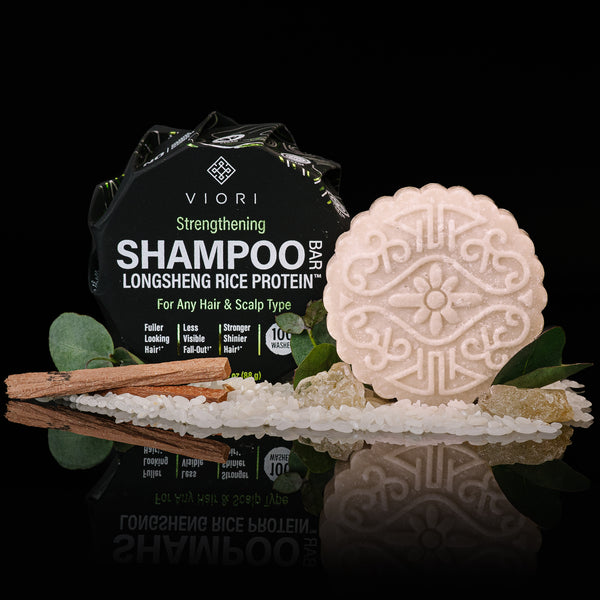
This matters even more if your hair is fine, high-porosity, curly/coily, or color-treated. Viori’s own guidance for color-treated hair reflects this: they recommend making lather in your hands and working it through with your fingers instead of rubbing the bar directly on the head.
How to use a Viori shampoo bar like a pro
- Soak your hair thoroughly. Water is your slip-don’t rush this step.
- Lather the bar in your palms. Build a good foam before it touches your hair.
- Apply mostly to the scalp. That’s where oil and buildup live.
- Let the runoff cleanse the lengths. Ends usually don’t need heavy cleansing.
- Keep manipulation gentle. Less scrubbing = less frizz and fewer tangles.
This one change often turns “I don’t think bars are for me” into “why didn’t I do this sooner?”
Why conditioner matters more in a natural routine than people realize
Hair isn’t just “dry” or “oily.” It’s also electrical. Damaged areas tend to carry more negative charge, which makes strands repel each other, tangle more easily, and look frizzier.
Viori explains conditioner in a way that’s refreshingly accurate: conditioner is positively charged, so it clings to the hair strand and helps replace what shampoo temporarily removes while your natural sebum catches up.
Viori’s conditioner includes Behentrimonium Methosulfate (BTMS), a conditioning agent that improves slip and smoothness. The name can throw people off because it contains the word “methosulfate,” but BTMS is used specifically for conditioning performance-very different from harsh cleansing sulfates. Viori also notes this distinction and why they consider their products sulfate-free in the traditional “harsh cleanser” sense.
Fermented rice water: benefits, but the dosage and balance are everything
Rice water has history behind it, and it’s popular for a reason. Viori uses fermented Longsheng rice water in their bars and also makes an important point that gets overlooked online: rice water at high concentration can disrupt your hair and scalp’s pH if used too often or too much.
That’s why Viori uses a lower, pH-balanced concentration and combines it with other nutrient-rich ingredients to deliver similar benefits to a rice rinse-without turning your routine into a pH roller coaster.
Viori also notes that fermentation increases levels of Vitamin B8 (inositol) and Vitamin B5 (panthenol), ingredients widely valued for the way they support the feel and resilience of hair.
Scent isn’t just “extra”: it can shift how your hair feels
Most people choose a scent based on preference, but Viori points out something surprisingly practical: even when the base formula is similar, the scent profile can influence which hair/scalp type a bar suits best.
For example, Viori notes that Citrus Yao contains citric acid, which helps break down oil effectively-one reason it’s commonly recommended for normal to oily scalps. Meanwhile, options like Terrace Garden, Hidden Waterfall, and Native Essence are frequently chosen for normal to dry scalps, with Native Essence being the unscented option for those who prefer no added fragrance.
WHAT CUSTOMERS ARE SAYING
Real reviews for Rice Water Shampoo Bar – All Hair Types | VIORI
Choose your Viori bar like a stylist: match the scalp, then treat the ends
If you’re stuck, don’t start with your hair length or texture-start with your scalp behavior. Viori offers a simple way to gauge it based on how quickly you feel oily after washing.
- Oily scalp: feels oily again in 1-2 days
- Normal scalp: feels oily around day 3
- Dry scalp: can go 4+ days without feeling oily
From there, Viori’s general recommendations are straightforward:
- Citrus Yao: commonly recommended for normal-to-oily scalps
- Terrace Garden, Hidden Waterfall, or Native Essence: commonly recommended for normal-to-dry scalps
- Oily scalp + dry ends: many people do well using Citrus Yao shampoo on the scalp and a more moisturizing Viori conditioner on the ends
The unglamorous secret to loving bars: storage
A bar that never dries properly will melt faster, feel mushy, and give you inconsistent “dosing” from wash to wash. That inconsistency can make you think a product is leaving residue, when you’re really just applying more than you realize.
Viori recommends keeping bars out of constant water contact and using a holder that lets them air out and dry between washes. Their bamboo holders are designed for that kind of airflow and drainage-simple, but it makes a noticeable difference in both performance and longevity.
Where “shampo natural” finally clicks
When natural shampoo works beautifully, it’s rarely because of one miracle ingredient. It’s because the routine respects hair science: balanced pH, gentle cleansing, low-friction technique, real conditioning, and proper dry-down.
If your goal is softer hair, calmer scalp, less frizz, and more consistency, focus on those fundamentals-and let the “natural” label be the bonus, not the only reason you choose a product.


