
If you're dealing with seborrheic dermatitis, you already know the drill. The relentless flakes. That maddening itch. The treatment that works brilliantly for three months and then-without warning-stops working entirely. In my twenty years behind the chair, I've watched countless clients cycle through every product imaginable, often missing what might be the most effective approach: the right shampoo bar.
Now, before you close this tab thinking I'm about to pitch you another miracle cure, hear me out. I'm going to walk you through the actual science of why certain shampoo bars work for seborrheic dermatitis-and more importantly, when they don't. No fluff. Just the chemistry, biology, and real-world application strategies I've developed working with clients who've struggled with this condition.
The Treatment Truth Nobody Mentions
Here's what gets left out of those "Quick Fix for Flaky Scalp" articles you've probably read a dozen times: seborrheic dermatitis isn't just about finding the right ingredient-it's about maintaining consistent therapeutic conditions over time.
Let me explain what I mean by breaking down something most people never consider.
The Hidden Problem With Water-Based Formulas
Seborrheic dermatitis stems primarily from Malassezia, a yeast that lives on everyone's scalp but goes into overdrive under certain conditions. This microscopic troublemaker feeds on sebum-your scalp's natural oil-and produces inflammatory byproducts that trigger all that redness, itching, and flaking you're dealing with.
Traditional liquid shampoos contain 70-80% water. Sounds innocent enough, right? But that water content creates a cascade of problems nobody talks about:
The Preservative Problem: All that water requires aggressive preservation systems to prevent bacterial growth. We're talking parabens, phenoxyethanol, or even "natural" alternatives like potassium sorbate. These preservatives can compromise your skin's protective barrier-the stratum corneum-making it more vulnerable to the very irritants you're trying to avoid. When your skin is already inflamed from seborrheic dermatitis, this barrier disruption is the last thing you need.
The Degradation Issue: Even with preservatives, liquid shampoos start breaking down the moment you pop that cap open. Exposure to air, bathroom humidity, and temperature swings cause active ingredients to degrade and pH levels to drift. That bottle that worked amazingly well when you first opened it? Three months later, it's chemically quite different.
NOT SURE WHICH PRODUCT IS RIGHT FOR YOU?
TAKE THE QUIZTakes 30 seconds · 134,000+ customers matched
Shampoo bars exist in what chemists call a "low water-activity state," which makes them naturally self-preserving. This isn't just a neat party trick-it has real implications:
- No need for harsh preservative systems that can trigger contact dermatitis
- Active ingredients remain stable throughout the product's entire lifespan
- No dilution of beneficial components as the product ages
- Consistent performance from your first use to the very last sliver
Why pH Isn't Just Chemistry Class Jargon
This is where things get interesting. Early in my career, I thought pH was just a technical detail for formulation nerds. I was wrong. Understanding pH transformed how I approach scalp conditions entirely.
pH isn't just a number-it's the difference between creating an environment where your problem thrives and one where it struggles to survive.
Malassezia yeast prefers a slightly alkaline environment, somewhere around pH 6.5-7.0. Traditional bar soaps are highly alkaline-pH 9-10-which essentially rolls out the welcome mat for the yeast causing your problems. It's like setting up a buffet for your worst enemy.
Viori bars are formulated between pH 4.5-5.5, and this matters tremendously because this acidic environment:
Inhibits Malassezia enzyme activity: The yeast produces enzymes called lipases that break down sebum into inflammatory fatty acids. Those fatty acids are what actually cause the inflammation and flaking. An acidic pH suppresses these enzymes, essentially throwing a wrench in the yeast's destructive machinery.
Supports your acid mantle: Your scalp's natural protective layer operates at pH 4.5-5.5. At this pH, your skin produces antimicrobial peptides that naturally keep microbial populations in check. Maintaining this pH enhances your scalp's own defense systems instead of fighting against them.
Strengthens barrier function: The slightly acidic pH helps your skin's lipid layers arrange themselves properly, creating a tighter, more effective barrier against irritants.
Here's the advantage of bars over liquids: pH stability. Liquid shampoos undergo constant pH changes as dissolved CO2 from air exposure acidifies the formula, preservatives break down, and temperature fluctuations cause chemical shifts. Solid bars maintain remarkably stable pH because their concentrated buffering systems aren't subject to these water-based reactions.
For a chronic condition like seborrheic dermatitis, this consistency isn't just nice to have-it's essential.
The Rice Water Story: When Ancient Tradition Meets Modern Science
This is where my enthusiasm as both a scientist and a practitioner really kicks in. Viori's fermented Longsheng rice water contains components that have been dramatically overlooked in the scalp health conversation.
Inositol: The Compound Everyone's Sleeping On
During fermentation, rice water develops elevated levels of inositol, also known as vitamin B8. This compound has two properties that make it particularly relevant for seborrheic dermatitis management:
Ceramide Support: Inositol serves as a precursor to ceramides-the crucial lipids that form your skin's protective barrier. Seborrheic dermatitis involves barrier dysfunction, which creates a vicious cycle: irritants penetrate more easily, causing more inflammation, which further damages the barrier, allowing even more irritants in. Topical inositol may support barrier repair without creating the heavy, occlusive layer that could trap heat and sebum-conditions that favor yeast growth.
Metabolic Influence: Emerging research suggests seborrheic dermatitis may have metabolic components. While scientists are still piecing this together, inositol's role in cellular signaling pathways could potentially influence sebaceous gland activity at the scalp level.
Hydrolyzed Rice Protein: Size Matters More Than You Think
Not all proteins can actually penetrate your skin. Molecular weight determines whether an ingredient sits on the surface creating a coating or actually penetrates the outer layer where it can do meaningful work.
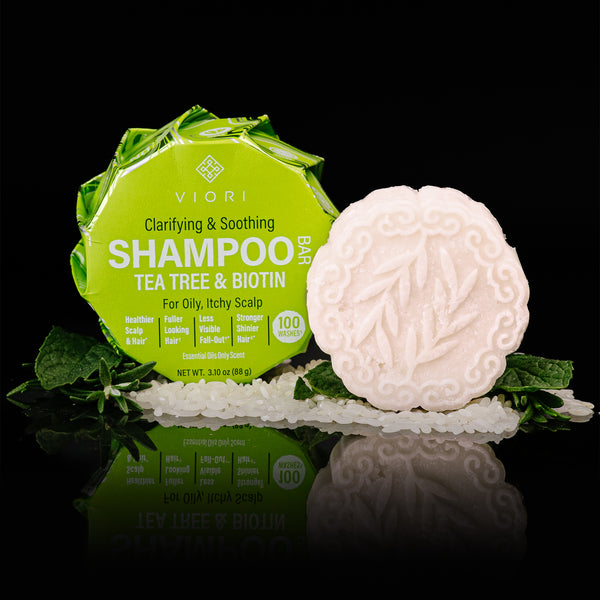
Hydrolyzed rice protein (500-2000 Daltons) is small enough to penetrate the stratum corneum, where it can:
- Provide amino acids your body uses to produce its own antimicrobial peptides
- Support your scalp's natural moisturizing factor
- Create a breathable protective film that doesn't clog pores or trap sebum
Compare this to the heavy silicones or oils in many liquid shampoos, which create an occlusive environment that may actually favor Malassezia proliferation by trapping the exact conditions the yeast loves: heat, moisture, and sebum.
The Application Method Advantage
Here's something almost never discussed in seborrheic dermatitis management articles: how you apply your shampoo matters as much as what's in it.
Seborrheic dermatitis involves excess scale formation. The direct application method used with shampoo bars-whether you apply the bar directly to your scalp or create a rich lather in your hands first-provides several mechanical benefits that liquid shampoos simply can't match:
Controlled Exfoliation: The application process provides gentle mechanical debridement, removing scales without the aggressive scrubbing that inflames your scalp further. It's the difference between gently dusting a delicate surface versus attacking it with steel wool.
Efficient Sebum Breakdown: When you apply a bar directly to wet hair and scalp, you're delivering concentrated surfactants exactly where they're needed. They begin breaking down sebum at full strength before any dilution occurs. With liquid shampoos, you're starting with an already-diluted product that's less effective at emulsifying the oily buildup that feeds Malassezia.
Therapeutic Massage: The application technique naturally encourages scalp massage, which improves circulation and potentially supports lymphatic drainage of inflammatory mediators. This isn't just about relaxation-it's about actively improving the physiological environment of your scalp.
Let's Be Real: What Shampoo Bars Can't Do
Professional integrity means being honest about limitations. So let's address this head-on.
The Active Ingredient Reality
Viori bars don't contain the clinically proven antifungal agents that dermatologists prescribe for active seborrheic dermatitis flares:
- Ketoconazole (2%)
- Zinc pyrithione
- Selenium sulfide
- Ciclopirox olamine
These remain the gold standard for directly suppressing Malassezia populations during moderate to severe flares. If you're in the middle of a bad outbreak, you need these medical-grade treatments. There's no getting around it.
When You Need More Than Maintenance
Shampoo bars excel at maintaining scalp health and supporting remission between flares, but they should NOT replace medical care if you're experiencing:
- Thick, adherent scales that don't improve with gentle washing
- Oozing, crusting, or any signs of secondary infection
- Involvement of eyebrows, facial areas, or other body regions
- Hair loss in affected areas
- No improvement after 8-12 weeks of consistent, appropriate care
These symptoms require dermatological evaluation to rule out other conditions like psoriasis or to determine whether you need prescription-strength interventions.
The Microbiome Perspective: Preservation Through Minimalism
This is perhaps the most cutting-edge angle in scalp health, and it's changing how we think about treatment: the best shampoo might be the one that disrupts your scalp's ecosystem the least.
Your scalp hosts a complex microbiome-beneficial bacteria like Cutibacterium and Staphylococcus epidermidis that naturally compete with Malassezia for resources and real estate. Recent research reveals that harsh surfactants like sulfates and aggressive preservative systems can devastate this microbial diversity. Lower diversity actually correlates with seborrheic dermatitis severity.
Viori bars use Sodium Cocoyl Isethionate, a gentle surfactant that:
- Has a higher molecular weight than SLS (Sodium Lauryl Sulfate), making it less penetrating and less disruptive to skin proteins
- Produces measurably less inflammation in laboratory studies
- May preserve beneficial microbial populations better than aggressive detergents
The absence of water-based preservatives means you're not exposing your scalp to:
- Methylisothiazolinone (a potent microbiome disruptor and common allergen)
- Formaldehyde-releasing preservatives
- Quaternium compounds
This minimalist approach reduces what scientists call "selective pressure" on your scalp's ecosystem, potentially allowing beneficial microbes to recover and gradually outcompete Malassezia through natural ecological balance.
Think of it this way: instead of carpet-bombing your scalp's entire microbial population and hoping the good guys recover faster than the bad guys, you're creating conditions that naturally favor the beneficial organisms you want to keep.
Practical Protocol: How to Actually Use Shampoo Bars for Seborrheic Dermatitis
Theory is fascinating, but let's talk about real-world application. Here's the protocol I've developed working with clients managing seborrheic dermatitis:
The Two-Phase Approach
Phase 1: Medical Control (Weeks 1-4)
If you're experiencing an active flare:
WHAT CUSTOMERS ARE SAYING
Real reviews for Tea Tree Shampoo Bar – Oily & Itchy Scalp | VIORI
- Use your prescribed antifungal shampoo 2-3 times weekly exactly as directed by your dermatologist
- On alternate days, use Viori's Native Essence shampoo bar (unscented to minimize fragrance sensitivity risk)
- Focus on being extremely gentle-your scalp is inflamed and needs careful treatment, not aggressive scrubbing
Phase 2: Maintenance (Ongoing)
Once symptoms are controlled:
- Reduce antifungal shampoo to once weekly for maintenance (or as directed by your dermatologist)
- Use your Viori shampoo bar daily or every other day, paying attention to:
Lukewarm water: Hot water strips protective oils and triggers rebound oil production, creating conditions that favor yeast growth.
Gentle massage: 60-90 seconds minimum contact time using your fingertips, never your nails. This isn't just about cleaning-you're supporting circulation and the natural shedding process.
Thorough rinsing: Residual product can actually provide nutrients for Malassezia. Rinse longer than you think you need to.
Proper bar storage: Keep your bar in a ventilated holder where it can dry completely between uses. A soggy bar loses its self-preserving advantage.
The Conditioner Consideration
This is crucial, and I cannot emphasize it enough: Do not apply conditioner to your scalp if you have seborrheic dermatitis.
Apply conditioner only to hair lengths and ends. The moisturizing ingredients in conditioner bars-shea butter, cocoa butter-are lipid-rich and could theoretically provide additional nutrients for Malassezia if applied directly to the scalp.
If your scalp needs moisture (and with seborrheic dermatitis, your hair might be oily while your scalp feels tight), use lightweight, non-comedogenic options like squalane or hyaluronic acid serums applied sparingly to problem areas only.
Matching Your Bar to Your Specific Situation
Not all seborrheic dermatitis presents the same way. Here's how to choose the right Viori bar for your particular situation:
Oily Seborrheic Dermatitis
Recommended: Citrus Yao bars
Why it works: The citric acid helps control excess sebum without the harsh stripping effect of sulfates, which paradoxically triggers rebound oil production. The lower pH also potentially inhibits enzymes in your sebaceous glands that contribute to excess oil production.
Frequency: Can be used more frequently (4-5 times weekly) due to the gentle formulation.
Dry Seborrheic Dermatitis
Recommended: Hidden Waterfall or


