
Shampoo powder sounds like a simple idea: less water, less packaging, easier travel, cleaner hair. In the salon, though, I see a different story play out-some clients fall in love immediately, and others end up with hair that looks fresher but feels oddly coated, dry, or itchy. The reason is almost never “your hair just hates powder.” It’s usually because the term shampoo powder gets used for two completely different product types, and they behave nothing alike on the scalp and hair fiber.
Here’s the stylist-level truth: the most important conversations around shampoo powder aren’t about trendy claims. They’re about how particles interact with the cuticle, how buildup changes the way hair moves and tangles, and how your scalp responds when oil is repeatedly absorbed rather than truly removed.
What “Shampoo Powder” Actually Means (Two Categories, Two Outcomes)
Most of the confusion starts here. People say “shampoo powder,” but they’re usually talking about one of these two formats:
- Water-activated powder shampoo (a real cleanser you use in the shower, just in dry form)
- Leave-on oil-absorbing powder (often used like dry shampoo to reduce the look of oily roots)
They may look similar in the bottle, but they do very different jobs. One is meant to wash away oil and grime. The other is meant to mask oil by soaking it up and dulling shine.
NOT SURE WHICH PRODUCT IS RIGHT FOR YOU?
TAKE THE QUIZTakes 30 seconds · 134,000+ customers matched
Why absorbent powders can “freshen” but not truly clean
Oil is only one part of what makes hair feel dirty. The scalp and hair also collect sweat salts, pollution particles, and styling residue. A leave-on powder can reduce shine and buy you time, but it typically doesn’t remove those other layers-so it’s common to feel okay in the morning and then feel progressively more uncomfortable as the day goes on.
The Rarely Discussed Factor: Particle Engineering (Why Some Powders Feel Gross)
Ingredient lists get all the attention online, but in practice, the physical design of the powder often determines whether you love it or hate it. This is the part that almost never gets explained in a useful way.
When clients describe powder products as gritty, heavy, or “dirty-feeling,” they’re often reacting to particle behavior such as:
- Particle size (too large can feel gritty; too fine can feel dusty and clingy)
- Particle shape (some shapes spread smoothly; others snag and grab)
- Surface properties (some powders bind oil aggressively and can be harder to remove later)
- Static/electrostatics (powders can increase friction and make frizz and flyaways worse)
In plain language: even a “clean” powder can behave like microscopic sand between hair strands if the particle design isn’t friendly to your hair type.
Why Hair Can Look Cleaner but Feel Rougher: Cuticle + Friction
Your hair’s outer layer (the cuticle) is like shingles on a roof. When those shingles lie flat, hair reflects more light, tangles less, and feels smoother. When they’re lifted-or when there’s residue sitting between strands-hair starts to snag, knot, and break more easily during brushing.
Powders can increase that friction in a few ways:
- They reduce the scalp’s natural lubrication (sebum) without necessarily replacing slip on the hair fiber.
- They can leave a faint particulate film that increases “drag” between strands.
- If a water-activated powder cleanser isn’t well balanced, hair can be left feeling rougher after rinsing.
That’s why I often recommend keeping leave-on powders mostly at the scalp. Your roots may need oil control; your lengths and ends usually need protection and lubrication.
The Scalp Microbiome Angle: Oil Isn’t Just “Grease”
This is one of the most overlooked parts of the conversation. Sebum isn’t purely a nuisance-it’s part of your scalp’s protective environment. When you repeatedly apply oil-absorbing powders and stretch wash days longer and longer, you can change what’s happening at the scalp surface.
Some people do fine. Others notice:
- Itchiness that builds throughout the day
- Scalp odor that seems to return quickly
- Flakes that look like dandruff but behave more like buildup
A helpful clue: if “dandruff” appears after powder use and disappears after a thorough wash, it may be powder + skin shedding + oil residue rather than a true dandruff issue.
Water-Activated Powder Shampoo: What It Has to Get Right
A true shampoo powder (the kind you use with water) can be a smart format-but it has technical hurdles that liquid products don’t always face in the same way.
1) Humidity and clumping
Bathrooms are humid. Many powder ingredients attract moisture from the air, which can cause clumping and uneven dosing. The container matters more than people think, and storage habits can make a product feel inconsistent from week to week.
2) Dissolution and “hot spots”
If the powder doesn’t dissolve evenly, you can end up with patches that feel squeaky-clean (over-cleansed) and others that still feel oily (under-cleansed). That’s one reason powder cleansers sometimes feel unpredictable.
3) pH and long-term hair quality
Hair generally performs best with a pH-balanced routine. When cleansing runs too alkaline, the cuticle can lift, which tends to show up as frizz, tangling, roughness, and faster fading for some color-treated hair.
Who Typically Loves Shampoo Powder (and Who Should Use It Carefully)
Shampoo powder isn’t “good” or “bad”-it’s situational. In my experience, it often works beautifully for:
- Fine hair that gets weighed down easily
- Low-porosity hair that’s prone to buildup when products are too heavy
- People who want a more minimal, travel-friendly routine
And it can be trickier (unless technique is very dialed in) for:
WHAT CUSTOMERS ARE SAYING
Real reviews for Rice Water Shampoo Bar – All Hair Types | VIORI
- High-porosity or heavily lightened hair (already prone to friction and dryness)
- Curly/coily hair when powder reduces slip and increases drag
- Sensitive scalps, especially with fragranced leave-on powders
How to Use Shampoo Powder Without the Dull, Gritty Aftermath
If you want powder products to work, application matters as much as the formula.
For leave-on powders (dry shampoo style)
- Apply only where oil is produced (scalp, hairline, crown), not through the ends.
- Let it sit for 30-90 seconds before you massage-absorption takes a moment.
- Brush it through thoroughly (or use a quick blow-dry) to remove excess particles.
- Use it as a bridge, not a permanent replacement for washing.
For water-activated powder shampoo
- Wet the hair fully first-distribution is everything.
- If possible, emulsify in your hands before applying to reduce clumping.
- Focus cleansing on the scalp; let the rinse cleanse the lengths.
- Condition mid-lengths to ends to restore slip and reduce cuticle drag.
If Your Goal Is “Lightweight Clean,” Consider a pH-Balanced Bar Routine
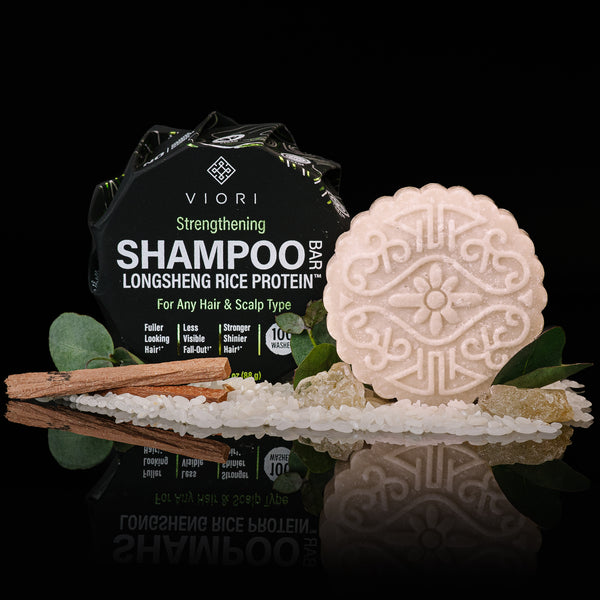
A lot of people reach for shampoo powder because they want hair that feels clean and light without heaviness or residue. If that’s your goal, a well-formulated shampoo bar can deliver similar benefits-without the common powder issues like grit, uneven distribution, or a dusty finish.
Viori’s shampoo bars are formulated to be pH balanced and use a gentle cleanser (Sodium Cocoyl Isethionate) alongside hair-supportive ingredients like fermented Longsheng rice water. The formula also uses a low, daily-safe concentration of rice protein, which matters because too much protein-or the wrong balance-can leave some hair types feeling stiff over time.
If you’re choosing based on scalp behavior, Viori typically aligns recommendations this way:
- Citrus Yao: often preferred for normal-to-oily scalp types and oil control
- Terrace Garden: often preferred for normal-to-dry scalps that need more moisture
- Native Essence: unscented and often preferred for sensitive scalps or fragrance avoidance
- Hidden Waterfall: a versatile option many people enjoy across hair types
Final Thoughts: The Best Shampoo Powder Is the One That Manages Friction, Residue, and Scalp Comfort
Shampoo powder can be a great tool-especially when you understand what kind you’re using and what job it’s meant to do. The difference between “lifesaver” and “never again” usually comes down to three things: friction on the hair fiber, residue on the scalp, and how consistently the product distributes.
If you’re experimenting, pay attention to how your scalp feels at the end of the day (not just right after application), and how your lengths behave during brushing. That’s where the real feedback lives-and it’ll tell you whether powder is improving your routine or quietly making your hair harder to manage.


