
“Shiny hair” gets marketed like it’s a single ingredient you can add at the end-some oil, a gloss spray, a miracle mask. In the salon, I see it differently. Shine is mostly about how light reflects off your hair, and shampoo is one of the biggest factors in whether your hair acts like a mirror… or a foggy window.
If you’ve ever had hair that feels clean but still looks dull, or hair that looks shiny at the roots but dry through the ends, you’re not imagining things. That’s usually an issue of surface texture, residue, charge, and friction-not simply “you need more moisture.”
Shine Is an Optical Effect (Not Just “Healthy Hair”)
Hair looks glossy when it produces specular reflection: light hits the hair and bounces back in a smooth, consistent way, forming that bright highlight band you notice under overhead lighting or near a window. When the surface is uneven-raised cuticles, mineral film, patchy buildup-light scatters in every direction and the hair reads matte.
NOT SURE WHICH PRODUCT IS RIGHT FOR YOU?
TAKE THE QUIZTakes 30 seconds · 134,000+ customers matched
In practical terms, shiny hair comes down to three things working together:
- A smooth cuticle surface so light can reflect cleanly
- An even, lightweight surface film (not heavy or patchy residue)
- Strands that align together (less frizz/static means a stronger highlight band)
What Shampoo Really Does: “Surface Engineering” for Your Hair
Most people think shampoo’s job is to remove oil. That’s only part of the story. Shampoo also influences fiber swelling, cuticle behavior, surface charge, and friction. Those four things decide whether hair feels sleek and looks glossy-or feels squeaky and looks fuzzy.
Why pH Has Everything to Do with Shine
One of the quickest ways to lose shine is to throw off the environment your cuticle prefers. Hair products generally perform best when they’re pH balanced (commonly within about 3.5-6.5). When pH creeps too high, hair can become more negatively charged and less cooperative: more friction, more roughness, more flyaways, more dullness.
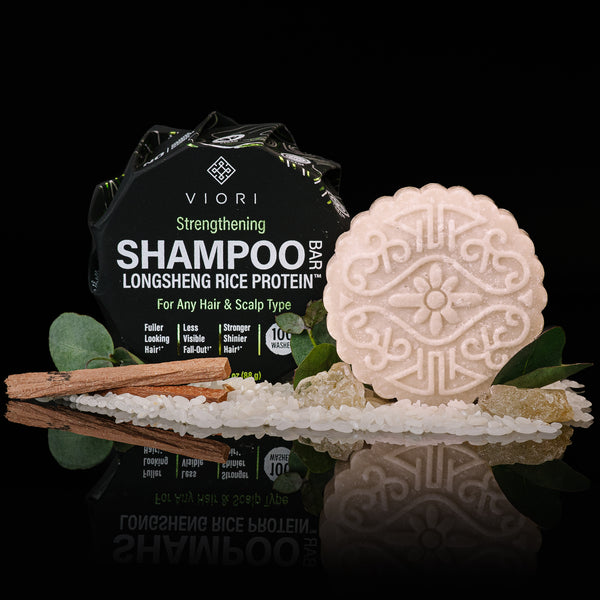
Viori bars are formulated to be pH balanced, which is a big deal for shine because it helps support a smoother, more compact cuticle surface over time-exactly what reflective hair needs.
The “Charge Story”: Shine Loves Alignment, Frizz Loves Static
Hair-especially porous, color-treated, or heat-styled hair-often carries a negative surface charge after cleansing. That negative charge contributes to static, flyaways, and that soft “halo” around the head that ruins a clean highlight band.
This is where conditioner chemistry matters. Viori conditioner bars use Behentrimonium Methosulfate (BTMS), a cationic (positively charged) conditioning ingredient known for improving slip and manageability. The short version: positive conditioning agents are attracted to negatively charged hair, helping strands lie together more smoothly. When hair aligns, shine shows up.
The Shine Sweet Spot: Too Clean and Not Clean Enough Both Look Dull
Here’s what most gloss advice misses: dullness can come from buildup, but it can also come from over-cleansing. Your goal isn’t “strip everything.” Your goal is to remove what creates haze without roughing up the cuticle.
Common shine-killers I see all the time include:
- Oxidized sebum + pollution (a dull film that scatters light, especially at the roots)
- Hard-water mineral residue (a cloudy, draggy layer on the cuticle)
- Layered styling product (often shiny in spots, dull in others because it’s uneven)
Viori shampoo bars use Sodium Cocoyl Isethionate (SCI) as the cleanser, which is widely considered a mild surfactant. Mild cleansing can be a major advantage when you’re trying to maintain shine long-term, because aggressive cleansing often increases friction and frizz-two things shine cannot survive.
Protein and Shine: More Isn’t Always Better
Protein can help, especially for hair that’s porous and struggling to hold together. But too much strengthening can make hair feel stiff, tangly, or brittle-and that often shows up visually as less gloss and more flyaways.
Viori notes it uses a low concentration of rice protein in its bars. From a stylist’s perspective, that’s a smart approach for daily or frequent routines: shine usually improves when hair feels smooth and flexible, not rigid.
The Most Overlooked Shine Killer: Friction in the Shower
If you want one “rarely discussed” factor that matters more than most people realize, it’s this: mechanical friction can rough up the cuticle. Even a great formula won’t shine if your wash technique is aggressive.
Because Viori products are in bar form, it’s especially important to reduce unnecessary abrasion. Viori recommends building lather in your hands and applying with your palms rather than rubbing the bar directly on your head-this is great advice not only for color-treated hair, but for anyone chasing shine.
WHAT CUSTOMERS ARE SAYING
Real reviews for Rice Water Shampoo Bar – All Hair Types | VIORI
Choosing the Right Viori Bar for Shine (Start with Scalp Type)
Shine is easier to maintain when your scalp is balanced, because that affects oil distribution, irritation, and how consistently your hair behaves from roots to ends.
- Normal to oily scalp: Viori often recommends Citrus Yao. Viori notes this scent contains citric acid, which helps break down oil-useful if the root area tends to get that dull, hazy look quickly.
- Dry to normal scalp or frizz-prone hair: Terrace Garden or Native Essence are commonly recommended as more moisturizing options, which can help reduce frizz (and frizz breaks the highlight band).
- Sensitive scalp or fragrance sensitivity: Native Essence is unscented (no added fragrance), often the gentlest choice for keeping the scalp calm and consistent.
If scent helps you stay consistent with your routine, Viori describes them this way: Terrace Garden is fresh and green-floral, Hidden Waterfall is sweet vanilla-musk, Citrus Yao is bright mixed citrus, and Native Essence is unscented (with a very subtle earthy grain note if you smell it up close).
A Shine-Focused Wash Routine (Simple, But Precise)
If you want your hair to reflect light more cleanly, your technique matters as much as your product choice. Here’s the routine I recommend most often for improving shine without chasing heaviness:
- Wet thoroughly for 60-90 seconds. Fully saturated hair tangles less and cleans more evenly.
- Cleanse the scalp first. Massage where oil and buildup live; let lather rinse through the lengths.
- Lather in your hands. Apply with your fingers and palms to reduce friction on the cuticle.
- Condition mid-lengths to ends. Let it sit briefly (even 2-5 minutes) to improve slip and alignment.
- Rinse well without roughing up the hair. Cooler water can help reduce frizz for many hair types.
- Blot-don’t scrub-when drying. Towel friction is a quiet shine thief.
How to Tell If Your Shampoo Is Actually Improving Shine
Forget perfect before-and-afters for a moment. In real life, shine shows up as consistent behavior. Over a few weeks, look for these signs:
- Less resistance when detangling (a friction win)
- Less halo frizz at the crown (a charge/alignment win)
- A cleaner, more continuous highlight band under overhead light
- No “filmy” feeling by day 2-3 (often a buildup clue)
And give it time. Viori notes some people notice results quickly, while others do best giving it 2-3 months. That tracks with what I see professionally: the best shine isn’t a one-wash trick-it’s what happens when your cuticle stays smoother, your scalp stays steadier, and your routine stays consistent.


