
If you’ve been hearing the word “shompos” floating around, you’re not alone. It’s become a catch-all term for the dream of haircare convenience: a single product that’s supposed to cleanse like a shampoo and condition like a conditioner in one quick step.
It’s a great idea on paper. In real life, it can be amazing for some people and a total letdown for others. The reason isn’t hype or user error-it’s that shompos are trying to do two jobs that naturally pull in opposite directions.
As a stylist, I’m less interested in the “2-in-1 is good” versus “2-in-1 is bad” debate. What matters is understanding the mechanics: what your scalp needs, what your ends need, and why a one-size-fits-all formula often struggles to satisfy both.
What “shompos” usually means (and what it’s trying to solve)
When most people say shompo, they mean a shampoo + conditioner hybrid: something designed to remove oil and buildup while also leaving hair soft, detangled, and easy to manage.
In theory, it’s the perfect shortcut. In practice, that shortcut often runs into a chemistry problem-because cleansing and conditioning aren’t just different goals; they’re often competing processes.
NOT SURE WHICH PRODUCT IS RIGHT FOR YOU?
TAKE THE QUIZTakes 30 seconds · 134,000+ customers matched
The real issue: cleansing wants “lift,” conditioning wants “smooth”
What cleansing is doing under the hood
To cleanse hair and scalp properly, you need cleansing agents (surfactants) that can loosen and carry away things like sebum, sweat residue, pollution, and styling film. Even when a cleanser is mild, the cleansing phase can temporarily make hair feel a little more “grabby” because the oils that normally lubricate the strands are being lifted and rinsed away.
What conditioning is doing under the hood
Conditioning is about reducing friction and improving manageability. Conditioners are typically built to increase slip, reduce static, help hair lie flatter, and make detangling less aggressive on the fiber. Many effective conditioning ingredients are attracted to hair because wet or damaged hair tends to carry more negative charge, so conditioning agents with a positive charge are drawn in.
Why this makes a true “one-step” formula difficult
Here’s the tightrope: if a shompo leans too hard into cleansing, hair can feel dry or tangled. If it leans too hard into conditioning, it can feel coated, flat, or like the scalp gets oily again faster. That’s not “in your head”-it’s the formulation trying to satisfy two goals that don’t naturally coexist.
The angle almost nobody talks about: deposition geography
This is the part that rarely gets spelled out online, but it explains a lot of frustrating wash days: your hair isn’t one uniform surface. You’re working with two very different zones-the scalp and the lengths/ends-and they don’t want the same treatment.
Your scalp is living skin
Your scalp produces oil, responds to climate and sweat, and has its own balance to maintain. It can get irritated from harsh stripping, but it can also get cranky from heavy buildup. It’s warm, too, which can soften oils and product films and make certain types of residue feel more obvious.
Your ends are “older” hair fiber
Your ends are the most weathered part of the hair. They’ve been through the most washing, brushing, sun exposure, and heat styling. That usually means they’re drier, more porous, and far more likely to tangle-especially if the cuticle has chips or lift.
The simple truth is this: a shompo has to guess how much to cleanse and how much to condition, but your scalp and your ends typically need two different answers.
Why technique matters more than people realize (especially with bars)
Many people blame “dryness” when what they’re actually feeling is friction. Hair is more vulnerable when it’s wet-more elastic, easier to overstretch, and easier to tangle. If your wash step doesn’t provide enough slip while you’re cleansing, you can end up with knots that seem to appear out of nowhere.
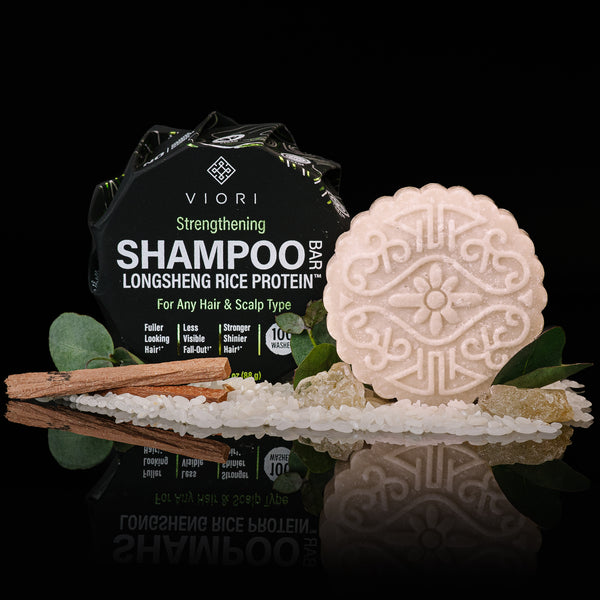
This is also where bars can be misunderstood. Bars aren’t a problem, but how you apply them matters. Direct rubbing increases friction and concentrates product in one area. For some hair types (especially color-treated or high-porosity hair), that can make the hair feel rougher mid-wash.
If you love the idea of shompos, here’s the smarter workaround
If what you want is “one-step” simplicity, the best way to get it isn’t forcing your hair into a true 2-in-1 routine. It’s creating a routine that feels fast while still respecting the scalp-versus-ends difference.
This is where a two-step system like Viori shampoo and conditioner bars can be the best of both worlds. You get a streamlined routine, but you can place cleansing where it belongs (scalp) and place conditioning where it’s actually needed (mid-lengths and ends).
Why Viori fits this approach
Viori shampoo bars use a mild cleanser (Sodium Cocoyl Isethionate) that’s often called “baby foam” in the industry because it cleans effectively without the harsh feel many people associate with traditional cleansing systems.
Viori conditioner bars are designed to increase slip and smooth the hair surface-exactly what helps reduce tangles and frizz in the lengths.
Viori products are pH balanced, which matters because overly alkaline products can leave the cuticle more raised, leading to roughness and frizz over time.
The bars include fermented Longsheng rice water along with supportive ingredients like hydrolyzed rice protein, vitamin B5 (panthenol), and vitamin B8 (inositol), which are commonly used in haircare for strength, shine, and improved feel.
How to pick a Viori bar like a pro: start with your scalp
A lot of people choose products based on hair texture (curly, straight, thick, fine). In my chair, the most consistent results usually come from choosing based on scalp behavior first.
Oily scalp: Viori Citrus Yao is often a great match because citrus/citric acid components help break down oil effectively.
Dry scalp or dry scalp flaking: Viori Hidden Waterfall, Terrace Garden, or Native Essence tend to feel more comfortable and moisturizing.
Sensitive scalp or fragrance sensitivity: Viori Native Essence is the unscented option and is typically the gentlest-feeling choice.
If you’re the classic combo type-oily scalp with dry ends-you can absolutely mix and match: cleanse the scalp with a more oil-focused option, then condition the ends with a more moisturizing choice.
WHAT CUSTOMERS ARE SAYING
Real reviews for Rice Water Shampoo Bar – All Hair Types | VIORI
The “controlled shompo” method: salon logic, home routine
This is my favorite way to get that shompo-style convenience without sacrificing your results. The goal is simple: clean where you must, soften where you can.
Lather in your hands first. With bars, build lather in your palms and apply it with your hands. This reduces friction and helps distribute product more evenly.
Cleanse the scalp deliberately. Massage where oil and buildup actually live. Let the runoff do the “light cleaning” on your ends.
Condition mid-lengths to ends. This is where tangles and dryness show up. Let the conditioner sit for a few minutes so it can do its job before rinsing.
Adjust your wash schedule based on feedback. Some people wash daily, others 2-3 times per week. Start where you are and adjust from there.
Give it a real test window. Hair and scalp can take time to settle into a new routine. A consistent 2-3 month trial is a fair way to judge results.
Final thoughts
Shompos aren’t “bad.” They’re simply trying to solve a tricky problem with a single tool. When you understand the chemistry and the geography-scalp needs cleansing, ends need conditioning-your routine stops feeling like guesswork.
If you want the simplicity that shompos promise, use the method above with Viori shampoo and conditioner bars. You’ll keep the routine streamlined, but you’ll also give your scalp and your ends what they actually need-without forcing them to compromise.


