
If you’ve typed “somma shampoo” into a search bar and ended up feeling more confused than informed, you’re in good company. In the salon, I see this kind of search behavior all the time-people latch onto a word they heard (or a term they think they heard) because they’re chasing a very specific result: clean hair that stays soft, a calmer scalp, less frizz, better shine, and no weird buildup.
Here’s the reality: “somma shampoo” isn’t a standardized category the way “clarifying” or “anti-dandruff” is. But the need behind the search is real-and it’s surprisingly technical. So instead of trying to define a mystery term, let’s decode what you’re actually asking for: the sum total of great wash-day results without the long-term downsides.
This post breaks down what really makes a shampoo work-using straightforward language, but with the behind-the-chair science that most articles skip. I’ll also show you how to apply that logic to Viori shampoo and conditioner bars, because the bar format brings some unique advantages (and a few technique details that matter a lot).
What Most People Mean When They Search “Somma Shampoo”
When someone comes in asking for “a shampoo that just works,” they usually mean a blend of goals that can feel contradictory:
NOT SURE WHICH PRODUCT IS RIGHT FOR YOU?
TAKE THE QUIZTakes 30 seconds · 134,000+ customers matched
- Clean scalp without that squeaky, tight feeling
- Soft lengths without heavy residue
- Less frizz and fewer tangles
- Comfortable scalp (especially if they’re prone to irritation or dryness)
- Consistency-hair that gets better over time, not worse
To get there, it helps to stop thinking in marketing labels and start thinking in four levers: cleansing system, pH, conditioning deposition, and friction. Those four things decide whether your hair improves after a month-or slowly becomes dull, rough, and unpredictable.
Lever #1: The Cleanser System (The Part That Actually Does the Washing)
Shampoo cleans because of surfactants-cleansing agents that surround oil and debris so water can rinse it away. The part most people miss is that not all surfactants behave the same way on your scalp or your cuticle.
Viori uses Sodium Cocoyl Isethionate (SCI) as its cleanser. In practical terms, SCI is known for being mild but effective. It’s one of those ingredients that can give you a satisfying wash and lather without the “my hair feels like straw” aftermath that some stronger detergents can cause.
One important clarification: foam is not the same as cleansing power. Foam is simply how a surfactant behaves when agitated with water and air. You can have big foam with a harsh wash, or big foam with a gentler wash. What matters is what the cleanser does to your scalp balance and your cuticle over repeated use.
Lever #2: pH (The Cuticle “Hinge” That Controls Smoothness)
If there’s one technical detail I wish every client understood, it’s this: pH affects how your cuticle behaves. Think of the cuticle like shingles on a roof. When the shingles lie flatter, hair looks shinier, feels smoother, tangles less, and frizzes less. When they lift and stay lifted, you get roughness, snagging, and dullness.
Viori notes that hair products generally perform best between pH 3.5-6.5, and that overly alkaline products can lead to dryness and damage over time. That lines up with what we see in real life: when pH is off, styling gets harder and hair tends to feel “never quite right,” even with good products.
Here’s the part that rarely gets discussed online: once the cuticle gets roughed up, friction becomes a snowball. Roughness causes more friction, which creates more wear, which creates more roughness. That’s why a shampoo can seem “fine” at first-and then suddenly your hair feels tangly and frizzy by week three.
Lever #3: Rice Water Benefits-Without the DIY Pitfalls
A lot of “mystery shampoo” searches are really people looking for the kind of results they associate with rice water: stronger-feeling hair, more shine, and improved manageability.
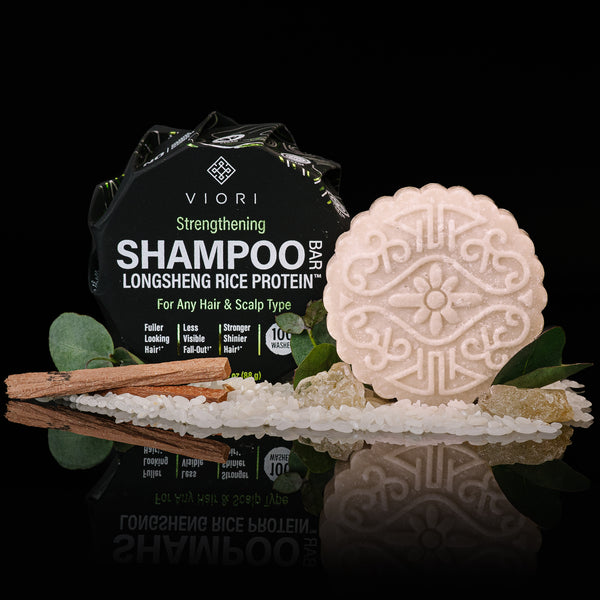
Viori uses fermented Longsheng rice water in a controlled, pH-balanced amount. That “controlled amount” matters. According to Viori’s FAQs, rice water at high concentration, used too often, can disrupt scalp and hair pH. The goal isn’t “as much as possible”-it’s the right level, consistently.
Fermentation is also relevant because it can increase components like inositol (Vitamin B8) and panthenol (Vitamin B5), both of which appear in Viori’s formulas and are widely used in haircare for improving feel, softness, and the look of healthier hair over time.
Lever #4: Conditioner Deposition (Where Most “Good Hair” Comes From)
People love to judge a shampoo in isolation, but professional results come from the full routine. After cleansing, hair is more vulnerable to friction from water, towel-drying, detangling, heat, and everyday wear. That’s where conditioner earns its keep.
Viori explains this well: conditioner is positively charged, which helps it cling to hair strands and temporarily replace some of what cleansing removes. In the real world, that translates to slip-and slip is what reduces breakage during combing and styling.
Viori’s conditioner includes Behentrimonium Methosulfate (BTMS), which is often misunderstood because of the word “methosulfate.” BTMS is a conditioning ingredient (not a harsh cleansing sulfate) and is used specifically to improve detangling, softness, and manageability.
Scent Isn’t Just Preference: It Can Nudge Performance
Most brands treat fragrance like a “pick what you like” situation. Viori makes an interesting point in their FAQs: while the bars share a core formula, the scents can change which hair/scalp types they’re best for.
- Citrus Yao includes citric acid, which helps break down oil and is often best for normal-to-oily scalps.
- Hidden Waterfall sits nicely in the middle for many people and is commonly chosen for normal-to-dry needs.
- Terrace Garden is frequently favored for normal-to-dry hair that wants more moisture support.
- Native Essence is unscented and is a smart option for anyone sensitive to fragrance or wanting the simplest routine.
If your version of “somma shampoo” means “my roots get oily fast, but my ends are dry,” this is where strategic pairing helps: cleanse the scalp with what it needs, and condition the ends with what they need.
The Bar Format Detail That Changes Everything: Friction and Technique
Bars are fantastic-concentrated, travel-friendly, and easy to store properly-but they introduce one variable you don’t deal with as much in liquid shampoo: direct friction.
Viori specifically recommends (especially for color-treated hair) getting a lather in your hands and applying it with your palms rather than rubbing the bar directly on your head. That’s not just a gentle tip-it’s practical hair physics. Direct rubbing can create concentrated wear on the cuticle, which can lead to tangling, roughness, and faster fading on more delicate hair.
If you want the best experience with a shampoo bar, this simple method is the one I recommend:
WHAT CUSTOMERS ARE SAYING
Real reviews for Rice Water Shampoo Bar – All Hair Types | VIORI
- Soak hair thoroughly. Bars perform best when hair is fully saturated.
- Build lather in your hands (or glide the bar lightly over your palms).
- Apply to the scalp first, using your fingertips to massage and lift debris.
- Let the rinse cleanse the lengths unless you truly need more on the mids/ends.
- Condition mid-lengths to ends, then detangle gently.
So, What’s the Best “Somma Shampoo” Choice in Viori Terms?
If we translate the search into real-life needs, it usually looks like one of these:
If your scalp gets oily quickly (1-2 days)
Viori Citrus Yao is often the best match, especially if you want your roots to feel cleaner without getting that stripped, crunchy sensation.
If your scalp feels dry, tight, or easily irritated (4+ days)
Viori Terrace Garden or Viori Native Essence tends to be the more comfortable direction. If fragrance sensitivity is part of your story, Native Essence is the simplest choice.
If you want a balanced “most people do well with this” option
Viori Hidden Waterfall often lands in that sweet spot-especially for normal hair or anyone who wants a routine that doesn’t feel too cleansing or too heavy.
Give It Time: Why Hair Can Improve Over Weeks, Not Just Washes
Viori notes that some people see the results they want right away, while others need 2-3 months. That’s realistic. Hair can feel smoother after one wash, but the bigger wins-less breakage, better shine consistency, calmer scalp-often show up after you’ve repeated the “low friction + balanced pH + consistent conditioning” cycle many times.
Bottom Line
You don’t need to find a product literally called “somma shampoo.” What you need is a routine that delivers the sum of what great shampoo should do: cleanse efficiently, keep pH friendly, reduce friction, and condition in a way that supports the cuticle instead of fighting it.
If you want, I can help you pick the best Viori match. Tell me (1) how many days until your roots feel oily, (2) whether your hair is color-treated, and (3) your biggest complaint-oil, flakes, itch, frizz, tangles, dullness, or breakage-and I’ll point you to the most logical bar pairing and wash technique.


