
“Sugar hair shampoo” sounds straightforward-almost comforting. It brings to mind something gentle, softening, and maybe even better for your scalp than a harsh cleanser. But in professional haircare, that phrase is actually a bit of a puzzle. Depending on what “sugar” means in a formula, the results can range from glossy and bouncy to sticky, flat, or frizzy.
After 20 years of working with every hair type (and every kind of “miracle ingredient” trend), here’s the truth: sugar shampoo isn’t one thing. It’s a category label that can describe multiple ingredient families, and they behave differently on the scalp than they do on the hair fiber. Once you know what you’re actually dealing with, it becomes much easier to get the benefits without stumbling into the common complaints.
What “sugar” can mean in a shampoo (and why that matters)
When most people say “sugar shampoo,” they’re usually pointing to one of four ingredient roles. The confusing part is that these roles can feel totally different on hair, even though they all sound “sugar-related.”
NOT SURE WHICH PRODUCT IS RIGHT FOR YOU?
TAKE THE QUIZTakes 30 seconds · 134,000+ customers matched
1) Free sugars (simple saccharides)
These are ingredients that function mainly as water-binders. In plain terms: they can help hair feel softer because they attract moisture. The tradeoff is that in humid weather, that same water-attracting behavior can make some hair expand and lift at the cuticle-hello, frizz.
2) Sugar alcohols (polyols)
This is where you’ll often see ingredients that behave like heavy-duty humectants. They can be brilliant in dry climates because they reduce static and keep strands from feeling crispy. In high humidity, though, they can sometimes make hair feel puffier or sticky if the balance is off.
3) Sugar-derived cleansers (surfactants)
This is the “it actually cleans your hair” category. These cleansers may be derived from plant sources and can be formulated to feel gentler than more aggressive detergents. Whether they work beautifully or feel like they leave buildup depends on the full cleansing and conditioning system-not just the marketing label.
4) Fermentation-derived components
Fermented ingredients can include trace sugars, amino acids, and vitamin-rich byproducts. These can influence scalp comfort, softness, and shine, especially when the formula is pH balanced and designed for consistent use rather than occasional DIY treatments.
The overlooked angle: sugar shampoo is really about scalp “microclimate”
Here’s the part that’s rarely explained online: a shampoo doesn’t just clean-it changes the environment on your scalp. Your scalp has its own daily mix of oil, sweat, styling residue, and natural shedding. When people say a shampoo “makes my scalp itchy” or “feels like it leaves a film,” it’s often because the product shifted that micro-environment in a way their scalp doesn’t love.
One technical factor behind this is water activity-basically how much water is “available” at the scalp surface. Humectants (including sugar-like ingredients) can change how hydrated the scalp feels. That can be helpful, but if there’s residue, hard water, or incomplete rinsing, it can also contribute to that coated, uncomfortable feeling.
Sugar shampoo and frizz: the humidity effect most people blame on “damage”
Sugars and humectants attract water. That’s a feature, not a flaw-until the weather changes. If you’ve ever had a shampoo make your hair feel soft in winter but puffy in summer, you’ve seen this in real time.
- Dry air: humectants can reduce static and brittleness, making hair feel more flexible.
- Humid air: humectants can pull in too much moisture, causing the hair fiber to swell and the cuticle to lift slightly-often felt as frizz or roughness.
A subtle professional insight: sometimes this creates “high-porosity behavior” even if your hair isn’t truly high porosity. The strand can go through repeated swelling cycles that make the surface feel less smooth over time.
Why the same “sugar shampoo” can feel stripping for one person and heavy for another
This is the big paradox. Two people use a similar-sounding product and one says it’s too cleansing while the other says it leaves buildup. That usually comes down to the relationship between cleansing power, conditioning/deposition, and rinse quality.
- If cleansing is strong but conditioning is light (or skipped), hair can feel squeaky, rough, or dry.
- If cleansing is mild but the formula deposits easily (and you don’t rinse thoroughly), hair can feel coated, limp, or waxy-especially if your hair is fine or low porosity.
How to make a sugar-leaning routine work for you
If you like the idea of “sugar shampoo” for softness and scalp comfort, the win is in the technique and in choosing the right balance for your scalp type-not in chasing a single buzzword.
Step 1: Choose based on scalp type first
This matters more than hair length or curl pattern. A quick rule of thumb:
- Oily scalp: feels oily again 1-2 days after washing
- Normal scalp: feels oily around day 3
- Dry scalp: can go 4+ days before feeling oily
With Viori, many people with normal-to-oily scalps gravitate toward Citrus Yao, while those with dry or sensitive scalps often prefer more gentle options like Terrace Garden or Native Essence (unscented).
WHAT CUSTOMERS ARE SAYING
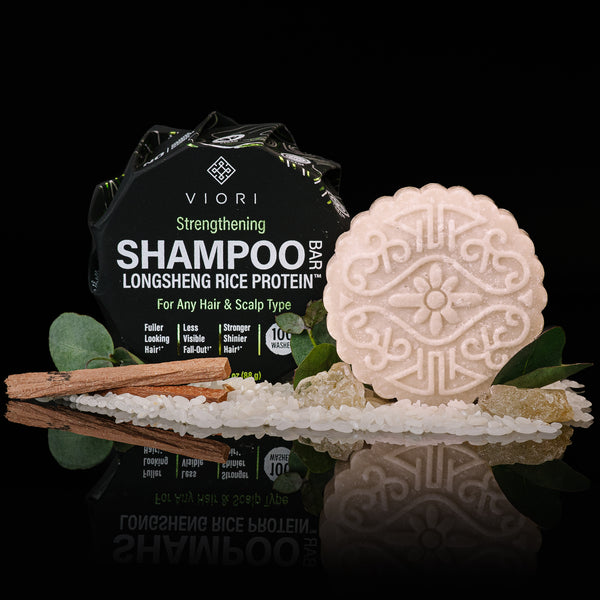
Real reviews for Rice Water Shampoo Bar – All Hair Types | VIORI
Step 2: Reduce friction if you’re using a bar
Bars can be fantastic, but friction matters-especially for color-treated hair or hair that tangles easily. One of the easiest upgrades you can make is applying with your hands instead of rubbing the bar directly on your head.
- Wet hair thoroughly.
- Create lather in your palms first.
- Massage the lather into the scalp with your fingertips.
- Let the runoff cleanse the lengths (unless you have heavy buildup).
Step 3: Condition with intention (not just a quick swipe)
Shampoo removes oil and residue, but it also removes some of the protective sebum on the strand. Conditioner helps restore slip and reduce friction, which is a big deal for breakage prevention and shine.
- Apply conditioner from mid-lengths to ends (unless your scalp is very dry and tolerates it well).
- Work it through and let it sit for 2-5 minutes.
- Rinse thoroughly.
And a quick note: Viori’s conditioner bar isn’t meant to foam like shampoo. It’s normal for it to feel more creamy or paste-like in application-what matters is coverage and contact time.
Troubleshooting: what your hair is trying to tell you
If hair feels waxy, sticky, or coated
- Use less product (especially on fine or low-porosity hair).
- Rinse longer than you think you need to.
- Be mindful of hard water, which can make residue more noticeable.
If hair feels dry, frizzy, or rough
- Give conditioner more time-most people rinse too fast.
- Finish with cooler water to help the cuticle lie flatter.
- Handle wet hair gently (wet hair is more vulnerable to friction damage).
The bottom line
“Sugar hair shampoo” isn’t a single technology. It can refer to moisture-binding ingredients, sugar-derived cleansers, or fermentation-associated components-and the experience depends on pH, rinse quality, humidity, and scalp type.
If you’re experimenting with a new routine, give it a fair window. Viori often recommends using their bars for 2-3 months before deciding, because hair and scalp don’t always show their best results after just a wash or two-especially if you’re transitioning away from heavier buildup or harsh cleansing habits.


