
“Sulfate-free” sounds simple: gentler cleansing, happier hair. But shampoo bars without sulfates aren’t automatically mild just because they skip a certain ingredient family. In practice, the difference between a bar that leaves your hair glossy and bouncy and one that leaves it dull, draggy, or coated comes down to three things most people never talk about: surfactant design, pH control, and how you physically apply the bar.
After two decades of working with every hair type (and every kind of product trend), I’ve learned that shampoo bars are less like “bottled shampoo in solid form” and more like a miniature chemistry set. When they’re formulated well and used correctly, they can be one of the most scalp-friendly, color-friendly ways to wash. When they’re not-or when technique is off-they can feel like they’re fighting your hair.
What “Sulfate-Free” Really Means (and What It Doesn’t)
In everyday hair talk, “sulfates” usually means the strong detergents that give a powerful cleanse and a very squeaky finish. Those cleansers can be effective, but for many people they’re simply too efficient-especially if your hair is dry, porous, curly, color-treated, or your scalp is easily irritated.
Still, here’s the nuance: “sulfate-free” is not the same thing as “gentle.” A formula can exclude sulfates and still be too drying, too heavy, or just poorly balanced for your hair and water type. What matters more is the overall cleanser system and the final pH.
NOT SURE WHICH PRODUCT IS RIGHT FOR YOU?
TAKE THE QUIZTakes 30 seconds · 134,000+ customers matched
The Bar Paradox: Solid Shampoo Creates “Hot Spots”
This is a shampoo-bar issue that rarely gets spelled out. When you rub a bar directly onto your scalp, you can create tiny areas where the cleanser is extremely concentrated. Liquids are naturally diluted in your hands and through the water in your hair; bars can hit the scalp in much stronger micro-doses.
That matters because irritation and cuticle disruption are often concentration- and friction-dependent. Even a well-designed cleanser can feel like “too much” if it’s applied with heavy pressure in the same spots over and over.
A stylist’s technique tweak that changes everything
If you’re sensitive, color-treated, or prone to frizz, adjust your method before you blame the bar:
- Soak hair thoroughly-give it a full minute.
- Rub the shampoo bar between wet palms to build lather.
- Apply the lather to your scalp with fingertips, like you would with liquid shampoo.
- Let the suds rinse through the lengths instead of scrubbing your ends.
Viori actually recommends this approach for color-treated hair because it helps reduce friction (which can rough up the cuticle) and can be gentler on the finish.
The Cleanser That Makes Many Sulfate-Free Bars Work: SCI
A great sulfate-free shampoo bar still needs a primary cleanser. One common choice in modern bars-including Viori shampoo bars-is Sodium Cocoyl Isethionate (SCI), a mild cleanser derived from coconut that creates a rich, creamy lather.
And here’s a myth worth retiring: foam isn’t the same thing as harshness. Foam is mostly about how surfactants stabilize air and water. A bar can lather beautifully and still cleanse gently-if the system is designed to lift oil and grime without over-stripping your scalp and lengths.
pH: The Quiet Detail That Separates “Hair Bars” From “Soap Bars”
If you’ve ever tried a bar that made your hair feel rough, tangled, or weirdly matte, you might have been dealing with something closer to traditional soap chemistry. Classic soap-style bars tend to run more alkaline, and hair generally doesn’t thrive long-term in an overly alkaline environment.
Hair products typically perform best when they’re pH balanced in a range that supports the cuticle laying flatter (many professionals cite roughly 3.5-6.5). When pH is too high, the cuticle can lift more, which often shows up as:
- more friction during rinsing and detangling
- less shine
- more frizz and static
- hair that feels “dry” even when you’re conditioning
Viori emphasizes that their bars are pH balanced, which is a major reason many people describe the finish as clean and soft rather than stripped.
The Most Underrated Issue: Ionic Balance (Why Some Hair Feels Coated)
Let’s talk about what I call “the invisible tug-of-war.” Hair, especially damaged hair, tends to carry more negative charge along rough or porous areas. Many conditioning ingredients are positively charged, which is why they cling so well to compromised strands and improve slip.
That’s the good news. The tricky part is that with shampoo bars-because they’re concentrated-it’s easier to accidentally over-apply or under-rinse. The result can be cationic over-deposition, which can feel like:
- waxy or coated ends
- roots that get oily faster than usual
- flatness at the crown
- a “never quite clean” sensation
If this happens, it doesn’t necessarily mean the bar is wrong for you. It often means the routine needs adjusting.
How to fix the “coated” feeling without starting over
Try these changes for a week and reassess:
- Use less product than you think you need (bars are concentrated).
- Rinse longer-most people under-rinse bars at first.
- Keep conditioner mostly mid-length to ends unless your scalp truly needs it.
- If your hair is fine or low porosity, apply conditioner lightly and rinse thoroughly.
Hard Water + Shampoo Bars: The Mineral Factor Nobody Warns You About
Hard water (high in calcium and magnesium) can make any cleanser feel different, but bars can expose the problem quickly. Minerals can interfere with how surfactants and conditioning agents rinse, leaving hair feeling stiff, dull, or filmy.
If your results are inconsistent, this quick “chair test” can help you narrow it down:
- Clean roots + dull lengths often points to minerals plus cuticle roughness.
- Greasy roots + coated lengths often points to over-application or incomplete rinsing.
- Squeaky + frizzy often points to too much friction or a routine that’s too cleansing for your hair type.
Before you assume the bar isn’t for you, fix technique first. It’s the simplest lever to pull, and it solves more problems than people expect.
Fermented Rice Water in Sulfate-Free Bars: Strength Without the “Protein Trap”
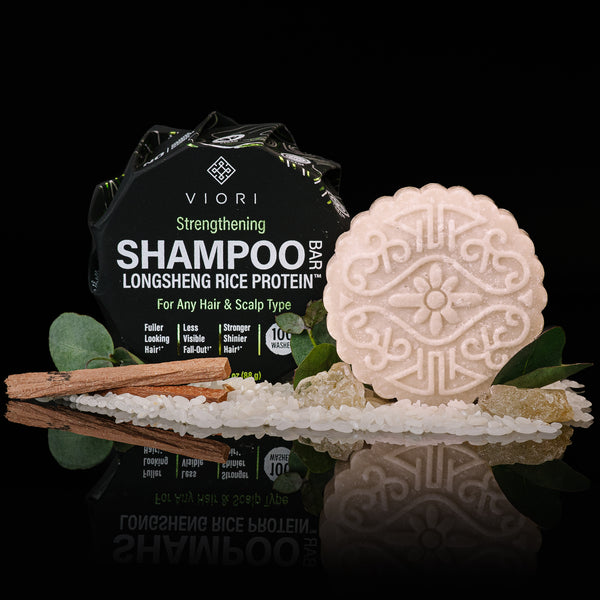
One reason sulfate-free bars can be so satisfying is that they’re often designed as more than “cleanser only.” Viori uses fermented Longsheng rice water along with other supportive ingredients. Fermentation is especially interesting because it can increase compounds like inositol (vitamin B8) and panthenol (vitamin B5), both commonly used in haircare for improved feel and resilience.
Another important detail: Viori uses a low concentration of rice protein. That matters because protein can help strengthen and boost shine, but overly protein-heavy routines can make some hair feel stiff-especially if moisture balance isn’t supported.
WHAT CUSTOMERS ARE SAYING
Real reviews for Rice Water Shampoo Bar – All Hair Types | VIORI
How to Pick the Right Sulfate-Free Shampoo Bar (Beyond “Dry vs Oily”)
In the salon, I don’t pick cleanser systems by curl pattern alone. I look at scalp behavior, porosity, and friction tolerance. You can do the same at home.
Step 1: Identify your scalp type by oil timing
- Oily: feels oily 1-2 days after washing
- Normal: feels oily around day 3
- Dry: feels oily 4+ days after washing
Step 2: Consider porosity
- Low porosity: more prone to buildup; often needs lighter application and thorough rinsing
- High porosity: absorbs quickly but loses moisture; usually needs more conditioning support and gentle handling
Step 3: Manage friction like it’s part of your formula
Bars can be incredibly hair-friendly, but they’re hands-on. If you treat a bar like you’re sanding the scalp, your hair will respond like it’s being sanded. Build lather, use fingertips, and keep the pressure light.
What to Expect When You Switch to a Sulfate-Free Bar
If you’re moving from stronger detergents or a routine with lots of heavy product layers, give your hair time to settle. A fair evaluation window looks like this:
- Washes 1-3: technique learning curve; results can be inconsistent
- Weeks 2-4: scalp and softness begin to stabilize
- Weeks 6-12: the most honest read on shine, breakage, and scalp comfort
Viori often recommends sticking with the bars for 2-3 months before giving up, and from a professional standpoint, that’s a realistic window for judging a new cleansing system.
Make Your Bar Work Harder: A Few Simple Pro Habits
- Lather in your hands first to reduce friction and concentrated “hot spots.”
- Use warm water to cleanse, then finish with a cooler rinse if frizz is an issue.
- Let conditioner sit for a couple minutes before rinsing for better slip.
- Store bars so they dry fully between washes for better longevity and performance.
Viori’s bamboo holders are designed to help bars air out and dry between uses, which helps prevent premature dissolving and keeps the bar texture consistent over time.
The Bottom Line
A sulfate-free shampoo bar can be one of the healthiest, most satisfying ways to wash your hair-when it’s formulated like modern haircare and used with smart technique. The real markers to look for are a gentle cleanser system, pH balance, and a routine that gives you slip without buildup.
If you want, tell me your hair texture (fine/medium/coarse), whether it’s color-treated, how often you wash, and whether you suspect hard water. I can help you pinpoint what’s most likely happening-technique, minerals, porosity, or product load-and how to tweak your routine so a sulfate-free bar (like Viori) performs the way it’s supposed to.


