
An “ayurvedic shampoo bar” sounds like the best of all worlds: time-tested botanicals, a simple ritual, and a cleaner routine that doesn’t involve plastic bottles. But here’s what most people don’t realize until they’ve tried a few: the experience can swing wildly from silky and balanced to squeaky, tangled, and dull.
After 20 years of working with every hair texture and scalp mood imaginable, I’ve found the outcome usually has less to do with the romance of “herbs” and more to do with the details no one posts about-pH, water hardness, friction, and how a bar is engineered to rinse clean and leave hair manageable.
Let’s break down what’s really happening when an Ayurvedic-inspired bar meets your scalp and hair-and how to choose (and use) one so you get the benefits without the common frustrations.
What “Ayurvedic” can mean in a shampoo bar (and what it often can’t)
In traditional use, many Ayurvedic hair routines rely on delivery methods that don’t behave like a shampoo bar at all. Think liquids that flood the hair evenly, pastes that sit for a long time, or oils that cling to the fiber.
NOT SURE WHICH PRODUCT IS RIGHT FOR YOU?
TAKE THE QUIZTakes 30 seconds · 134,000+ customers matched
A shampoo bar is different by design: it’s a solid cleansing system used for a short window of time, often with more friction, and it has to perform under real-world conditions (hard water, styling products, humidity, color-treated hair, and so on).
This is the part that rarely gets said out loud: in a bar format, botanicals often play a supporting role unless the formula is built to deliver them in a way that doesn’t cause drag, buildup, or irritation.
The quiet deal-breaker: soap bars vs modern shampoo bars
One of the biggest misunderstandings online is calling every solid cleanser a “shampoo bar.” In practice, there are two very different categories, and your hair will absolutely feel the difference.
Soap-based bars (true soap)
Soap-based bars are made from saponified oils and tend to be alkaline. Alkalinity can lift the cuticle, which may lead to roughness, tangling, frizz, and a loss of shine-especially if your hair is porous, curly, or color-treated.
They can also react with minerals in hard water and create a dulling film that people describe as “waxy” or “coated.”
Modern shampoo bars (syndet-style cleansing)
Modern shampoo bars use mild cleansers (surfactants) rather than soap. This matters because they can be formulated to be pH balanced, which helps keep the cuticle smoother and the scalp more comfortable over time.
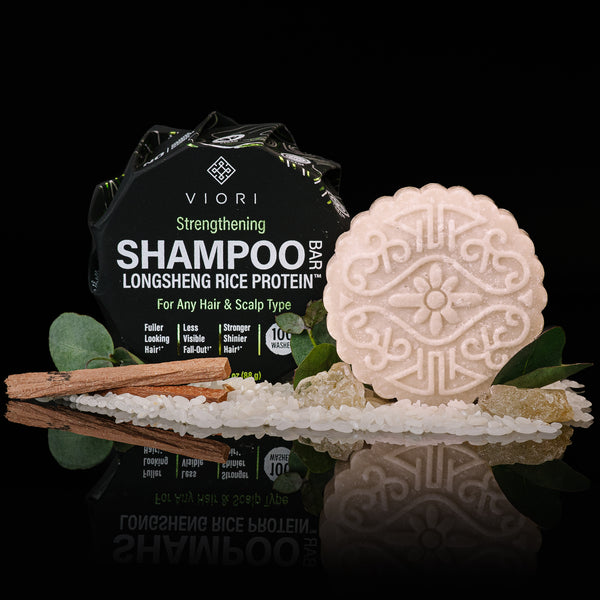
Viori’s bars, for example, are described as pH balanced and use a gentle cleanser called sodium cocoyl isethionate. That kind of cleanser is often chosen because it produces a soft, creamy lather without the harsh feel people associate with stronger detergents.
The “herbal powder problem” nobody talks about: friction and abrasion
Here’s a technical detail that explains a lot of “I wanted to love it, but…” reviews: particles.
Many Ayurvedic ingredients are included as powders. If those powders aren’t ultra-finely milled or well-incorporated, they can increase hair-to-hair friction. And friction is one of the fastest ways to rack up the things you don’t want:
- More tangles, especially at the nape and crown
- Snapped ends that look like frizz
- Rough mids that won’t hold a smooth blowout
- Less shine because the cuticle isn’t lying flat
This doesn’t mean botanicals are “bad.” It means the bar has to be designed so you’re not essentially sanding the cuticle while you cleanse.
Hard water: the hidden variable that makes bars feel inconsistent
Hard water (water with higher calcium and magnesium) is the silent troublemaker in a lot of routines. It can change how a cleanser lathers, how well it rinses, and how your hair feels when it’s wet.
In hard water, people often apply more product because they don’t feel enough lather. That leads to more rubbing. More rubbing leads to more friction. And then the hair feels rough, so people apply more conditioner-until the whole routine feels like it’s “not working anymore.”
A well-built bar anticipates this by balancing effective cleansing with slip and rinseability, so hair feels clean without feeling stripped or coated.
Scalp reality check: “dandruff” isn’t one thing
If you’ve ever tried a “scalp-friendly” product and gotten the opposite result, you’re not alone. In the salon, flaking can show up for very different reasons, and they don’t all respond to the same approach.
- Oily scalp flaking tends to need better oil management and consistent cleansing.
- Dry scalp flaking usually needs gentler cleansing and more barrier-friendly conditioning.
- Sensitivity can be triggered by fragrance or certain botanicals, even in “natural” products.
One of the reasons Viori is easy to navigate is that the options are often discussed by scalp type. For example, Citrus Yao is commonly recommended for normal-to-oily scalps, while Terrace Garden, Hidden Waterfall, and the unscented Native Essence are often suggested when the scalp leans normal-to-dry or when fragrance sensitivity is a concern.
Strengthening: where tradition and modern formulation can actually agree
“Strengthening” gets used as a catch-all word online, but in hair terms it typically comes down to two things: less damage and better fiber behavior.
Less damage often means less friction, less cuticle disruption, and fewer harsh cleansing events. Better behavior means ingredients that improve slip and smoothness, and supportive components that help hair feel resilient without getting stiff or brittle.
Viori’s approach is notable here because it pairs fermented Longsheng rice water with a carefully balanced formula. They also note that using rice water at too high a concentration can disrupt the scalp’s pH if overused-so a controlled, pH-balanced approach tends to be more wearable long-term.
The “salon feel” factor most people miss: how conditioner sticks to hair
If a bar routine leaves your hair detangled and glossy, it’s usually because the system manages wet friction. That’s where conditioning chemistry comes in.
Hair is typically more negatively charged after cleansing, which is why positively charged conditioning ingredients can “grab on” and improve slip. Viori includes behentrimonium methosulfate in its conditioner system-an ingredient widely used for conditioning performance and often misunderstood because of the word “sulfate” in the name.
WHAT CUSTOMERS ARE SAYING
Real reviews for Rice Water Shampoo Bar – All Hair Types | VIORI
In plain terms: it helps hair feel smoother, reduces combing resistance, and can make the whole bar experience feel more luxurious and less squeaky.
A smarter way to choose a bar: think porosity, not just “dry vs oily”
Most advice stops at scalp oil. That’s only half the story. Your hair’s porosity-how easily it absorbs and holds moisture-changes what will feel good on your lengths.
- Low porosity hair can feel coated easily and often prefers lighter, cleaner-feeling formulas and techniques.
- High porosity hair absorbs quickly but loses moisture fast, so it tends to thrive with more conditioning support and careful handling.
This is also why two people can use the same “ayurvedic shampoo bar” and have totally different results. Their scalp may be similar, but their hair fiber isn’t.
How to use a shampoo bar so it actually behaves like a professional routine
Even the best formula can be sabotaged by rough technique. If you want the benefits of a bar without the tangles and friction damage, do this:
- Lather in your hands first, then apply with your fingertips. This reduces friction on the cuticle.
- Focus shampoo on the scalp. Let the rinse water carry cleanser through the ends.
- Condition mid-length to ends and give it a couple minutes when possible.
- Adjust your schedule based on your scalp, not trends. Some people do best washing more often, some less.
- Give it a real trial window. Consistency matters, and hair often needs time to show you what it’s doing.
Viori specifically recommends the lather-in-hands method (instead of rubbing the bar directly on the head), which is especially helpful if you’re trying to preserve color and reduce cuticle disruption from friction.
Bottom line: “Ayurvedic” is the mood-performance is the engineering
An Ayurvedic-inspired shampoo bar can absolutely be part of a beautiful, grounded routine. But the best results come when the ritual is supported by the fundamentals that keep hair shiny and scalp calm: pH balance, smart cleansing, low-friction technique, and conditioning that actually deposits.
If you want a simple framework, start here: choose a bar based on scalp type (oily vs dry vs sensitive), respect your hair’s porosity, and apply it in a way that protects the cuticle. If you’re using Viori, that often looks like reaching for Citrus Yao when oil control is the priority, or Terrace Garden, Hidden Waterfall, or Native Essence when you need more moisture support or a fragrance-free option.
If you tell me your scalp type, porosity, and whether your hair is color-treated or curly/coily, I can help you map out a bar routine that gets you the clean, healthy feel you want-without the “why is my hair suddenly so tangled?” phase.


