
Men love a 2-in-1 shampoo for one reason: it’s fast. One product, one rinse, done. And honestly, I’m not here to talk anyone out of convenience. I’m here to explain what most articles don’t: the “best” 2-in-1 isn’t a matter of preference-it’s a matter of chemistry, scalp biology, and how your hair behaves under friction.
After two decades behind the chair, I’ve noticed a pattern. When a 2-in-1 works, it feels like you’ve hacked your routine. When it doesn’t, the problems are oddly specific: hair that feels clean in the shower but greasy by dinner, roots that fall flat, an itchy scalp that seems to come out of nowhere, or a rough texture that makes hair look frizzy even when it’s short.
Those aren’t random. They’re the predictable side effects of trying to make one formula do two jobs that naturally fight each other.
The Rarely Discussed Truth: A 2-in-1 Is a Compromise, Not a Miracle
Here’s the technical reality: shampoo and conditioner are designed to behave differently on purpose.
NOT SURE WHICH PRODUCT IS RIGHT FOR YOU?
TAKE THE QUIZTakes 30 seconds · 134,000+ customers matched
- Shampoo is built to lift and remove oil, sweat residue, pollution, and styling buildup from the scalp and hair.
- Conditioner is built to cling to the hair fiber, reduce friction, improve slip, and help the cuticle lie flatter for shine and manageability.
In most systems, cleansing relies on surfactants that do a great job grabbing onto oil so it can rinse away. The catch is that cleansing can also leave hair feeling more “grippy” if you don’t follow with proper conditioning-especially if you wash frequently.
Conditioning, on the other hand, often relies on positively charged conditioning agents that are attracted to the negatively charged areas on hair (especially where it’s dry or damaged). That’s why conditioning can make hair feel instantly smoother.
Put both into one product and you get a negotiation: either the cleanser gets toned down, the conditioner gets toned down, or the formula tries to deposit conditioning agents while still rinsing clean. That balancing act is exactly why so many 2-in-1s feel great at first and disappointing a few weeks later.
Why Men Get Hit Harder by “2-in-1 Problems”
Most men don’t have “princess hair” routines. They have real-life routines: gym days, daily showers, hats, helmets, quick towel-drying, and styling products that are often waxy or oil-based. Short-to-medium hair also has less room to hide mistakes-if something leaves residue, you’ll see it fast.
The most common 2-in-1 breakdown I see is scalp film. That’s when conditioning ingredients leave a subtle coating near the scalp. It can feel silky at first, but over time it often leads to:
- roots that look oily sooner (even if you washed that morning)
- hair that collapses flat at the scalp
- an itchy or “tight” feeling scalp
- flakes that aren’t true dandruff-more like irritation or dryness
If your hair is short and you’re washing frequently, that film has repeated chances to build up. That’s why one guy can use a 2-in-1 for years and love it, while another feels like their scalp is constantly annoyed.
The Metric Nobody Mentions: Cuticle Drag (and Why It Matters Even With Short Hair)
If I could teach every client one concept, it would be this: hair doesn’t just look good because it’s “clean.” It looks good because it has low friction.
Cuticle drag is the friction between hair fibers. High drag is what makes hair snag, poof, or look rough-especially after towel-drying or pulling a hat on and off. And yes, it shows up on short hair too.
Here’s what high cuticle drag looks like in men:
- a persistent frizz halo that won’t settle
- hair that refuses to lay down cleanly
- ends that feel rough even right after a cut
- breakage that makes hair seem like it “won’t grow”
A weak conditioner system inside a 2-in-1 often doesn’t reduce drag enough. A heavy conditioner system might reduce drag, but then it can leave the scalp coated and the roots flat. Again: the compromise.
pH: The Quiet Dealbreaker
Another factor that separates “decent for a week” from “great for months” is pH balance. Hair and scalp generally do best when products stay in a hair-friendly range (often discussed around pH 3.5-6.5). When products lean too alkaline over time, the cuticle can lift more than you want-making hair feel rougher, look duller, and behave frizzier.
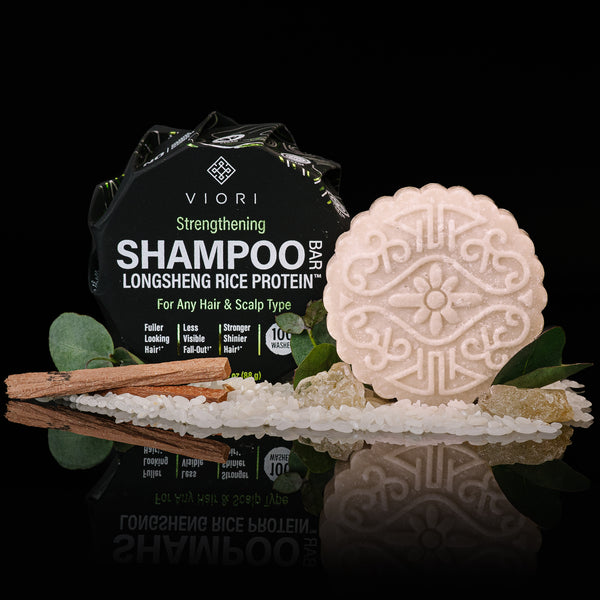
This is one reason I like to see routines built around pH-balanced formulas. Viori, for example, emphasizes that their bars are pH balanced, which is a meaningful detail if you wash often or struggle with texture issues.
The Rice-Water Angle (Done Like a Professional, Not a Trend)
Rice water gets talked about online like it’s automatically harmless. The part that’s usually missing is the “how”: concentration, frequency, and pH. Used too strongly or too often, rice water can create problems-especially for the scalp.
Viori’s approach is more controlled: they use a lower concentration of fermented Longsheng rice water because higher concentrations can disrupt hair and scalp pH if overused. Their goal is to provide the benefits people chase with rice-water routines-without turning your shower into a chemistry experiment.
In their formulas, you’ll also see a performance-focused lineup that supports hair feel without relying on heavy coating, including:
- Hydrolyzed rice protein (commonly used to support strength, volume, and shine)
- Vitamin B5 (panthenol) and Vitamin B8 (inositol) (nutrients often associated with fermented rice-based hair rituals)
- support ingredients like aloe vera and bamboo extract (often used for comfort and conditioning benefits)
This matters because one of the smartest ways to get “2-in-1 convenience” is to improve hair’s baseline behavior-so you don’t need a heavy conditioner film at the scalp to make hair feel good.
How to Choose What’s “Best” for You (Without Guessing)
If you’re determined to stick with a 2-in-1, you’ll get the best results by matching it to two things: your scalp oil cycle and your hair’s porosity.
Step 1: Identify your scalp type
A simple way to classify it is how fast oil returns after washing:
WHAT CUSTOMERS ARE SAYING
Real reviews for Rice Water Shampoo Bar – All Hair Types | VIORI
- Oily scalp: feels oily again in 1-2 days
- Normal scalp: feels oily around day 3
- Dry scalp: can go 4+ days before it feels oily
Step 2: Check porosity (buildup vs. moisture loss)
A quick at-home test is to place a clean strand of hair into a glass of water:
- Floats: low porosity (often more prone to buildup)
- Stays mid-glass: medium porosity
- Sinks: high porosity (absorbs fast, loses moisture fast)
In plain terms: low-porosity and oily scalps typically do worse with heavy “conditioning-in-the-cleanser” formulas, while high-porosity hair often needs more targeted conditioning than most 2-in-1s can provide.
The Better Play: Get the 2-in-1 Result Without the 2-in-1 Drawbacks
Most men don’t actually need a single product. They need a routine that feels like one step: clean scalp, controlled hair, no drama. The fastest way to get there is usually a two-step routine done strategically-cleanse the scalp thoroughly, then condition where it counts.
That’s where a bar system like Viori can be a smart “upgrade” from the typical 2-in-1 experience. You’re not forcing shampoo and conditioner to coexist in one formula. You’re letting each step do its job properly-without adding much time.
A simple, efficient Viori approach (based on scalp needs)
- If you’re oily or you train a lot: use Viori Citrus Yao Shampoo Bar on the scalp. Viori notes this scent contains citric acid, which helps break down oil. Then condition lightly on the lengths (or skip conditioner if hair is very short and not dry).
- If your scalp is dry, reactive, or you’re sensitive to fragrance: choose Viori Native Essence, their unscented option designed to be extra gentle.
- If you’re oily at the roots but dry at the ends: use Citrus Yao for the scalp and a more moisturizing conditioner choice only on the ends.
Pro tip: reduce friction when using bars
Bars can add friction if you rub them directly onto the hair. Viori recommends building lather in your palms and applying with your hands instead. That one tweak can make a big difference in feel, especially if your hair is fragile, dry, or easily frizzes.
Bottom Line
The “best men’s 2-in-1 shampoo” is the one that keeps your scalp truly clean, controls cuticle drag, respects pH, and doesn’t leave a conditioning film that makes your hair feel greasy, flat, or irritated over time.
For a lot of men, the best answer isn’t chasing the perfect 2-in-1. It’s getting the same convenience outcome with a smarter structure: a quick scalp cleanse plus targeted conditioning. If you want that streamlined result with fewer ingredients you don’t need, a pH-balanced bar routine like Viori is one of the easiest ways to do it.


