
If you’ve been searching for the best natural soap for hair, you’re probably not just browsing-you’re trying to fix something. Maybe your scalp is itchy, your hair feels dull, you’re tired of plastic bottles, or you want a simpler routine that still gives you that clean, healthy feel.
Here’s the honest stylist perspective: when people say “soap,” they often mean any solid bar that cleans hair. But chemically speaking, true soap and a pH-balanced shampoo bar are not the same product. That difference is exactly why one person swears a bar changed their hair, while another ends up with waxy buildup and frizz.
First, a quick reality check: hair isn’t skin
Hair is a fiber, not living tissue. It has an outer protective layer called the cuticle-think of it like overlapping shingles on a roof. When those shingles lie flat, hair feels smoother, looks shinier, detangles more easily, and breaks less.
NOT SURE WHICH PRODUCT IS RIGHT FOR YOU?
TAKE THE QUIZTakes 30 seconds · 134,000+ customers matched
When the cuticle is repeatedly forced open, hair starts to feel rough. The ends snag, the mid-lengths frizz, and the whole head can look dull even when it’s “clean.”
The pH issue: the most important detail nobody explains
This is where “natural soap for hair” gets tricky. Hair generally behaves best when products stay in a mildly acidic range-roughly pH 3.5-6.5. That range helps the cuticle lie flatter, which improves softness and shine.
True soap (the kind made by saponification) is naturally alkaline. In the short term, that can give you a “squeaky clean” feeling-but over time it often shows up as:
- More frizz and flyaways
- More tangling and mechanical breakage
- Hair that feels rough even after conditioning
- Color that fades faster (especially if your hair is already porous)
If your real goal is strong, glossy, manageable hair, the “best natural soap” is often not soap at all-it’s a pH-balanced hair bar. Viori bars are pH balanced, which is a major reason they tend to perform more consistently on hair over time.
The rarely discussed culprit: your shower water (and mineral buildup)
Now for the part that almost never gets the attention it deserves: minerals. If you’ve ever tried a natural soap bar and your hair felt coated, sticky, heavy, or weirdly “waxy,” you may have been told you’re going through a detox period.
Sometimes there is a transition when you change routines, but that waxy feeling is often plain chemistry-especially if you have hard water.
What’s happening on your hair
Hard water contains minerals like calcium and magnesium. With true soap, those minerals can bind to the cleanser and form insoluble deposits-basically the hair version of soap scum.
That deposit can:
- Mute shine (light can’t reflect off a coated cuticle)
- Increase friction (more snagging and tangles)
- Make hair feel “dry,” even when it’s actually coated
One reason Viori bars tend to avoid that classic “soap scum hair” effect is that they’re formulated as haircare bars using a gentle cleanser system rather than behaving like traditional soap. Viori uses Sodium Cocoyl Isethionate (SCI), a mild cleanser that’s often described as “baby foam” because it cleans effectively without the harsh feel people associate with stronger detergents.
“Natural” shouldn’t mean “guessing”-look for function
A great hair bar has to do three jobs at once: cleanse the scalp, keep friction low, and support comfort. If any one of those is off, hair doesn’t just look worse-it becomes harder to manage and more vulnerable to breakage.
What I look for as a stylist
- Gentle cleansing that doesn’t leave your scalp tight or itchy
- Slip and conditioning support so hair doesn’t feel grabby while rinsing
- Scalp-friendly performance (especially if you’re prone to flakes or irritation)
One ingredient category that gets unfairly criticized is fatty alcohols (like cetyl alcohol and stearic acid). These are not the drying, evaporating alcohols people worry about. Fatty alcohols are emollients that help create a smoother feel, better manageability, and a more polished finish.
A surprising detail: scent can affect results
Most people assume scent is just scent. In real formulations, aromatic components and acids can influence how hair feels-especially when it comes to oil control.
Viori points out that while the bars share a core formula, Citrus Yao includes citric acid, which helps break down oil more effectively. That’s why it’s commonly recommended for oily scalps and why some people find they can stretch the time between washes.
If you’re sensitive or reactive (or you just want the simplest option), Viori’s Native Essence is unscented and tends to be the gentlest choice.
Rice water: the benefit is real, but the dose matters
Rice water has a lot of hype online, but the nuance gets lost: using too much too often can throw off your scalp or leave hair feeling off-especially if the pH isn’t controlled.
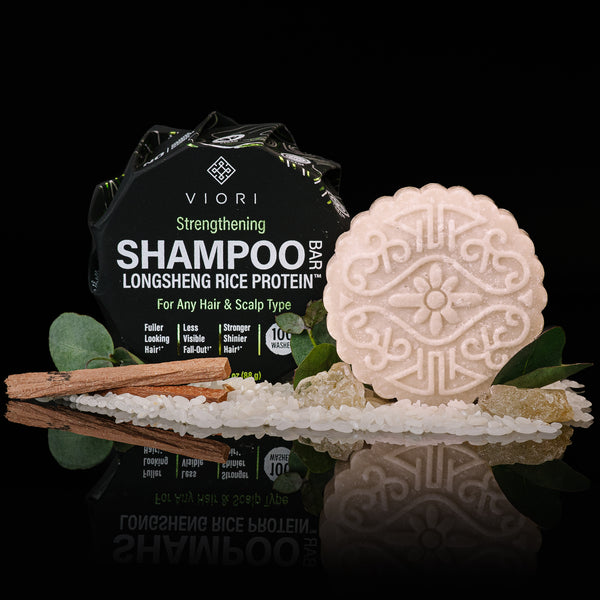
Viori uses a lower concentration of fermented Longsheng rice water specifically because high concentrations of rice water used too frequently can disrupt hair and scalp pH. The goal is to keep the formula stable and supportive for regular use while still delivering the conditioning and strengthening benefits associated with fermented rice components such as inositol (Vitamin B8) and panthenol (Vitamin B5).
WHAT CUSTOMERS ARE SAYING
Real reviews for Rice Water Shampoo Bar – All Hair Types | VIORI
How to choose the best Viori bar for your hair
If you want results that feel tailored (instead of random), start with your scalp type. That matters more than most people think.
Use this simple guide
- Oily scalp (feels oily 1-2 days after washing): try Citrus Yao
- Dry scalp (can go 4+ days before feeling oily): consider Terrace Garden, Hidden Waterfall, or Native Essence
- Normal scalp (starts feeling oily around day 3): you can do well with most options-choose based on whether you want more moisture or more oil control
If you’re oily at the scalp but dry on the ends (one of the most common patterns I see), a smart approach is to cleanse the scalp for oil control and keep conditioning focused mid-length to ends.
The bar technique that makes a bigger difference than you’d think
Bars work best when you keep friction under control-especially if your hair is color-treated or prone to tangling.
Try this method
- Wet hair thoroughly (bars need water to perform well).
- Work up lather in your hands rather than rubbing the bar directly on your hair.
- Apply the lather to your scalp and massage with fingertips.
- Rinse well, then follow with conditioner (focused on mid-lengths and ends).
That one change-lathering in your palms instead of scrubbing the bar onto your hair-can noticeably improve softness and reduce color fade risk over time.
Bottom line: the “best natural soap for hair” is usually a hair bar that doesn’t behave like soap
If you’re committed to the bar format, the best results usually come from a bar that’s built for hair chemistry: pH balanced, gentle cleansing, and enough conditioning support to keep friction low.
That’s why Viori tends to be a strong fit for people who want a natural-leaning routine without the common pitfalls of true soap-especially the mineral buildup issues that show up fast in hard water.


