
When people ask me what the best shampoo bars are, they usually expect a simple list: this one for shine, that one for dryness, another for “clean ingredients.” But the real answer-after 20 years of doing hair and troubleshooting every scalp and strand situation you can imagine-is that the “best” bar is the one that matches your scalp biology, your hair’s porosity, and the way a bar physically behaves in the shower.
Most articles miss the part that actually changes outcomes: a shampoo bar isn’t just liquid shampoo in a different shape. It’s a solid-format delivery system. That means friction, dilution, and ingredient deposition work differently-and those differences can make a bar feel incredible or totally wrong, even when the ingredient list looks “good.”
Step One: Make Sure You’re Using a True Shampoo Bar (Not Hair Soap)
The first filter is simple but critical: is the bar formulated as a true shampoo, or is it essentially a soap bar being marketed for hair? Hair tends to do best with formulas designed to stay in a hair-friendly pH range. When pH climbs too high, the cuticle can lift more than you want, which shows up as frizz, tangles, dullness, and sometimes that stubborn “coated” feeling people blame on a transition period.
NOT SURE WHICH PRODUCT IS RIGHT FOR YOU?
TAKE THE QUIZTakes 30 seconds · 134,000+ customers matched
Viori bars are formulated with Sodium Cocoyl Isethionate (SCI) as the cleanser. In the formulation world, SCI has a reputation for being mild and creating a dense, creamy lather-one reason it’s often nicknamed “baby foam.” Viori also emphasizes that its bars are pH balanced, which is a big deal if you’re trying to keep hair feeling smooth and manageable long-term.
The Part Almost Nobody Talks About: Shampoo Bars Change the Physics of Washing
Here’s the “under the hood” detail that rarely gets covered: bars introduce mechanical friction in a way liquids usually don’t. If you rub a solid bar directly on your hair, you can unintentionally create extra wear on the cuticle-especially on fine hair, curly hair, high-porosity hair, or color-treated hair.
That friction can show up as more tangling, more frizz, and quicker fading on dyed hair-not necessarily because the bar is “too strong,” but because the application method is too rough.
A better way to use a shampoo bar (and why it works)
If you want your shampoo bar to perform like a well-formulated salon shampoo, focus on controlled dilution and low friction. Viori even recommends this approach for color-treated hair: build a lather in your hands and apply with your fingers rather than dragging the bar over your head.
- Soak your hair thoroughly (this matters more than most people realize).
- Rub the bar between your palms to create a generous lather.
- Massage the lather into your scalp using your fingertips.
- Let the suds rinse through the lengths; avoid aggressively “shampooing” the ends.
- Repeat only if you truly need it (heavy styling product, lots of oil, or infrequent washing).
What “Best” Really Means in a Formula: Cleansing Plus Smart Conditioning
Great shampoo bars don’t just clean-they manage what happens after cleansing. Hair is often negatively charged, and the more damaged it is, the more noticeable that charge becomes (hello, static and tangles). A well-designed system will include ingredients that help hair feel smoother and comb easier without relying on heavy coating.
Viori includes Behentrimonium Methosulfate (BTMS), a conditioning ingredient valued in haircare because it improves slip and helps with manageability. The name can sound intimidating, but in practice BTMS is commonly used for conditioning performance. Viori also notes its bars are silicone free, which is helpful if you prefer a cleaner feel and want to minimize the risk of heavy buildup.
Why pH Balance Is a Cuticle-Control Tool (Not a Buzzword)
In the salon, pH is one of those quiet factors that separates hair that air-dries smooth from hair that puffs up and feels “grabby.” Hair products are generally happiest in a pH range that supports a flatter, more controlled cuticle. Viori highlights pH balance as a priority, and that’s one reason a bar can leave hair feeling clean without that rough, squeaky aftermath people associate with harsher cleansing.
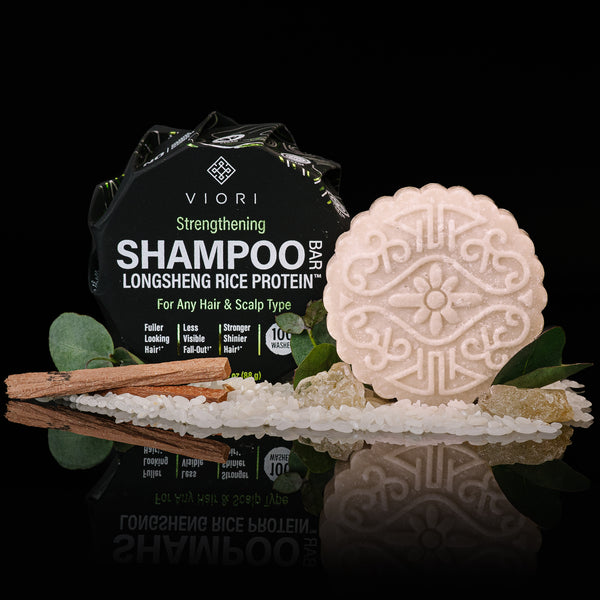
Fermented Rice Water: Helpful When It’s Done Carefully
Rice water has a long history in beauty rituals, but DIY versions are often used too strong or too frequently. Viori’s approach is more measured: it uses a lower concentration of fermented Longsheng rice water because overly concentrated rice water can disrupt your hair and scalp’s pH if used too often.
Fermentation is where the nuance comes in. Viori points to fermented-rice-related nutrients like inositol (Vitamin B8) and panthenol (Vitamin B5), which are well-known in haircare for supporting softness, strength, and overall hair feel. The key is that these benefits show up best when the rest of the formula-cleansing, conditioning support, and pH-works in harmony.
One important note: topical hair products can support scalp comfort and reduce breakage (which helps you retain length), but they can’t responsibly promise to override genetics or medical causes of shedding. Viori also acknowledges results vary from person to person.
Choose a Shampoo Bar by Scalp Type First (Not Curl Pattern)
If you want to pick the right bar quickly, start with your scalp’s oil schedule. Viori explains it in a way I also use with clients:
- Oily scalp: feels oily 1-2 days after washing
- Normal scalp: feels oily around day 3
- Dry scalp: feels oily 4+ days after washing
From there, Viori’s recommendations are practical and consistent:
- Citrus Yao tends to suit normal-to-oily scalps. Viori notes it includes citric acid, which helps break down oil and may help some people stretch time between washes.
- Terrace Garden, Hidden Waterfall, and Native Essence tend to suit normal-to-dry scalps, with Native Essence being the unscented choice for fragrance sensitivity.
The pro move: treat scalp and ends like different “materials”
If your roots get oily but your ends feel dry (extremely common), don’t force one product choice to do two opposite jobs. Many Viori users do well with a split routine:
- Cleanse the scalp with Citrus Yao
- Condition mid-lengths to ends with Hidden Waterfall, Terrace Garden, or Native Essence
Porosity: The Quiet Detail That Explains Why a Bar Feels “Perfect” or “Too Heavy”
Porosity is your hair’s ability to absorb and hold moisture-and it strongly influences buildup, frizz, and how products sit on the hair. Viori suggests a simple water-glass test:
- Brush your hair.
- Drop a single strand into a glass of water.
- If it floats, you likely have low-porosity hair.
- If it stays in the middle, you likely have medium-porosity hair.
- If it sinks, you likely have high-porosity hair.
In practical terms, Viori’s guidance aligns with what I see behind the chair:
WHAT CUSTOMERS ARE SAYING
Real reviews for Rice Water Shampoo Bar – All Hair Types | VIORI
- Low porosity often does better with lighter routines and can be more prone to buildup-Viori often points these users toward Citrus Yao.
- High porosity tends to need more support with moisture and gentle handling-Viori commonly suggests Terrace Garden, Hidden Waterfall, or Native Essence.
Don’t Ignore Storage: A Waterlogged Bar Can Ruin a Great Formula
This one sounds basic, but it changes everything. If a bar stays wet, it softens on the outside, applies too heavily, dissolves faster, and can make hair feel like it has residue-even when the formula itself is solid. Letting the bar dry between washes is part of making a shampoo bar perform consistently.
Viori recommends keeping bars out of direct water flow and letting them air dry between uses (a holder helps). That’s not just about longevity-it’s about repeatable results.
So What Are the Best Shampoo Bars?
The best shampoo bars are the ones that are pH balanced, built with a true shampoo surfactant system, and designed to cleanse while keeping the hair fiber comfortable and manageable. They’re also the ones you choose based on scalp type and porosity-and use with a technique that minimizes friction.
If you’re choosing within Viori, here’s a clean way to narrow it down:
- Citrus Yao: a strong match for normal-to-oily scalps or hair that’s prone to buildup
- Terrace Garden or Hidden Waterfall: great starting points for normal-to-dry scalps and hair that needs more moisture support
- Native Essence: best for those who want an unscented option or have fragrance sensitivity
Final Take: “Best” Is a Match, Not a Ranking
If you remember nothing else, remember this: shampoo bars work beautifully when the chemistry (pH + cleansing system + conditioning support) and the physics (friction + dilution + storage) are working together. When you get that right, a bar can leave your hair clean, light, and shiny-without the heaviness or residue people worry about.
If you want a truly tailored recommendation, start with three quick details: how many days after washing your scalp feels oily, whether your hair is color-treated, and your porosity test result. That combination tells me more than any “best shampoo bar” list ever will.


